
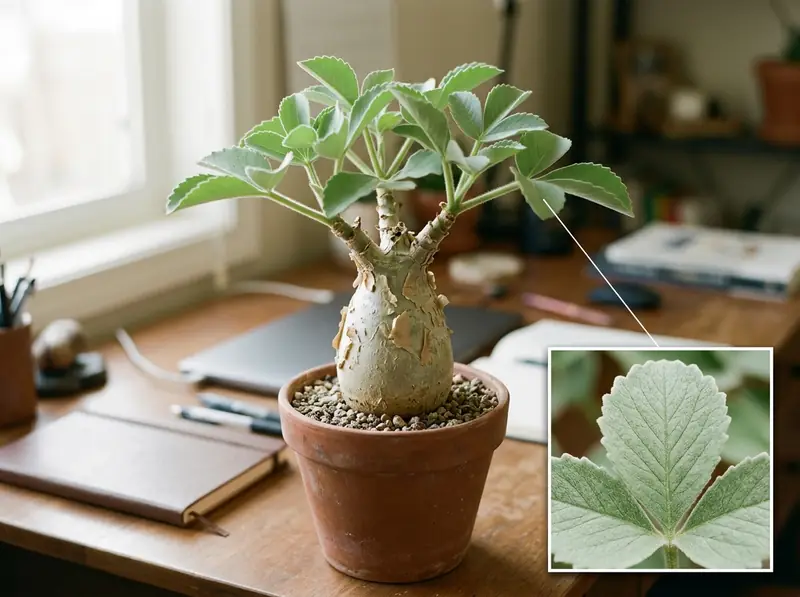
 AI-generated
Baines' Cyphostemma
Cyphostemma bainesii
Baines' cyphostemma is a southern African bottle-tree succulent with a fat, pale, peeling trunk topped by large, lobed leaves. It is slow and sculptural, and needs full sun, gritty soil and a dry winter rest.
Saving is free with a KinClub account, and it works here and in the KinClub app. Sign up free
Care profile
- Light
- Direct sunLow → direct sun
- Water
- Let it dry outAbout every 21 days
- Difficulty
- ModerateTricky → easy
- Coldest it tolerates
- 45°F
- Humidity
- Low
- Mature size
- MediumSmall → tree-size
- Growth rate
- Slow
- How common
- RareRare → everywhere
- Plant family
- Vitaceae
Pets and toxicity
Cats and dogs: not yet checked
Not yet checked against ASPCA — don't assume it's safe for pets.
No toxicity source on record for this plant yet. If a pet eats any houseplant, call your vet or an animal poison helpline.
How to care for Baines' Cyphostemma
Light
Give as much sun as you can: a south or west window with 4 to 6 hours of direct light, or a strong grow light. Introduce new plants to full sun slowly to avoid leaf burn.
Watering
Water deeply but only when the soil is fully dry, about every 2 to 3 weeks in summer. It is deciduous: stop watering completely when it drops its leaves in fall and keep it dry through winter.
Soil
Use a very gritty cactus mix with at least half pumice, perlite or coarse sand, in a deep pot with drainage holes.
Feeding
Feed with a diluted cactus fertilizer once a month during active growth in spring and summer, never when dormant.
Repotting
Repot every 2 to 3 years in spring only if the trunk fills the pot, using a heavy pot so it does not tip.
Propagation
Grow from seed, which is the reliable route; cuttings root poorly. Expect slow growth for the first years.
Common problems
- Rot at the base from wet winter soil: keep it completely dry while leafless.
- Mealybugs and scale cling to the leaf base and trunk; wipe with 70 percent rubbing alcohol.
- Leaf drop in fall is normal dormancy, not a sign of death.
- Cold below 45 F, especially if damp, can kill the swollen caudex.
Similar plants
Same light needs and difficulty.
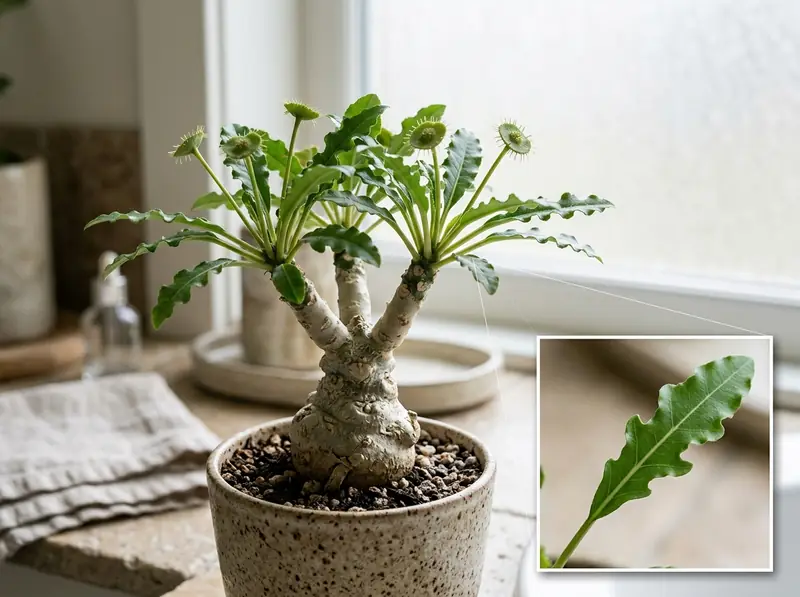 AI-generated
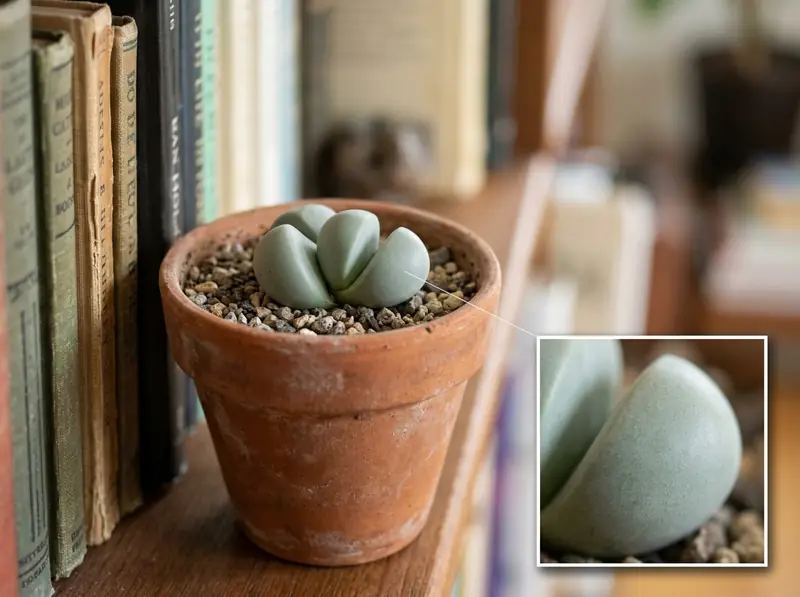 AI-generated
 AI-generated
 AI-generated