AI-generated image, not a photograph of this plant. Real plants look different depending on light, soil, temperature and age.
LauraceaeCommon in stores
Bay Laurel
Laurus nobilis
Also known as Sweet Bag, Bay Tree, Tree Laurel, Laurel Tree, Laurel
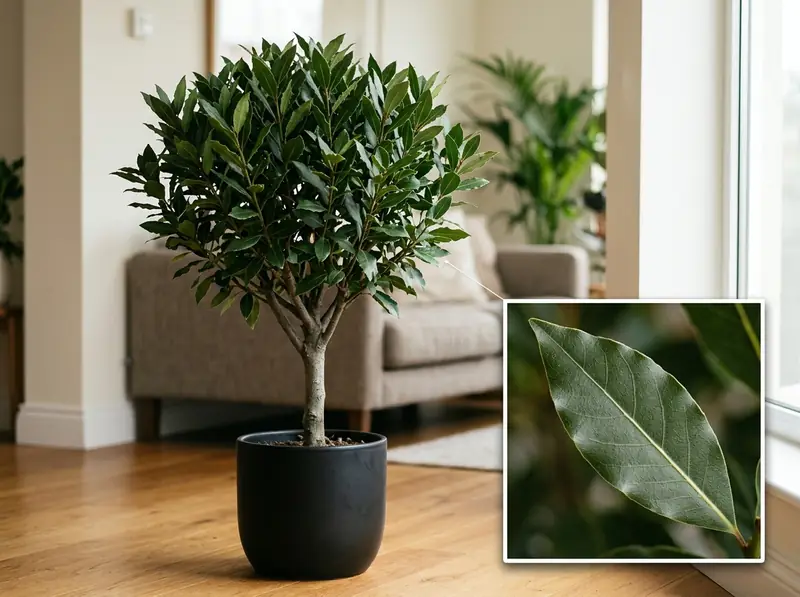
Bay laurel is the aromatic evergreen whose leaves are used in cooking, and it grows slowly into a shrub or small tree. It wants a sunny window, a pot that drains well, and a cool winter spot. It is fairly tolerant if kept on the dry side, but it can be prone to scale.
Toxic to cats and dogs
💡
Saving is free with a KinClub account, and it works here and in the KinClub app. Sign up free
🪴 Care profile
Light
Direct sunLow → direct sun
Water
Moderate wateringAbout every 10 days
Difficulty
ModerateTricky → easy
Coldest it tolerates
30°F
Humidity
Medium
Mature size
Tree-sizeSmall → tree-size
Growth rate
Slow
How common
CommonRare → everywhere
Plant family
Lauraceae
🐾 Pets and toxicity
Toxic to cats
Keep away from cats. Call your vet or a pet poison helpline if a cat chews it.
Toxic to dogs
Keep away from dogs. Call your vet or a pet poison helpline if a dog chews it.
Give it at least 4-6 hours of direct sun, such as a south or west window, or put it outside in summer. Acclimate it gradually to outdoor sun over a week or two to avoid scorching.
Watering
Water thoroughly when the top 1-2 inches of soil are dry, roughly every 7-14 days in summer. In winter, water less, only when the top half of the soil is dry, and never leave it standing in water.
Soil
Use a well-draining potting mix with some added perlite or coarse sand, about one part grit to three parts mix. A terracotta pot helps the soil dry evenly.
Feeding
Feed every 4-6 weeks from spring to late summer with a balanced liquid fertilizer at half strength. Do not feed in autumn and winter.
Repotting
Repot every 2-3 years in spring into a pot only 1-2 inches wider, as bay is slow growing and dislikes excess soil. In between, refresh the top 2 inches of soil.
Propagation
Semi-ripe cuttings taken in late summer root slowly and unreliably, often taking 2-3 months with bottom heat and rooting hormone. Seed is even slower, so most people buy plants.
Common problems
Scale insects appear as brown bumps on stems and leaf undersides with sticky residue; scrape them off or wipe with rubbing alcohol and repeat weekly.
Brown leaf tips or edges come from dry soil, salt buildup or cold drafts; water deeply and flush the pot every few months.
Yellowing leaves and leaf drop usually mean soggy soil; let it dry out and check that the pot drains freely.
Sooty black mold on leaves follows scale or aphid honeydew; wipe leaves with a damp cloth and treat the pests.

 AI-generated
 AI-generated
 AI-generated
 AI-generated
 AI-generated