AI-generated image, not a photograph of this plant. Real plants look different depending on light, soil, temperature and age.
EuphorbiaceaeCommon in stores
Buddha Belly Plant
Jatropha podagrica
Buddha belly plant is a caudiciform succulent shrub with a swollen, bottle-shaped base, glossy lobed leaves and clusters of small coral-red flowers. It needs plenty of sun, a gritty fast-draining soil and very little water. It is deciduous in cool weather and rests through winter.
Pets: not yet checked
💡
Saving is free with a KinClub account, and it works here and in the KinClub app. Sign up free
🪴 Care profile
Light
Direct sunLow → direct sun
Water
Let it dry outAbout every 10 days
Difficulty
ModerateTricky → easy
Coldest it tolerates
50°F
Humidity
Low
Mature size
MediumSmall → tree-size
Growth rate
Slow to moderate
How common
CommonRare → everywhere
Plant family
Euphorbiaceae
🐾 Pets and toxicity
Cats and dogs: not yet checked
Not yet checked against ASPCA — don't assume it's safe for pets.
No toxicity source on record for this plant yet. If a pet eats any houseplant, call your vet or an animal poison helpline.
🌿 How to care for Buddha Belly Plant
Light
Give it at least 4-6 hours of direct sun, such as a south or west window. Bright light keeps leaves compact and helps the bottle-shaped base swell. Acclimate it gradually to stronger sun.
Watering
Water thoroughly only when the soil is dry down to 2 inches, roughly every 7-14 days in summer. In winter, when leaves drop, water very little: about a splash once a month, or not at all.
Soil
Use a fast-draining cactus or succulent mix, with extra perlite or pumice added if it feels heavy. The pot must have drainage holes, and unglazed terracotta helps the soil dry.
Feeding
Feed with a balanced fertilizer at half strength about once a month from spring through late summer, when it is actively growing. Do not feed during dormancy.
Repotting
Repot every 2-3 years in spring, only one size up, as it likes being slightly root-bound. Handle the base gently and let any damaged roots dry a day before potting.
Propagation
Seed is the most reliable method, and fresh seed germinates in warm conditions. Stem cuttings are possible but slow, and the cut should dry for several days first. Cuttings will not form the swollen base.
Common problems
Yellow leaves dropping in autumn or winter are normal dormancy. Cut back water and keep the plant warm and dry.
Soft, mushy base means rot from overwatering. Unpot it, cut away any soft tissue, let it dry, and repot in fresh gritty mix.
Leggy growth with few leaves means too little light. Move it to a sunnier window.
Fine webbing and stippled leaves point to spider mites. Wipe the leaves and treat with insecticidal soap weekly until they are gone.

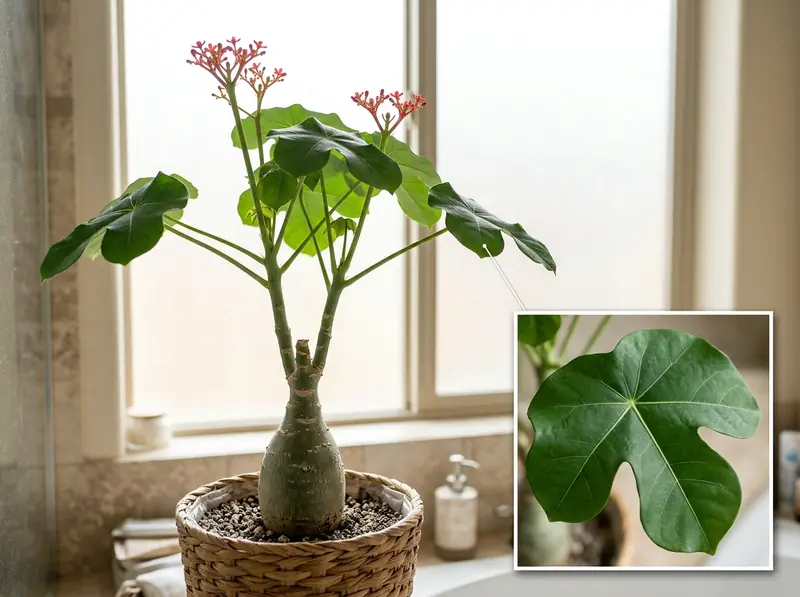 AI-generated
 AI-generated
 AI-generated
 AI-generated
 AI-generated