AI-generated image, not a photograph of this plant. Real plants look different depending on light, soil, temperature and age.
Common in stores
Compton Carousel Echeveria
Echeveria 'Compton Carousel'
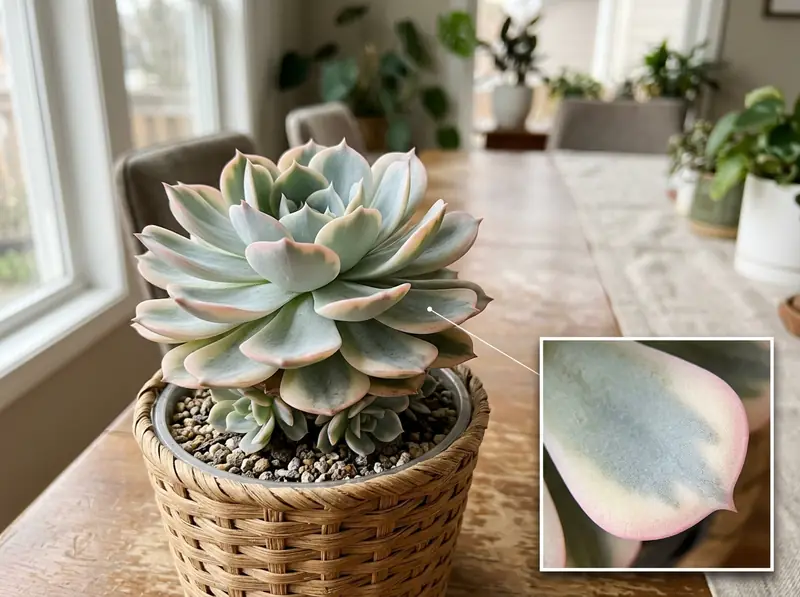
Compton Carousel is a small echeveria with a tidy rosette of silvery blue-green leaves edged in cream and pink. It needs lots of sun and a gritty, fast-draining soil, and it does best when allowed to dry out completely between waterings. It is slow-growing and easy to multiply from leaves and offsets.
Pets: not yet checked
💡
Saving is free with a KinClub account, and it works here and in the KinClub app. Sign up free
🪴 Care profile
Light
Direct sunLow → direct sun
Water
Let it dry outAbout every 14 days
Difficulty
ModerateTricky → easy
Coldest it tolerates
40°F
Humidity
Low
Mature size
SmallSmall → tree-size
Growth rate
Slow
How common
CommonRare → everywhere
🐾 Pets and toxicity
Cats and dogs: not yet checked
Not yet checked against ASPCA — don't assume it's safe for pets.
Give it at least 4-6 hours of direct sun, such as a south or west window, or bright light under a grow light. Turn the pot occasionally to keep the rosette even, and move it to full sun gradually.
Watering
Soak the soil thoroughly, then wait until it is completely dry before watering again, about every 10-14 days in summer. In winter, water only every 3-5 weeks, or less if it is cool.
Soil
Use a gritty cactus or succulent mix, ideally with extra pumice or coarse perlite (about half grit). Use a pot with drainage holes, and unglazed terracotta helps the soil dry faster.
Feeding
Feed in spring and summer with a cactus fertilizer or a balanced one diluted to half strength, once a month at most. Do not feed in fall and winter.
Repotting
Repot every 1-2 years in spring when it has outgrown the pot or offsets crowd it. Shake off the old soil, let cut roots dry a few days, and choose a pot only slightly wider than the rosette.
Propagation
Twist off healthy lower leaves, let the ends callus for a few days, and lay them on dry gritty soil, misting lightly when roots appear. You can also remove offsets with a bit of stem, or behead a leggy rosette and replant it.
Common problems
Stretched, leggy growth from low light: move to a sunnier window or add a grow light; behead and re-root the top if needed.
Soft, translucent leaves or a black stem from overwatering: stop watering, unpot, cut away rot and repot in dry gritty mix.
Mealybugs in the crevices of the rosette: dab with a cotton swab dipped in rubbing alcohol and repeat weekly until gone.
Shriveling and dropping of lower leaves is normal as the plant ages, but if upper leaves also wrinkle, give a deep watering.
Sunburn after a sudden move into strong sun: shade a little and reintroduce sun over 1-2 weeks; scarred leaves will not recover.

 AI-generated
 AI-generated
 AI-generated
 AI-generated
 AI-generated