
 AI-generated
Desert Rose
Adenium obesum
Also known as Desert Azalea, Mock Azalea, Sabi Star, Impala Lily, Kudu Lily
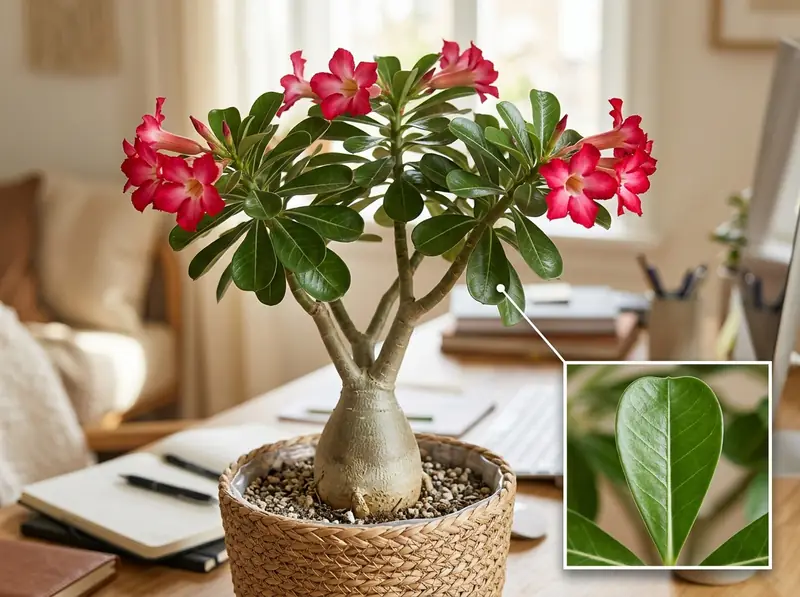
Desert rose is a succulent with a swollen, sculptural trunk and showy pink, red or white flowers that bloom in warm, sunny conditions. It needs several hours of direct sun, very gritty soil, and careful watering, especially a near-dry rest in winter. Keep it warm above 50°F, and it will reward you with flowers for much of the growing season.
Saving is free with a KinClub account, and it works here and in the KinClub app. Sign up free
Care profile
- Light
- Direct sunLow → direct sun
- Water
- Let it dry outAbout every 10 days
- Difficulty
- ModerateTricky → easy
- Coldest it tolerates
- 50°F
- Humidity
- Low
- Mature size
- MediumSmall → tree-size
- Growth rate
- Slow to moderate
- How common
- EnthusiastRare → everywhere
- Plant family
- Apocynaceae
Pets and toxicity
Toxic to cats
Keep away from cats. Call your vet or a pet poison helpline if a cat chews it.
Toxic to dogs
Keep away from dogs. Call your vet or a pet poison helpline if a dog chews it.
Source: ASPCA toxic and non-toxic plants. If a pet eats any houseplant, call your vet or an animal poison helpline.
How to care for Desert Rose
Light
Give at least 4-6 hours of direct sun daily, ideally in a south- or west-facing window or outdoors in summer. Move it to full sun gradually over a week or two to avoid leaf scorch.
Watering
During spring and summer, soak the soil thoroughly, then wait until it is completely dry before watering again, usually every 7-14 days. In winter, when it is dormant and leafless, water very little or not at all.
Soil
Use a gritty cactus and succulent mix, ideally with extra perlite or pumice (about half by volume). Choose a pot with drainage holes; an unglazed terracotta pot helps the soil dry faster.
Feeding
Feed every 2-4 weeks in spring and summer with a half-strength fertilizer higher in phosphorus (such as 5-10-10 or a bloom formula). Stop feeding in fall and winter.
Repotting
Repot every 2-3 years in spring, only moving up 1-2 inches in pot size, as it flowers best when slightly snug. Wait a few days after repotting before watering and handle the trunk and roots gently.
Propagation
Seeds sown fresh in warm, gritty mix germinate readily, though plants vary. Stem cuttings can be rooted in spring or summer after letting the cut dry for several days, but the plants often do not form the same swollen trunk. Grafting is used for named flower varieties.
Common problems
- Yellowing leaves in fall and winter: normal dormancy in cool conditions, so cut back watering and keep the plant dry.
- Soft, mushy trunk: rot from overwatering; unpot, cut away any soft tissue, let it dry, and repot in fresh gritty mix if the plant is firm.
- No flowers: usually too little sun or too much nitrogen fertilizer; increase direct sunlight and switch to a bloom fertilizer.
- Sticky leaves, white cottony spots or fine webbing: aphids, mealybugs or spider mites; wipe with rubbing alcohol on a cotton swab or spray with insecticidal soap, and repeat weekly.
Similar plants
Same light needs and difficulty.
 AI-generated
 AI-generated
 AI-generated
 AI-generated