AI-generated image, not a photograph of this plant. Real plants look different depending on light, soil, temperature and age.
AsparagaceaeEnthusiast in stores
Dragon Blood Tree
Dracaena draco
Also known as Dracaena boerhaavei, Dracaena resinifera, Dracaena yucciformis, Yucca draco
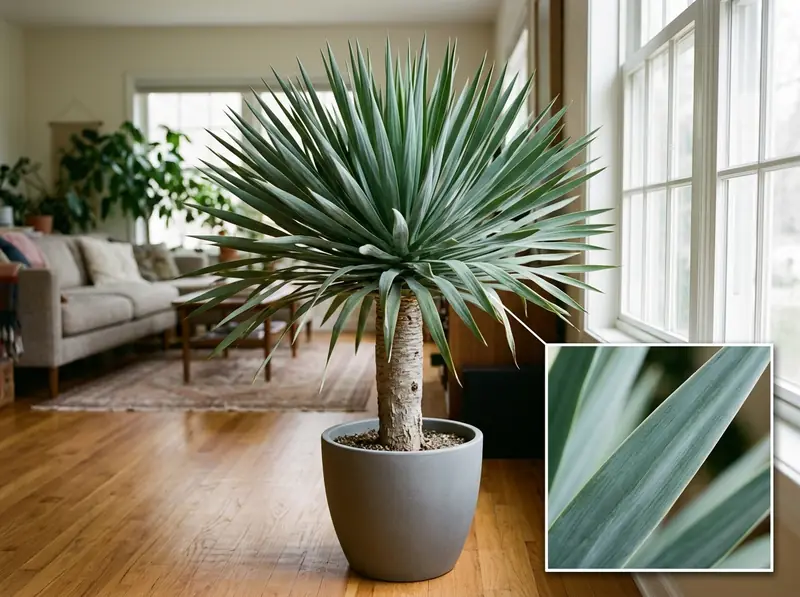
The Canary Islands dragon tree, famous for its umbrella crown and red resin. As a houseplant it grows very slowly with sword-shaped, blue-green leaves. It likes sun and a pot that drains well.
Toxic to cats and dogs
💡
Saving is free with a KinClub account, and it works here and in the KinClub app. Sign up free
🪴 Care profile
Light
Direct sunLow → direct sun
Water
Dry to moderate wateringAbout every 14 days
Difficulty
Easy to moderateTricky → easy
Coldest it tolerates
45°F
Humidity
Low
Mature size
Tree-sizeSmall → tree-size
Growth rate
Slow
How common
EnthusiastRare → everywhere
Plant family
Asparagaceae
🐾 Pets and toxicity
Toxic to cats
Keep away from cats. Call your vet or a pet poison helpline if a cat chews it.
Toxic to dogs
Keep away from dogs. Call your vet or a pet poison helpline if a dog chews it.
Needs bright light, including several hours of direct sun, to keep its blue-green leaves compact. A south or west window is ideal, with gradual acclimation to summer sun.
Watering
Water thoroughly when the top 2 inches of soil are dry, about every 2 weeks in the growing season. In winter water only every 3 to 4 weeks. It tolerates short dry spells better than wet soil.
Soil
Use a well-draining mix of potting soil and perlite or pumice in a heavy pot with drainage holes.
Feeding
Feed with a half-strength balanced fertilizer every 6 weeks in spring and summer.
Repotting
Repot every 3 years in spring when roots fill the pot; it grows slowly and prefers being slightly snug.
Propagation
Stem cuttings or air-layering are possible with warmth and patience; seed is slow. Callus cuttings before planting.
Common problems
Lower leaves dying back is normal, but widespread yellowing means overwatering.
Brown leaf tips come from dry soil or salts in tap water. Water deeply and use filtered water if possible.
Spider mites and scale show up in dry rooms. Wipe the leaves and treat promptly.

 AI-generated
 AI-generated
 AI-generated
 AI-generated
 AI-generated