AI-generated image, not a photograph of this plant. Real plants look different depending on light, soil, temperature and age.
Common in stores
Dwarf Cavendish Banana
Musa 'Dwarf Cavendish'
Dwarf Cavendish is a compact banana, growing about 4 to 8 feet tall indoors, with big tropical leaves. It needs a lot of sun, regular water and frequent feeding in summer. It grows fast, so expect to repot it once a year, and keep it away from cold drafts.
Pets: not yet checked
💡
Saving is free with a KinClub account, and it works here and in the KinClub app. Sign up free
🪴 Care profile
Light
Direct sunLow → direct sun
Water
Keep moistAbout every 5 days
Difficulty
ModerateTricky → easy
Coldest it tolerates
50°F
Humidity
High
Mature size
Large to tree-sizeSmall → tree-size
Growth rate
Fast
How common
CommonRare → everywhere
🐾 Pets and toxicity
Cats and dogs: not yet checked
Not yet checked against ASPCA — don't assume it's safe for pets.
No toxicity source on record for this plant yet. If a pet eats any houseplant, call your vet or an animal poison helpline.
🌿 How to care for Dwarf Cavendish Banana
Light
Give it at least 6 hours of direct sun, such as an unobstructed south or west window. In low winter light, add a grow light for 12 hours a day.
Watering
Water when the top inch of soil feels dry, which is often every 4 to 7 days in summer. Water thoroughly until it drains, then empty the saucer. Cut back in winter, when growth slows.
Soil
Use a rich, loose potting mix with added perlite or bark, about 2 parts mix to 1 part perlite. The pot must have drainage holes.
Feeding
Feed every 2 weeks in spring and summer with a balanced liquid fertiliser at half strength, ideally one with extra potassium. Stop or reduce feeding in winter.
Repotting
Repot every year in spring into a pot 2 to 4 inches wider, as it is a fast grower. Plants are often moved up to a 12 to 15 inch pot and then kept there.
Propagation
Separate pups (suckers) when they are 1 to 2 feet tall and have their own roots. Cut them from the parent with a clean sharp knife and pot them up on their own.
Common problems
Brown leaf edges: usually dry air or irregular watering. Mist, group it with other plants or use a humidifier, and water evenly.
Yellow lower leaves: often overwatering or cold. Let the top inch dry and keep the plant above 60°F.
Torn or split leaves: normal for bananas, made worse by wind or drafts. Move it out of the airflow.
Spider mites (fine webbing, stippled leaves): wipe the leaves, rinse them, and use insecticidal soap weekly until they are gone.
Little or no fruit indoors: it rarely fruits inside. Grow it for its foliage.

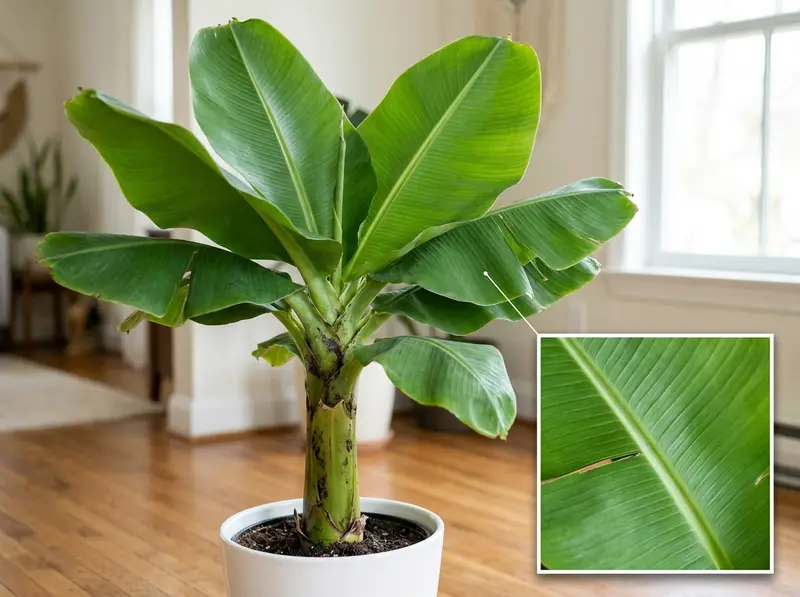 AI-generated
 AI-generated
 AI-generated
 AI-generated
 AI-generated