
 AI-generated
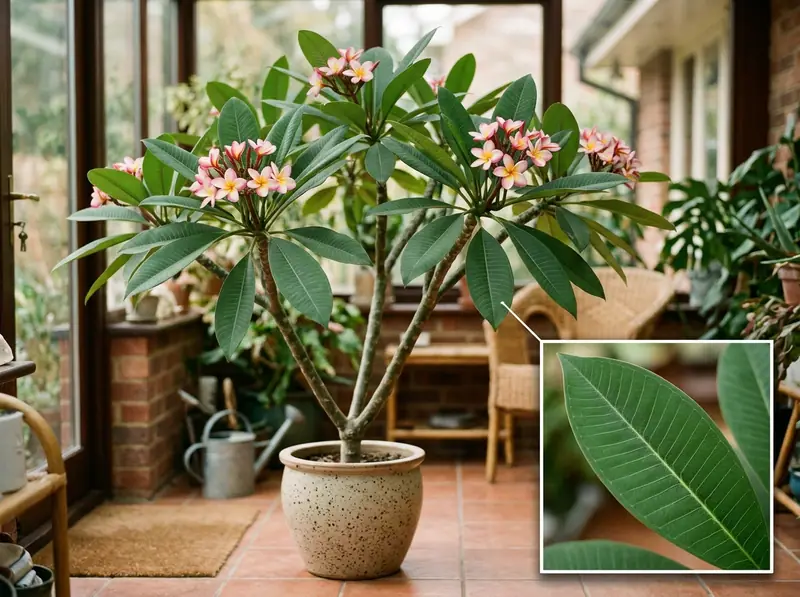
Frangipani
Plumeria rubra
Frangipani is a sun-loving tropical tree grown for its fragrant, waxy flowers in pink, white, yellow or red. Indoors it needs the sunniest window you have, a gritty fast-draining mix, and a dry, leafless winter rest. With those conditions it is fairly easy and can bloom in summer.
Saving is free with a KinClub account, and it works here and in the KinClub app. Sign up free
Care profile
- Light
- Direct sunLow → direct sun
- Water
- Let it dry outAbout every 10 days
- Difficulty
- ModerateTricky → easy
- Coldest it tolerates
- 50°F
- Humidity
- Low to medium
- Mature size
- Tree-sizeSmall → tree-size
- Growth rate
- Moderate
- How common
- CommonRare → everywhere
- Plant family
- Apocynaceae
Pets and toxicity
Cats and dogs: not yet checked
Not yet checked against ASPCA — don't assume it's safe for pets.
No toxicity source on record for this plant yet. If a pet eats any houseplant, call your vet or an animal poison helpline.
How to care for Frangipani
Light
Give it at least 6 hours of direct sun a day, such as a south- or west-facing window or a sunny patio in summer. Acclimate it to stronger sun over a week or two to avoid leaf scorch.
Watering
In spring and summer, water thoroughly when the soil is dry down to 2-3 inches, roughly every 7-14 days, then empty the saucer. In winter dormancy, water only a little once a month or not at all.
Soil
Use a fast-draining cactus mix with extra perlite or pumice added, about one part grit to two parts mix. Choose a pot with large drainage holes; terracotta helps the soil dry.
Feeding
From spring to late summer, feed every 2-4 weeks with a high-phosphorus fertilizer (for example 10-30-10) at half strength to encourage blooms. Stop feeding in fall.
Repotting
Repot every 2-3 years in spring into a pot only 2 inches wider, as plumeria flowers best when slightly root-bound. Handle the brittle roots and stems gently.
Propagation
Take 12-18 inch tip cuttings in late spring, let the cut end dry and callus for 1-2 weeks, then plant in gritty mix and keep barely damp in a warm, sunny spot. Rooting takes 4-8 weeks.
Common problems
- Leaves drop in fall or winter: this is normal dormancy. Reduce water and keep the plant dry and warm until spring.
- Trunk base is soft or black: this is rot from overwatering. Cut off healthy tip cuttings above the rot and re-root them in dry gritty mix.
- No flowers: usually too little sun or too much nitrogen. Move to a sunnier spot and switch to a high-phosphorus fertilizer.
- Spider mites or whiteflies on leaves: spray with water, then treat with insecticidal soap weekly until clear.
- Rust-colored powder under leaves: this is frangipani rust fungus. Remove affected leaves, keep foliage dry and improve air flow.
Similar plants
Same light needs and difficulty.
 AI-generated
 AI-generated
 AI-generated
 AI-generated