AI-generated image, not a photograph of this plant. Real plants look different depending on light, soil, temperature and age.
ApocynaceaeEnthusiast in stores
Geay's Pachypodium
Pachypodium geayi
Geay's Pachypodium, or Madagascar palm relative, is a spiny, silvery-grey succulent trunk topped with long, narrow leaves. It needs lots of direct sun, very gritty soil and sparing water, and it drops its leaves in winter as part of a normal rest. It grows slowly into a dramatic floor plant over time.
Pets: not yet checked
💡
Saving is free with a KinClub account, and it works here and in the KinClub app. Sign up free
🪴 Care profile
Light
Direct sunLow → direct sun
Water
Let it dry outAbout every 14 days
Difficulty
ModerateTricky → easy
Coldest it tolerates
50°F
Humidity
Low
Mature size
Large to tree-sizeSmall → tree-size
Growth rate
Slow to moderate
How common
EnthusiastRare → everywhere
Plant family
Apocynaceae
🐾 Pets and toxicity
Cats and dogs: not yet checked
Not yet checked against ASPCA — don't assume it's safe for pets.
No toxicity source on record for this plant yet. If a pet eats any houseplant, call your vet or an animal poison helpline.
🌿 How to care for Geay's Pachypodium
Light
Give it as much direct sun as you can, ideally 4-6 hours or more from a south- or west-facing window. Introduce it to stronger sun gradually to avoid leaf scorch.
Watering
During spring and summer growth, soak thoroughly and then let the soil dry out completely, usually every 10-18 days. When it sheds leaves in winter, water only a little about once a month, or not at all if the room is cool.
Soil
Use a very gritty cactus and succulent mix, with about 50-70% pumice, perlite or coarse sand. Use a pot with drainage holes, ideally unglazed clay.
Feeding
Feed with a half-strength cactus or balanced fertiliser about once a month from spring to late summer while it has leaves. Do not feed in autumn and winter.
Repotting
Repot every 2-3 years in spring, only moving up one pot size, as it resents root disturbance. Choose a heavy, stable pot because the plant becomes top-heavy.
Propagation
It is mainly grown from fresh seed, sown in warm, gritty, lightly moist mix. Cuttings are unreliable and usually rot, so buying a plant is the easiest route.
Common problems
Leaf drop in winter is normal dormancy; reduce watering and keep the plant warm and bright until new leaves appear in spring.
Soft, mushy trunk from overwatering or cold, wet soil; stop watering, and if the rot is extensive the plant is hard to save, so always let the soil dry fully.
Leggy, leaning growth from low light; move it to the sunniest window or add a grow light.
Mealybugs in leaf joints and spines; dab with cotton swabs dipped in rubbing alcohol and repeat weekly until gone.
Brown leaf scorch after a sudden move to strong sun; acclimate gradually over 1-2 weeks.

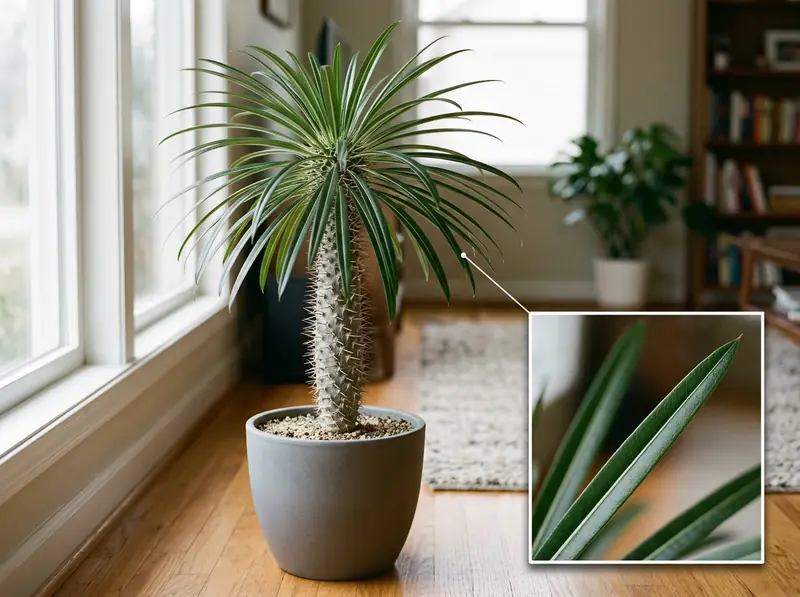 AI-generated
 AI-generated
 AI-generated
 AI-generated
 AI-generated