AI-generated image, not a photograph of this plant. Real plants look different depending on light, soil, temperature and age.
AizoaceaeEnthusiast in stores
Karas Mountains Living Stones
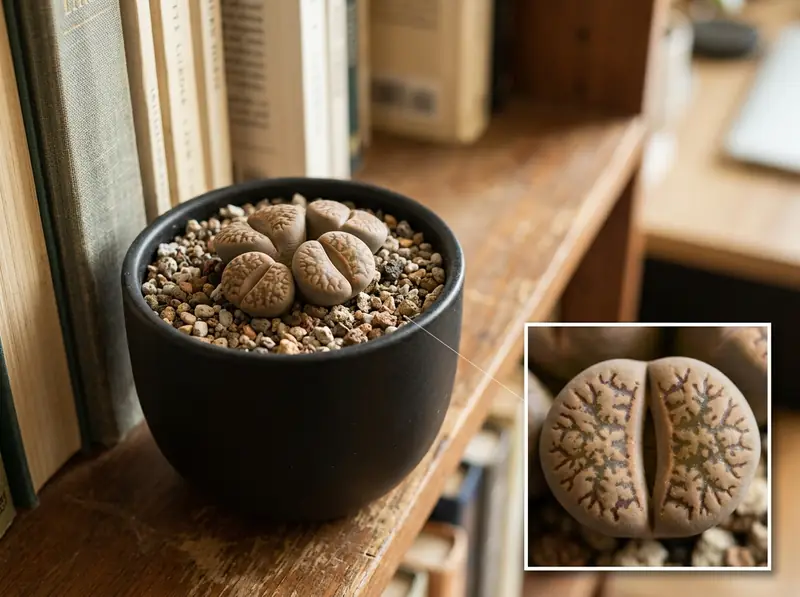
Lithops karasmontana
Karas Mountains Living Stones are tiny succulents from southern Africa that look like pebbles, usually grey-brown with darker window patterns. They need strong sun, a gritty mix and very little water, with watering timed to their cycle, not to a calendar. Overwatering is the main cause of loss, so keep them dry when they are dormant or shedding old leaves.
Pets: not yet checked
💡
Saving is free with a KinClub account, and it works here and in the KinClub app. Sign up free
🪴 Care profile
Light
Direct sunLow → direct sun
Water
Let it dry outAbout every 21 days
Difficulty
Moderate to challengingTricky → easy
Coldest it tolerates
40°F
Humidity
Low
Mature size
SmallSmall → tree-size
Growth rate
Slow
How common
EnthusiastRare → everywhere
Plant family
Aizoaceae
🐾 Pets and toxicity
Cats and dogs: not yet checked
Not yet checked against ASPCA — don't assume it's safe for pets.
No toxicity source on record for this plant yet. If a pet eats any houseplant, call your vet or an animal poison helpline.
🌿 How to care for Karas Mountains Living Stones
Light
Give at least 4-6 hours of direct sun, such as a south or west window, or strong grow lights. Introduce a plant that has been in lower light to full sun gradually over a couple of weeks.
Watering
Water thoroughly only in autumn and early winter when the plant is actively growing and the soil has been dry for days, roughly every 3 weeks. Give no water from late autumn through winter while the old leaves are splitting, and little in summer, when it is dormant.
Soil
Use a very gritty, fast-draining mix, about 70-80% mineral grit such as pumice, coarse sand or perlite, with a little cactus mix. Use a shallow pot with drainage holes.
Feeding
Feeding is not needed. If you want to, give one dose of a low-nitrogen cactus fertiliser at quarter strength during the autumn growing period.
Repotting
Repot only every 2-3 years or when crowded, in late spring or summer, when the plant is dormant and dry. Shake off old soil gently and keep the pot shallow and only slightly wider than the clump.
Propagation
Seed is the usual method and is slow: sow on fine grit, keep moist and warm, and expect several years to reach a good size. Mature clumps can be divided carefully, but each head needs its own roots.
Common problems
Splitting or rotting bodies: caused by too much water, especially in winter or summer. Stop watering, let the soil dry out fully, and repot into grittier mix if rot has started.
Stretched, pale bodies: not enough light. Move to the sunniest window or add a grow light. Stretched growth will not shrink back.
Wrinkled bodies in summer: normal dormancy. Keep dry and do not water to fix it.
Mealybugs on the roots or between the leaf pair: dab with rubbing alcohol on a cotton swab, and repot with fresh grit if the roots are affected.
Fungus gnats: soil is staying wet too long. Let it dry out fully and use a grittier mix.

 AI-generated
 AI-generated
 AI-generated
 AI-generated
 AI-generated