
 AI-generated
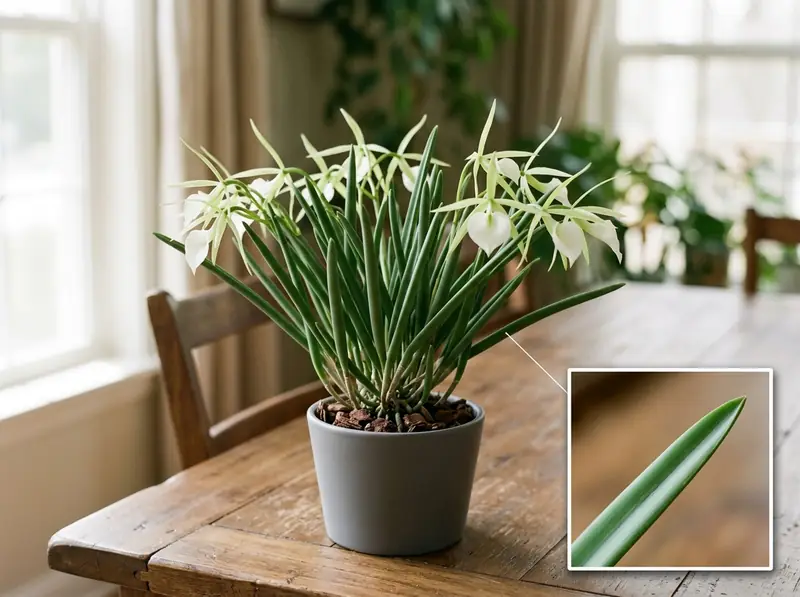
Lady of the Night
Brassavola nodosa
Lady of the Night is a compact Central American orchid with slender, pencil-like leaves. It produces fragrant white, spidery flowers that smell strongest at night. It needs lots of light, a coarse mix or mount, and a dry spell between waterings. With that, it is a rewarding orchid to bloom at home.
Saving is free with a KinClub account, and it works here and in the KinClub app. Sign up free
Care profile
- Light
- Direct sunLow → direct sun
- Water
- Let it dry outAbout every 7 days
- Difficulty
- Easy to moderateTricky → easy
- Coldest it tolerates
- 50°F
- Humidity
- Medium to high
- Mature size
- SmallSmall → tree-size
- Growth rate
- Slow to moderate
- How common
- CommonRare → everywhere
- Plant family
- Orchidaceae
Pets and toxicity
Cats and dogs: not yet checked
Not yet checked against ASPCA — don't assume it's safe for pets.
No toxicity source on record for this plant yet. If a pet eats any houseplant, call your vet or an animal poison helpline.
How to care for Lady of the Night
Light
Give it very bright light, including a few hours of direct sun from an east, west or lightly shaded south window. Healthy leaves are a light, yellowish olive-green rather than dark green.
Watering
In the growing season, water thoroughly about once a week, or whenever the mix has dried fully. Let it dry quickly after each watering. In winter, cut back to every 2 to 3 weeks, giving just enough to keep the leaves from shriveling.
Soil
Use a coarse, fast-draining orchid mix of large bark chunks, perlite and charcoal, or mount it on cork or tree fern. The roots need air and dry quickly between waterings.
Feeding
In spring and summer, feed every 2 weeks with orchid fertilizer diluted to quarter or half strength. Once a month, flush the pot with plain water to clear salt buildup. Stop feeding or feed very little in winter.
Repotting
Repot only every 2 to 3 years, when the mix breaks down or the plant outgrows its pot. Do it after flowering or when new roots start to grow. It blooms best when somewhat crowded.
Propagation
Divide large clumps into sections of at least 3 to 4 pseudobulbs or leaves in spring. Keep the divisions fairly dry until new roots form. Keikis are rare.
Common problems
- No flowers: usually not enough light. Move it to a brighter window with some direct sun, and give it cooler nights in autumn.
- Shriveled leaves: the roots have rotted or dried out. Check them, trim any dead roots, and repot in fresh bark.
- Scale or mealybugs on the leaves: dab with rubbing alcohol on a cotton swab and repeat weekly until clear.
- Leaf scorch: move it back a little from the glass at midday, or filter the hottest summer sun with a sheer curtain.
Similar plants
Same light needs and difficulty.
 AI-generated
 AI-generated
 AI-generated
 AI-generated