AI-generated image, not a photograph of this plant. Real plants look different depending on light, soil, temperature and age.
RutaceaeCommon in stores
Orange Jessamine
Murraya paniculata
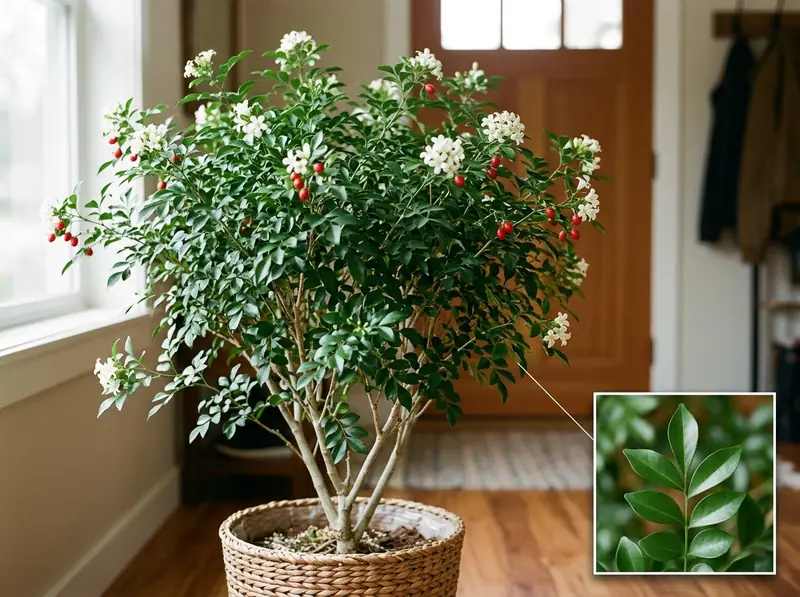
Orange jessamine is a glossy-leaved evergreen shrub that bears clusters of white, orange-blossom-scented flowers, often several times a year, followed by small red berries. It needs a sunny window and steady watering, and it can be pruned into a compact shrub or small tree. It is a little fussy about light and moves, but it is rewarding when well placed.
Pets: not yet checked
💡
Saving is free with a KinClub account, and it works here and in the KinClub app. Sign up free
🪴 Care profile
Light
Direct sunLow → direct sun
Water
Moderate wateringAbout every 7 days
Difficulty
ModerateTricky → easy
Coldest it tolerates
50°F
Humidity
Medium to high
Mature size
LargeSmall → tree-size
Growth rate
Moderate to fast
How common
CommonRare → everywhere
Plant family
Rutaceae
🐾 Pets and toxicity
Cats and dogs: not yet checked
Not yet checked against ASPCA — don't assume it's safe for pets.
No toxicity source on record for this plant yet. If a pet eats any houseplant, call your vet or an animal poison helpline.
🌿 How to care for Orange Jessamine
Light
Give it at least 4-6 hours of direct sun, such as a south or west window. It tolerates bright indirect light but will flower much less.
Watering
Water thoroughly when the top inch of soil feels dry, about once a week in summer, and let excess drain away. Water less in winter, but don't let the root ball dry out completely.
Soil
Use a well-draining potting mix, such as standard potting soil with about a quarter perlite or coarse sand added. Choose a pot with drainage holes.
Feeding
Feed every 2-4 weeks from spring through summer with a balanced fertilizer diluted to half strength. Stop or cut back to once every 6-8 weeks in winter.
Repotting
Repot every 2-3 years in spring into a pot only 1-2 inches wider, as it flowers best when slightly root-bound. In between, refresh the top couple of inches of soil.
Propagation
Take 4-6 inch semi-ripe stem cuttings in summer, dip them in rooting hormone and keep them in a warm, humid spot. Rooting can take 4-8 weeks. Seeds from the red fruit also sprout, but the plants are slower to flower.
Common problems
Leaf drop after a move or a cold draft: keep the plant in a steady, warm spot away from vents and cold glass, and avoid moving it often.
No flowers: usually too little light or too much nitrogen; move it to a sunnier window and prune lightly after flowering.
Yellowing leaves: often overwatering or poor drainage; let the top inch dry out and check the drainage holes.
Sticky leaves or webbing: aphids, scale or spider mites; wipe with soapy water or apply insecticidal soap every 7 days until clear.
Leggy growth: pinch back the tips in spring to encourage a fuller, bushier shape.

 AI-generated
 AI-generated
 AI-generated
 AI-generated
 AI-generated