AI-generated image, not a photograph of this plant. Real plants look different depending on light, soil, temperature and age.
ArecaceaeVery common in stores
Pygmy Date Palm
Phoenix roebelenii
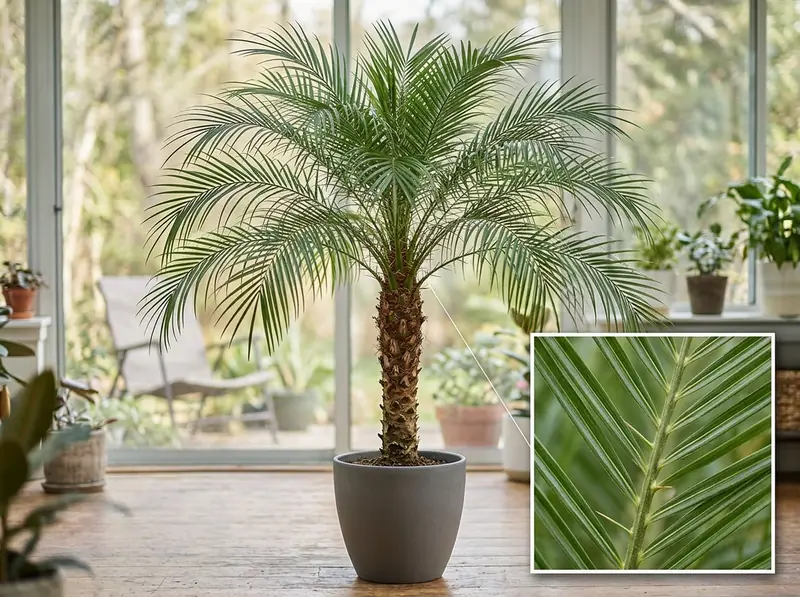
Pygmy date palm is a graceful, slow-growing palm with feathery arching fronds that suits a bright, sunny room. It needs plenty of light, steady watering and a little patience, and it can reach 3-6 feet indoors. Take care around its sharp spines at the base of the fronds.
Pets: not yet checked
💡
Saving is free with a KinClub account, and it works here and in the KinClub app. Sign up free
🪴 Care profile
Light
Bright, indirect to direct sunLow → direct sun
Water
Moderate wateringAbout every 7 days
Difficulty
ModerateTricky → easy
Coldest it tolerates
45°F
Humidity
Medium
Mature size
Large to tree-sizeSmall → tree-size
Growth rate
Slow
How common
Very commonRare → everywhere
Plant family
Arecaceae
🐾 Pets and toxicity
Cats and dogs: not yet checked
Not yet checked against ASPCA — don't assume it's safe for pets.
No toxicity source on record for this plant yet. If a pet eats any houseplant, call your vet or an animal poison helpline.
🌿 How to care for Pygmy Date Palm
Light
Give it at least 4-6 hours of bright light, ideally direct sun from a south or west window. Turn the pot a quarter turn every week or two so fronds grow evenly.
Watering
Water thoroughly when the top 1-2 inches of soil feel dry, usually about every 7-10 days in summer, and let excess drain away. Water less in winter, but never let the root ball dry out completely.
Soil
Use a well-draining potting mix, such as a palm or cactus blend or regular mix with about 20-30% perlite or coarse sand. The pot must have drainage holes.
Feeding
Feed monthly in spring and summer with a balanced or palm fertilizer at half strength. Skip feeding in fall and winter. Palms can show nutrient deficiency as frizzled or yellow new fronds.
Repotting
Repot only every 2-3 years in spring, going up just 1-2 inches in pot diameter. Palms dislike root disturbance, so handle the root ball gently and don't bury the trunk deeper.
Propagation
It is grown from seed, which is slow and erratic, often taking 2-3 months or longer to germinate with warm soil. Division is rarely successful, although some plants form several trunks that stay together.
Common problems
Brown leaf tips: caused by dry air, inconsistent watering or fertilizer salts. Water evenly, flush the soil occasionally, and trim only the brown tips.
Spider mites and fine webbing: common in dry heated rooms. Rinse fronds in the shower and wipe them, then repeat weekly and raise the humidity.
Yellowing lower fronds: often from overwatering or age. Let the soil dry more between waterings and remove fronds only when fully yellow or brown.
Sharp spines at the frond base: handle with care and wear gloves when repotting or pruning, and place it away from walkways.
Frond browning after a move: sudden changes in light or drafts stress it. Acclimate gradually and avoid cold drafts and heating vents.

 AI-generated
 AI-generated
 AI-generated
 AI-generated
 AI-generated