
 AI-generated
Tongue Leaf
Glottiphyllum linguiforme
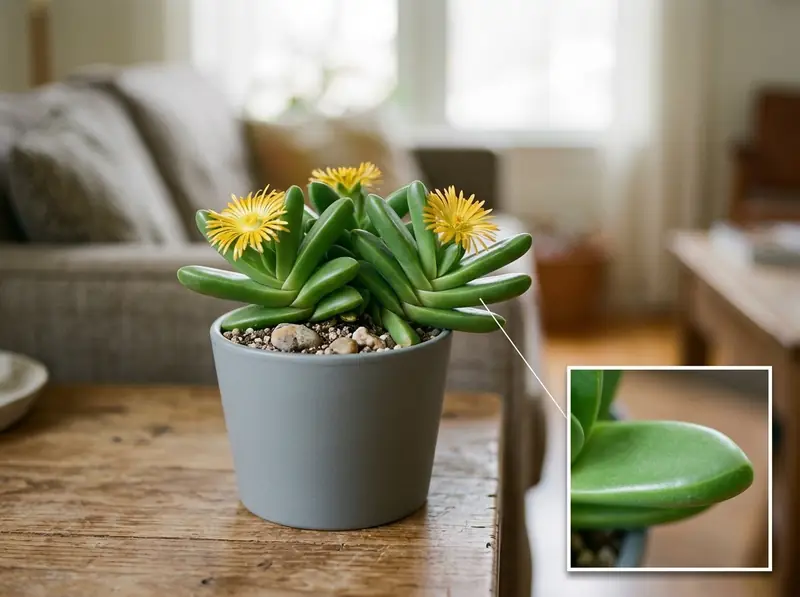
Tongue leaf is a small succulent with thick, glossy, tongue-shaped leaves in pairs and golden daisy-like flowers in fall. It rests in summer and grows in the cool months, which makes its watering seasonal.
Saving is free with a KinClub account, and it works here and in the KinClub app. Sign up free
Care profile
- Light
- Direct sunLow → direct sun
- Water
- Let it dry outAbout every 21 days
- Difficulty
- Easy to moderateTricky → easy
- Coldest it tolerates
- 45°F
- Humidity
- Low
- Mature size
- SmallSmall → tree-size
- Growth rate
- Slow to moderate
- How common
- EnthusiastRare → everywhere
- Plant family
- Aizoaceae
Pets and toxicity
Cats and dogs: not yet checked
Not yet checked against ASPCA — don't assume it's safe for pets.
No toxicity source on record for this plant yet. If a pet eats any houseplant, call your vet or an animal poison helpline.
How to care for Tongue Leaf
Light
Provide bright light with several hours of direct sun in a south or west window. Strong light keeps the leaves compact and flowering.
Watering
Water when the soil is dry through, about every 3 weeks in fall to spring when it grows. Keep it nearly dry in summer.
Soil
Use a very gritty cactus mix with extra pumice or sand, in a shallow pot with drainage holes.
Feeding
Feed once or twice in fall and spring with a diluted cactus fertilizer; skip summer.
Repotting
Repot every 2 to 3 years in early fall, using a shallow pot that is just larger than the clump.
Propagation
Divide the clump or root leaf-pair cuttings in dry gritty mix in fall; they root fairly easily.
Common problems
- Rot from summer watering: keep the pot dry while the plant rests.
- Mealybugs between leaf pairs: dab with rubbing alcohol and repeat weekly.
- Weak, floppy growth means too little light: move it to full sun.
Similar plants
Same light needs and difficulty.
 AI-generated
 AI-generated
 AI-generated
 AI-generated