
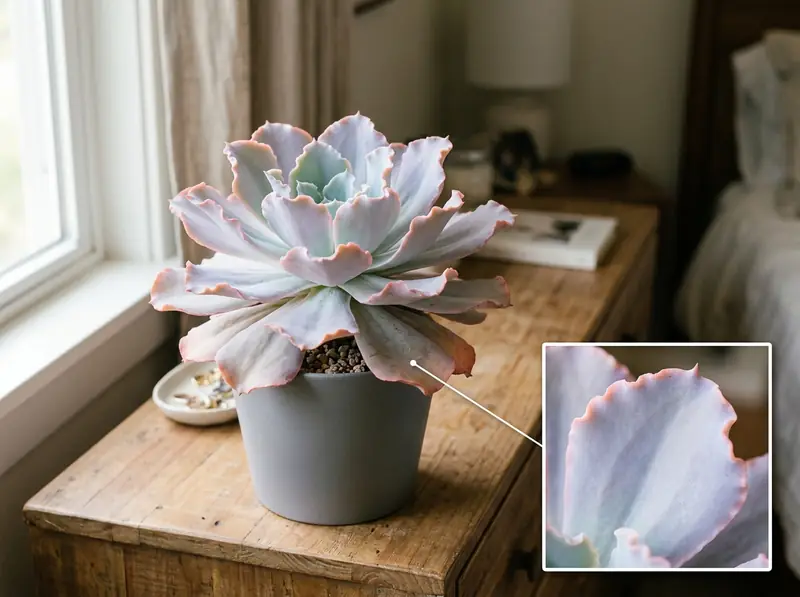
 AI-generated
Afterglow Echeveria
Echeveria 'Afterglow'
A large, ruffled echeveria hybrid with pastel peach, pink, and lavender rosettes. It is easy if it gets strong sun and very little water. Best on a bright sill in a gritty pot.
Saving is free with a KinClub account, and it works here and in the KinClub app. Sign up free
Care profile
- Light
- Direct sunLow → direct sun
- Water
- Let it dry outAbout every 14 days
- Difficulty
- EasyTricky → easy
- Coldest it tolerates
- 40°F
- Humidity
- Low
- Mature size
- SmallSmall → tree-size
- Growth rate
- Slow to moderate
- How common
- CommonRare → everywhere
Pets and toxicity
Cats and dogs: not yet checked
Not yet checked against ASPCA — don't assume it's safe for pets.
Source: ASPCA toxic and non-toxic plants. If a pet eats any houseplant, call your vet or an animal poison helpline.
How to care for Afterglow Echeveria
Light
Needs at least 4-6 hours of bright light, including some direct sun, to keep a tight rosette and the peach-pink color. A south or west window works; add a grow light in winter.
Watering
Soak the soil fully, then wait until it is completely dry, about every 2 weeks in summer and every 4-6 weeks in winter. Keep water off the rosette, which can rot at the center.
Soil
Use a gritty cactus mix with extra pumice or perlite, in a pot with a drainage hole. Terra-cotta helps the soil dry quickly.
Feeding
Feed once or twice in spring and summer with a half-strength cactus fertilizer. Do not feed in winter.
Repotting
Repot every 2 years in spring into a pot only slightly wider. Wait a week before watering so any damaged roots heal.
Propagation
Twist off a healthy leaf, let the end callus for 2-3 days, and set it on dry gritty soil. Pups can also be cut off and planted.
Common problems
- Stretched, leggy growth: not enough light. Move it to the brightest window and behead the rosette to restart it.
- Mealybugs hide in the leaf joints: dab each one with rubbing alcohol on a cotton swab and repeat weekly.
- Lower leaves rotting: overwatering or water pooling in the rosette. Let the pot dry fully and water at the soil level.
Similar plants
Same light needs and difficulty.
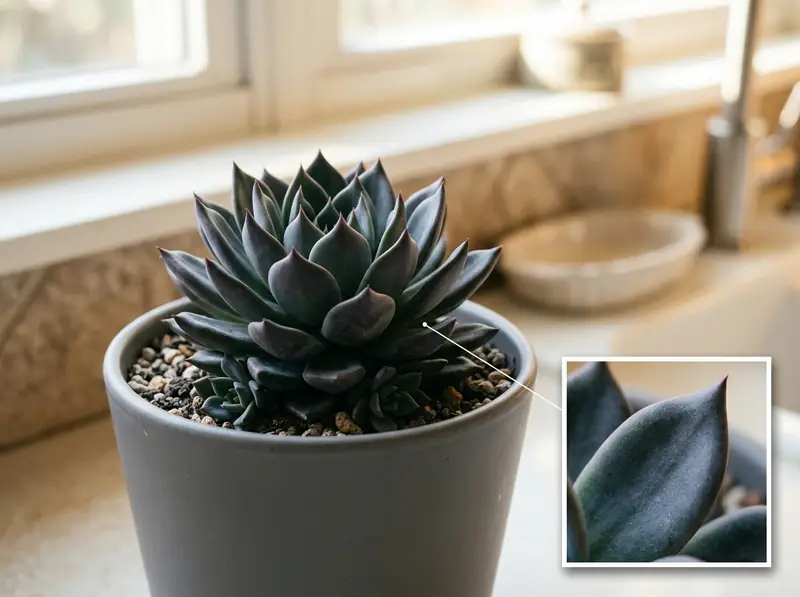 AI-generated
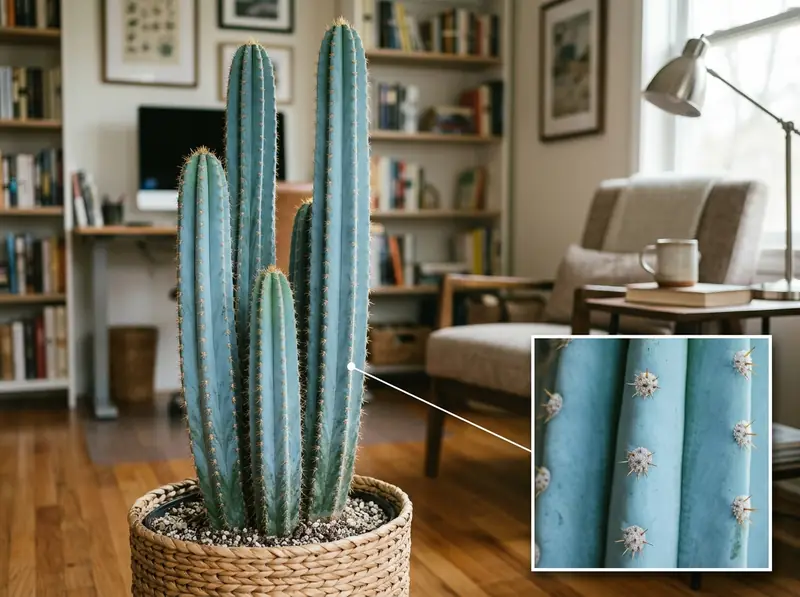 AI-generated
 AI-generated
 AI-generated