
 AI-generated
Jade Plant
Crassula ovata
Also known as Chinese Jade, Silver Jade Plant, Silver Dollar, Baby Jade, Dwarf rubber plant, Jade tree, Chinese rubber plant, Japanese rubber plant, Crassula arborescens, Crassula argentea
Jade plant is a slow-growing succulent with thick, glossy oval leaves and woody stems that age into a small tree shape. It is forgiving of neglect if it gets plenty of sun and is watered only when fully dry. With good light it can live for decades and grow to about 2-3 feet indoors.
Saving is free with a KinClub account, and it works here and in the KinClub app. Sign up free
Care profile
- Light
- Direct sunLow → direct sun
- Water
- Let it dry outAbout every 18 days
- Difficulty
- EasyTricky → easy
- Coldest it tolerates
- 45°F
- Humidity
- Low
- Mature size
- Medium to largeSmall → tree-size
- Growth rate
- Slow
- How common
- EverywhereRare → everywhere
- Plant family
- Crassulaceae
Pets and toxicity
Toxic to cats
Keep away from cats. Call your vet or a pet poison helpline if a cat chews it.
Toxic to dogs
Keep away from dogs. Call your vet or a pet poison helpline if a dog chews it.
Source: ASPCA toxic and non-toxic plants. If a pet eats any houseplant, call your vet or an animal poison helpline.
How to care for Jade Plant
Light
Give it at least 4-6 hours of bright light, ideally direct morning or afternoon sun from a south or west window. Turn the pot a quarter turn every week or two to keep growth even.
Watering
Water thoroughly until it drains, then wait until the soil is completely dry through the pot, usually every 2-3 weeks in summer. In winter, water only about every 4-6 weeks, just enough to keep leaves from wrinkling.
Soil
Use a gritty cactus or succulent mix, or add about one-third perlite or coarse sand to regular potting soil. Choose a pot with a drainage hole; unglazed clay helps the soil dry faster.
Feeding
Feed with a half-strength balanced fertilizer or cactus fertilizer about once a month from spring through summer. Do not feed in fall and winter.
Repotting
Repot only every 2-4 years in spring, when the plant is top-heavy or roots fill the pot. Use a heavy pot only slightly larger so the plant does not tip over.
Propagation
Twist off a healthy leaf or cut a stem tip 3-4 inches long. Let the cut end callus for several days, then set it on or in dry succulent mix and water lightly only after roots form in 2-4 weeks.
Common problems
- Shriveled, wrinkled leaves: the plant is thirsty, so water deeply and then return to a dry-between-waterings routine.
- Mushy stem or yellow leaves: this is rot from too much water; cut off healthy tops to root and discard the rotted parts.
- Leggy, stretched stems: move it to a sunnier window and prune back to a branching point.
- White cottony clusters in leaf joints are mealybugs; dab them with cotton swabs dipped in rubbing alcohol and repeat weekly.
- Leaf drop in winter: often caused by cold drafts or overwatering, so keep it above 45°F and reduce watering.
Similar plants
Same light needs and difficulty.
 AI-generated
 AI-generated
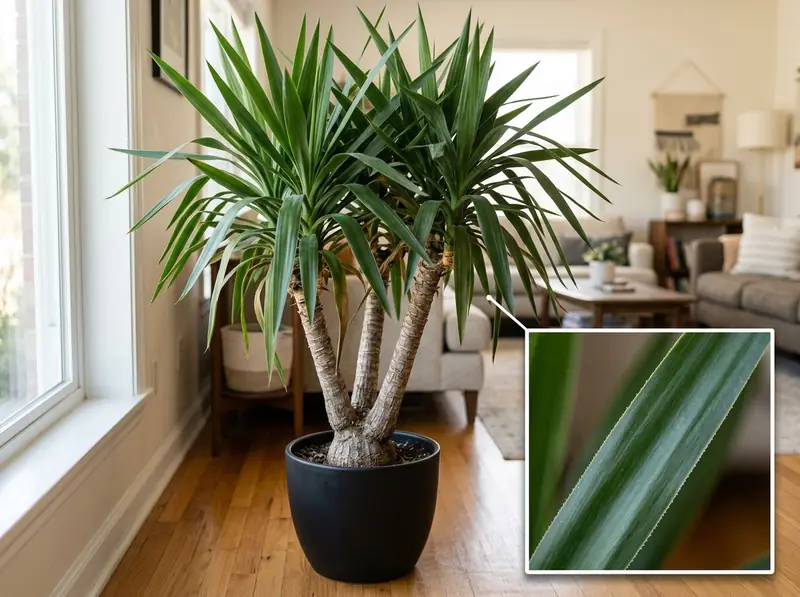
Spineless Yucca
Yucca elephantipes
- Bright, indirect to direct sun
- Let it dry out
Toxic to cats and dogs AI-generated
 AI-generated