
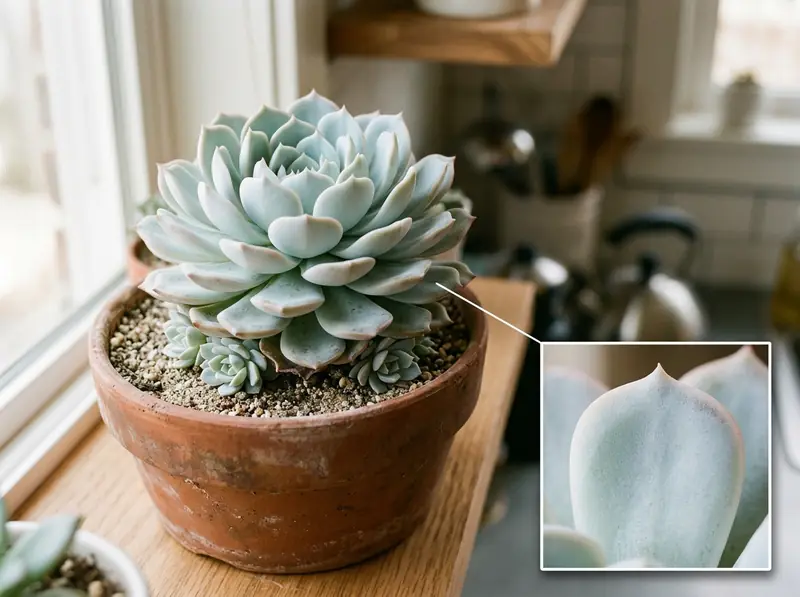
 AI-generated
Mexican Snowball
Echeveria elegans
Also known as Chickens and Hens, Hens and Chickens, Mother Hens and Chicks, Urbinia Agavoides
Mexican Snowball is a compact rosette succulent with plump, silvery blue-green leaves, often producing pink and yellow flowers on arching stems in spring. It is easy to grow if given lots of sun and a gritty, fast-draining mix, and the main risk is overwatering. It slowly makes offsets, so it is simple to share or multiply.
Saving is free with a KinClub account, and it works here and in the KinClub app. Sign up free
Care profile
- Light
- Direct sunLow → direct sun
- Water
- Let it dry outAbout every 14 days
- Difficulty
- EasyTricky → easy
- Coldest it tolerates
- 40°F
- Humidity
- Low
- Mature size
- SmallSmall → tree-size
- Growth rate
- Slow
- How common
- EverywhereRare → everywhere
- Plant family
- Crassulaceae
Pets and toxicity
Non-toxic to cats
Listed as non-toxic to cats by the ASPCA.
Non-toxic to dogs
Listed as non-toxic to dogs by the ASPCA.
Source: ASPCA toxic and non-toxic plants. If a pet eats any houseplant, call your vet or an animal poison helpline.
How to care for Mexican Snowball
Light
Give it at least 4-6 hours of bright light, including some direct sun, such as a south or west window. Move it gradually to stronger sun to avoid scorch.
Watering
Soak the soil thoroughly, then wait until it is completely dry before watering again, usually every 2-3 weeks in summer. In winter, water only about once a month or less.
Soil
Use a gritty cactus and succulent mix, ideally with extra perlite or pumice (about half mineral grit). The pot must have drainage holes, and terracotta helps the soil dry faster.
Feeding
Feed with a diluted cactus fertilizer at quarter to half strength once a month in spring and summer. Do not feed in fall and winter.
Repotting
Repot every 2-3 years in spring, or when offsets crowd the pot. Choose a pot only slightly wider than the rosette, and let the plant sit dry for a few days before watering.
Propagation
Twist off a healthy leaf, let the end callus for 2-3 days, and lay it on dry gritty soil. Or remove offsets (pups) with a bit of stem and pot them up once calloused.
Common problems
- Stretched, leggy growth from low light: move to a sunnier spot, and behead and re-root the rosette if needed.
- Soft, mushy leaves or stem rot from overwatering: remove rotted tissue, let it dry, and re-root the healthy top in dry mix.
- Mealybugs in leaf crevices look like white cotton: dab with rubbing alcohol on a cotton swab and repeat weekly.
- Lower leaves drying and shriveling is normal as the rosette ages: gently pull off the dead leaves to prevent pests and rot.
- Loss of the powdery coating on the leaves from handling or water splashes is permanent on those leaves, so avoid touching them.
Similar plants
Same light needs and difficulty.
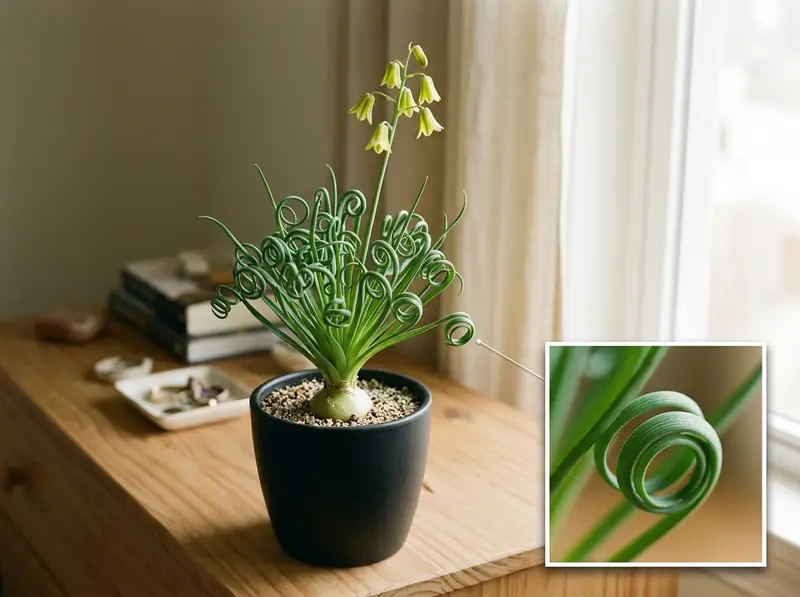 AI-generated
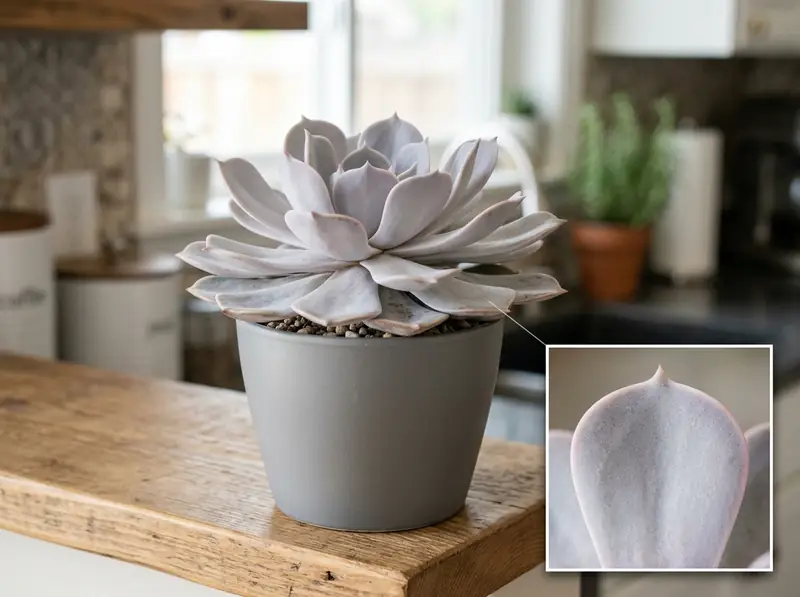 AI-generated
 AI-generated
 AI-generated