
 AI-generated
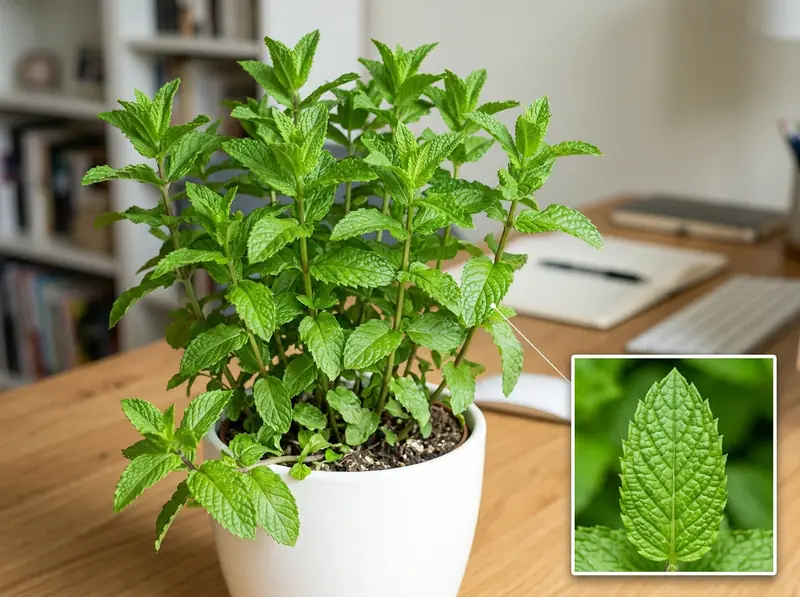
Spearmint
Mentha spicata
Also known as Mentha crispata, Mentha rubicunda
Spearmint is a fast-growing, fragrant herb that is easy to keep on a sunny kitchen windowsill. It wants lots of light and steady moisture, and it is best kept in its own pot because the roots spread aggressively. Pinch and harvest often to keep it full and flavorful.
Saving is free with a KinClub account, and it works here and in the KinClub app. Sign up free
Care profile
- Light
- Direct sunLow → direct sun
- Water
- Keep moistAbout every 3 days
- Difficulty
- EasyTricky → easy
- Coldest it tolerates
- 40°F
- Humidity
- Medium
- Mature size
- SmallSmall → tree-size
- Growth rate
- Fast
- How common
- Very commonRare → everywhere
- Plant family
- Lamiaceae
Pets and toxicity
Toxic to cats
Keep away from cats. Call your vet or a pet poison helpline if a cat chews it.
Toxic to dogs
Keep away from dogs. Call your vet or a pet poison helpline if a dog chews it.
Source: ASPCA toxic and non-toxic plants. If a pet eats any houseplant, call your vet or an animal poison helpline.
How to care for Spearmint
Light
Give it at least 4-6 hours of direct sun, such as a south or west window, or bright light under a grow light for 12-14 hours a day. With less light it grows leggy and loses flavor.
Watering
Keep the soil evenly damp like a wrung-out sponge, watering when the top half inch feels barely dry, about every 2-4 days in summer. Never let the pot sit in standing water, and water less in winter.
Soil
Use a standard peat- or coir-based potting mix with some perlite for drainage. It tolerates a rich, moisture-retentive mix as long as the pot has drainage holes.
Feeding
Feed every 3-4 weeks in spring and summer with a balanced liquid fertilizer at half the label strength. Skip feeding in winter, and avoid overfeeding, which dilutes flavor.
Repotting
Repot or divide every year in spring, as the roots fill the pot quickly. Move up to a pot 1-2 inches wider, or split the root ball and replant a portion in fresh mix.
Propagation
Cut a 4-6 inch stem below a node, strip the lower leaves and stand it in water; roots form in 1-2 weeks. Pot it once roots are about an inch long. Division also works easily.
Common problems
- Leggy, sparse growth: move to a sunnier spot or add a grow light, and pinch the tips regularly.
- Yellow lower leaves: usually overwatering or poor drainage; let the top of the soil dry slightly and empty the saucer.
- Spider mites (fine webbing, stippled leaves): rinse the plant in the shower and spray with insecticidal soap weekly.
- Woody, tired plant after a year or two: take cuttings to start fresh plants and cut back the old one hard.
- Rust or fungal spots on leaves: remove affected leaves, improve air flow and water at the soil level rather than over the foliage.
Similar plants
Same light needs and difficulty.
 AI-generated
 AI-generated
 AI-generated
 AI-generated
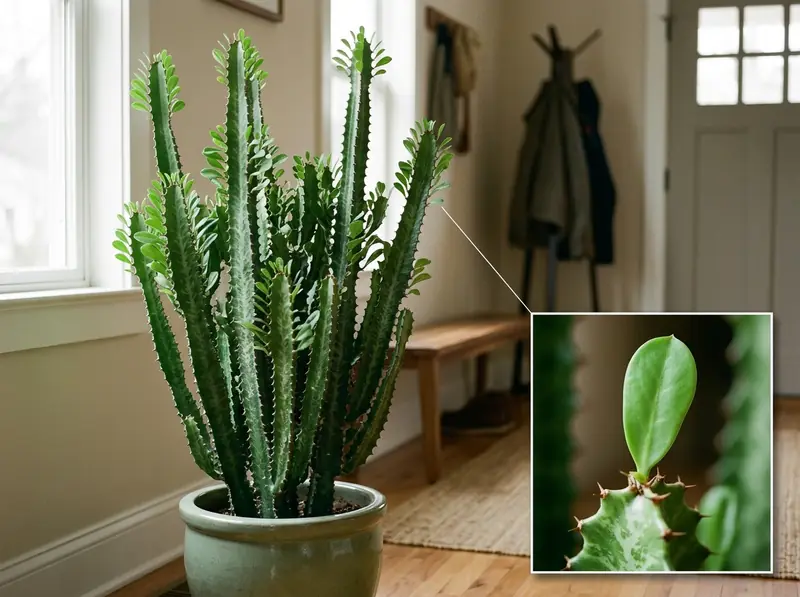
African Milk Tree
Euphorbia trigona
- Bright, indirect to direct sun
- Let it dry out
Pets: not yet checked