
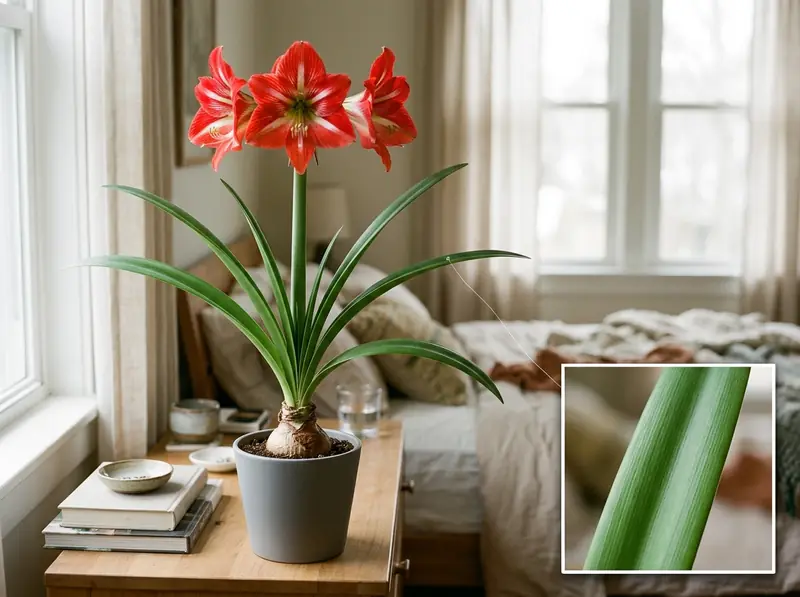
 AI-generated
Amaryllis
Hippeastrum hybrids
Amaryllis is a bulb grown for its huge trumpet-shaped flowers, usually in winter, on stalks about 1.5-2 feet tall. It is easy to bloom once and can rebloom yearly if you keep the leaves growing in summer and give the bulb a dry, cool rest in autumn.
Saving is free with a KinClub account, and it works here and in the KinClub app. Sign up free
Care profile
- Light
- Bright, indirect lightLow → direct sun
- Water
- Moderate wateringAbout every 7 days
- Difficulty
- EasyTricky → easy
- Coldest it tolerates
- 50°F
- Humidity
- Low to medium
- Mature size
- MediumSmall → tree-size
- Growth rate
- Moderate to fast
- How common
- Very commonRare → everywhere
- Plant family
- Amaryllidaceae
Pets and toxicity
Toxic to cats
Keep away from cats. Call your vet or a pet poison helpline if a cat chews it.
Toxic to dogs
Keep away from dogs. Call your vet or a pet poison helpline if a dog chews it.
Source: ASPCA toxic and non-toxic plants. If a pet eats any houseplant, call your vet or an animal poison helpline.
How to care for Amaryllis
Light
Give bright light, including a few hours of gentle direct sun from an east or south window, while growing and blooming. Once it flowers, move it out of hot direct sun so the blooms last longer.
Watering
Water sparingly until the flower stalk is 4-6 inches tall, then water when the top inch of soil is dry, roughly weekly. Pour water around the bulb rather than over it, and empty the saucer.
Soil
Use a well-draining potting mix with some perlite or coarse sand added. Plant the bulb with the top third to half of it above the soil line.
Feeding
Once the leaves are growing, feed every 2-4 weeks with a balanced or high-potash liquid fertiliser at half strength. Stop feeding in late summer when you begin the rest period.
Repotting
Amaryllis bloom best when slightly root-bound, so choose a pot only 1-2 inches wider than the bulb. Repot every 2-3 years in late winter, before new growth starts.
Propagation
Remove offset bulbs (pups) when repotting and pot them separately; they take 2-3 years to bloom. Growing from seed is possible but takes 4-6 years to flower.
Common problems
- No flowers next year: the bulb did not get enough leaf growth or rest. Keep leaves in bright light and feed through summer, then rest it dry for 8-10 weeks in a cool spot.
- Stalk falls over: the plant is getting too little light or has top-heavy blooms. Rotate the pot and use a stake.
- Red blotches on leaves or bulb (red blotch fungus): cut off affected tissue and keep the bulb's neck dry when watering.
- Leaves yellow after flowering: this is normal as the bulb rests, but if it happens early, check for soggy soil and bulb rot.
Similar plants
Same light needs and difficulty.
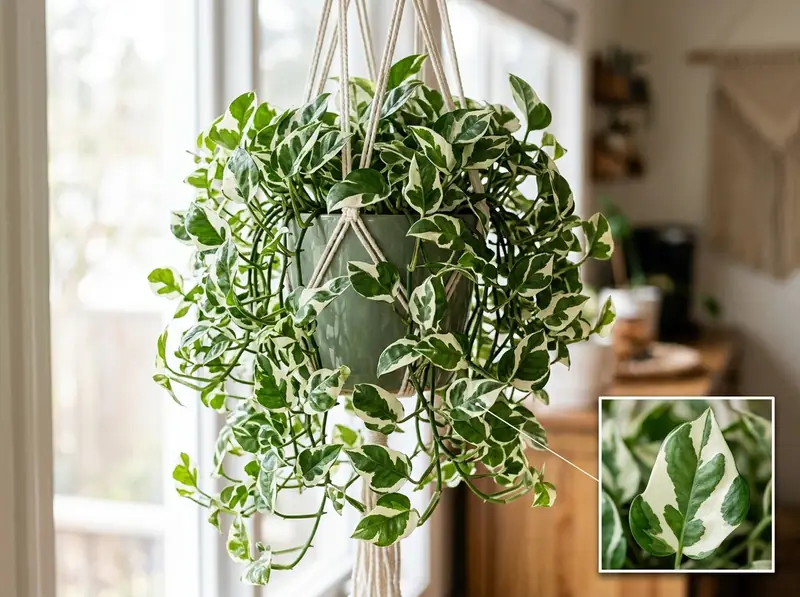 AI-generated
N'Joy Pothos
Epipremnum aureum 'N'Joy'
- Bright, indirect light
- Dry to moderate watering
Pets: not yet checked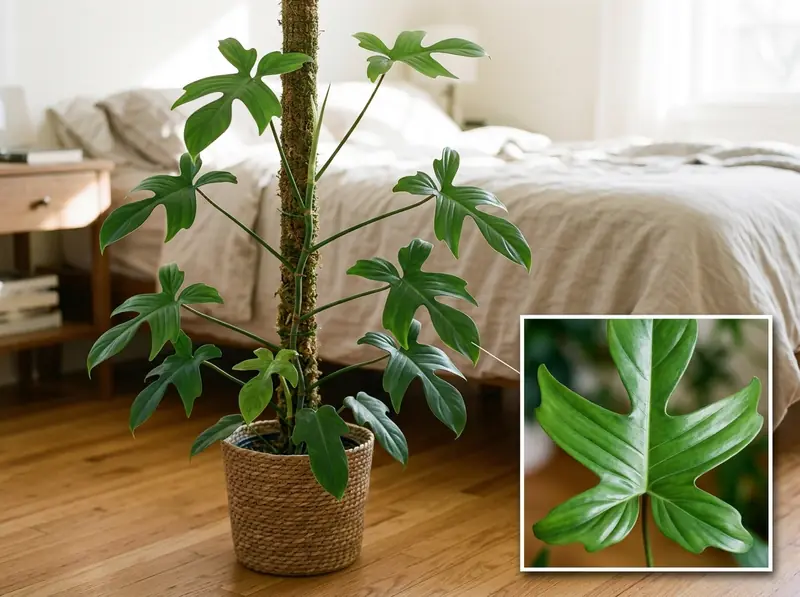 AI-generated
Oak Leaf Philodendron
Philodendron pedatum
- Bright, indirect light
- Moderate watering
Toxic to cats and dogs AI-generated
Chinese Money Plant
Pilea peperomioides
- Bright, indirect light
- Dry to moderate watering
Pets: not yet checked AI-generated
Christmas Cactus
Schlumbergera × buckleyi
- Bright, indirect light
- Moderate watering
Pets: not yet checked