
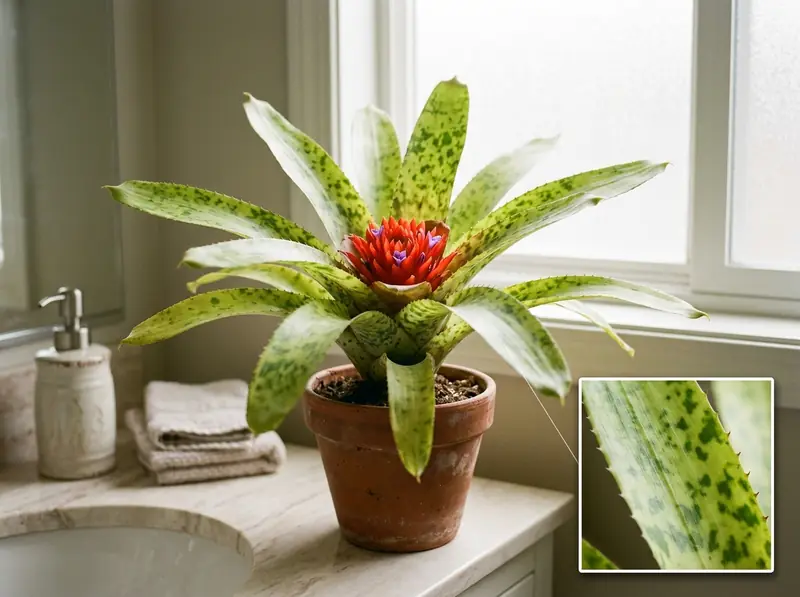
 AI-generated
Bird's Nest Bromeliad
Nidularium fulgens
Bird's Nest Bromeliad is a compact rosette of glossy green leaves whose center blushes bright red when it is about to flower. It is easy to grow in bright filtered light with a little water held in its central cup. After flowering, the main plant slowly fades while producing pups to replace it.
Saving is free with a KinClub account, and it works here and in the KinClub app. Sign up free
Care profile
- Light
- Medium to bright, indirect lightLow → direct sun
- Water
- Moderate wateringAbout every 7 days
- Difficulty
- EasyTricky → easy
- Coldest it tolerates
- 55°F
- Humidity
- Medium to high
- Mature size
- SmallSmall → tree-size
- Growth rate
- Slow
- How common
- CommonRare → everywhere
- Plant family
- Bromeliaceae
Pets and toxicity
Cats and dogs: not yet checked
Not yet checked against ASPCA — don't assume it's safe for pets.
No toxicity source on record for this plant yet. If a pet eats any houseplant, call your vet or an animal poison helpline.
How to care for Bird's Nest Bromeliad
Light
Give bright, filtered light or medium light, such as a spot a few feet from an east or shaded south window. Avoid direct midday sun, which scorches the leaves.
Watering
Keep the central cup about a quarter full of clean water, preferably rainwater or filtered water, and flush it every week or two. Water the potting mix lightly when the top inch is dry, roughly weekly in summer and less often in winter.
Soil
Use a very loose, airy mix such as orchid bark blended with a little peat-free potting soil and perlite. The roots mostly anchor the plant, so the mix must drain fast.
Feeding
Feed lightly during spring and summer with a balanced fertilizer diluted to quarter strength, applied to the soil or the cup about once a month. Do not feed in winter.
Repotting
Repot rarely, only when the plant is top-heavy or the pot is crowded, usually every 2 to 3 years. Choose a shallow pot only slightly larger than the old one.
Propagation
Separate pups when they are about one-third the size of the parent and have their own roots. Pot them in a loose mix and keep them lightly moist and warm until established.
Common problems
- Brown leaf tips: usually dry air or mineral-heavy tap water; switch to rainwater or filtered water and mist occasionally.
- Rotting center: caused by stagnant water in the cup or cold conditions; flush the cup regularly and keep the plant above 60°F.
- Mealybugs or scale on leaf bases: wipe them off with a cotton swab dipped in rubbing alcohol and repeat weekly until gone.
- Plant declines after flowering: this is normal for the mother plant; let pups grow and remove the old rosette once it fades.
Similar plants
Same light needs and difficulty.
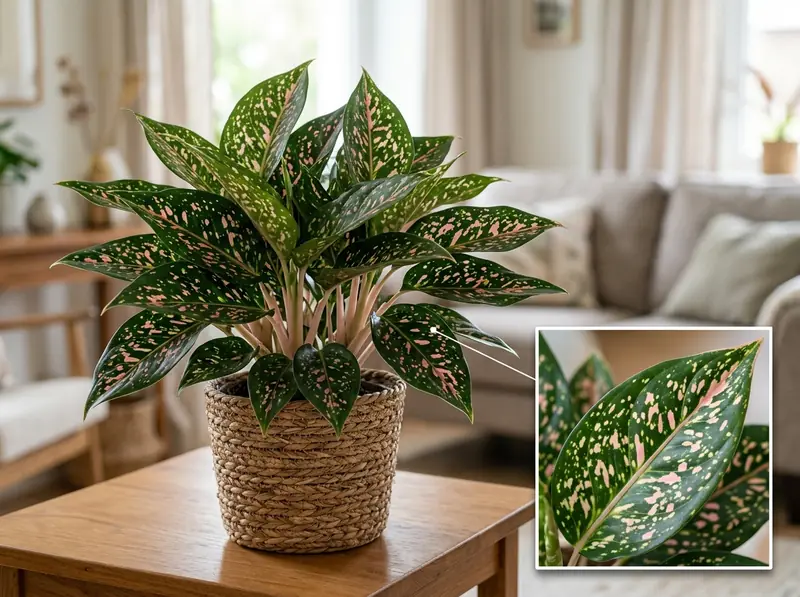 AI-generated
Pink Dalmatian Aglaonema
Aglaonema 'Pink Dalmatian'
- Medium light
- Moderate watering
Pets: not yet checked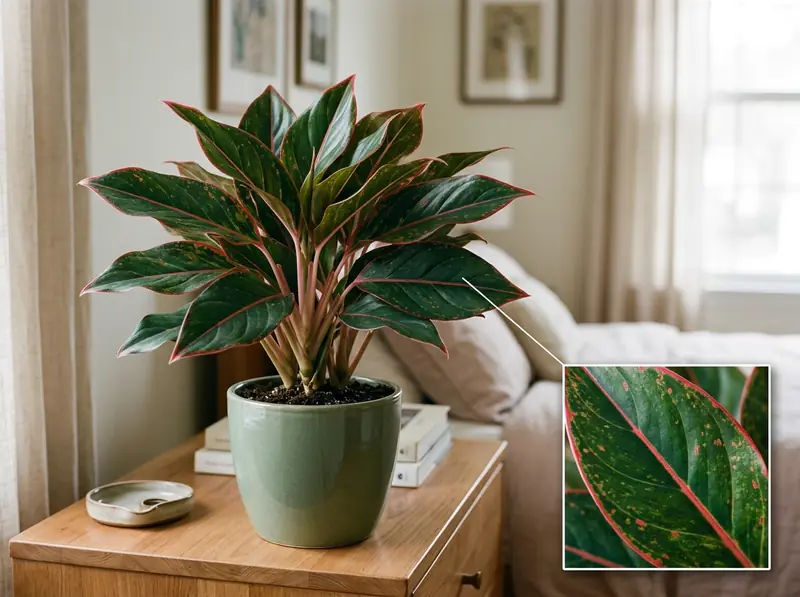 AI-generated
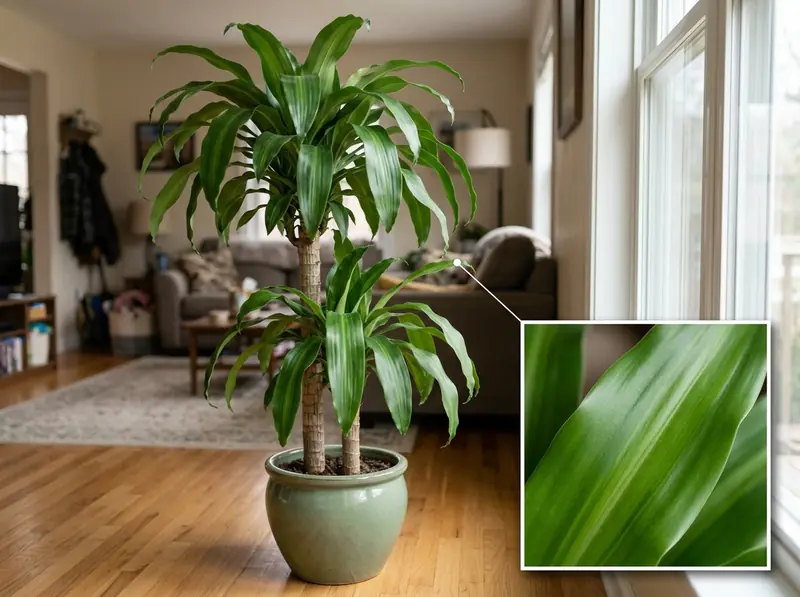 AI-generated
 AI-generated