
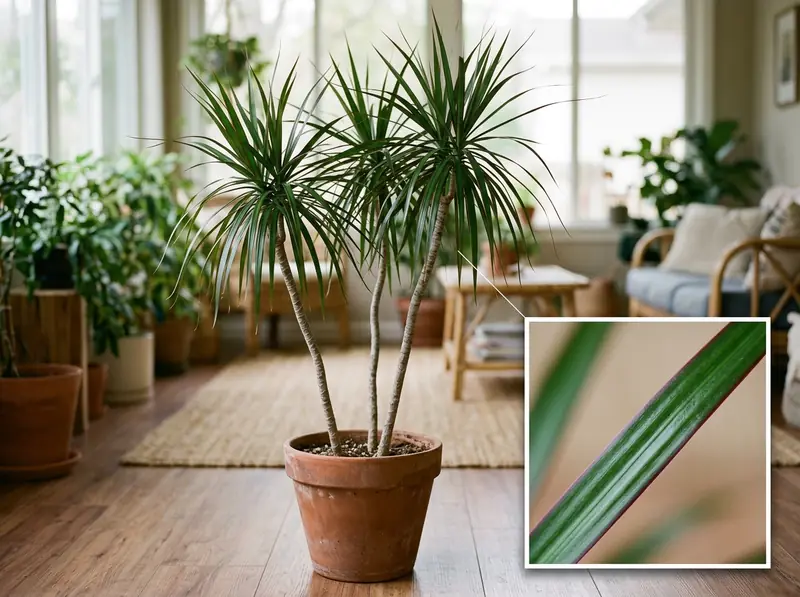
 AI-generated
Dragon Tree
Dracaena marginata
Also known as Madagascar Dragon Tree, Red-Marginated Dracaena, straight-marginated dracaena, Straight-Margined Dracaena, red-margined dracaena
Dragon tree is a tough, slow-growing plant with slender canes topped with arching, spiky leaves edged in red. It is forgiving of low light and missed waterings, making it a good choice for beginners. It can eventually reach 6 feet or more indoors and suits a floor pot in a bright corner.
Saving is free with a KinClub account, and it works here and in the KinClub app. Sign up free
Care profile
- Light
- Medium to bright, indirect lightLow → direct sun
- Water
- Let it dry outAbout every 14 days
- Difficulty
- EasyTricky → easy
- Coldest it tolerates
- 55°F
- Humidity
- Low to medium
- Mature size
- Tree-sizeSmall → tree-size
- Growth rate
- Slow
- How common
- EverywhereRare → everywhere
- Plant family
- Asparagaceae
Pets and toxicity
Toxic to cats
Keep away from cats. Call your vet or a pet poison helpline if a cat chews it.
Toxic to dogs
Keep away from dogs. Call your vet or a pet poison helpline if a dog chews it.
Source: ASPCA toxic and non-toxic plants. If a pet eats any houseplant, call your vet or an animal poison helpline.
How to care for Dragon Tree
Light
Give it bright, indirect light for the best color, though it tolerates medium and fairly dim rooms. Avoid hours of direct midday sun, which scorches the leaves.
Watering
Water thoroughly when the top 1-2 inches of soil are dry, about every 10-14 days in the growing season, and less in winter. Empty the saucer so the roots never sit in water.
Soil
Use a well-draining potting mix, such as standard indoor mix with about a quarter perlite or coarse sand added. The pot must have drainage holes.
Feeding
Feed with a balanced liquid houseplant fertilizer at half strength about once a month from spring to late summer. Do not feed in fall and winter.
Repotting
Repot only every 2-3 years, in spring, when roots crowd the pot. Move up just 1-2 inches in pot diameter, since it likes being slightly root-bound.
Propagation
Cut a section of cane 4-6 inches long, or take a stem tip, and keep it upright in moist soil or water. Roots usually form in 4-8 weeks in a warm spot.
Common problems
- Brown leaf tips: often fluoride or salts in tap water or dry soil; use filtered or rainwater and flush the soil occasionally.
- Yellow lower leaves: usually overwatering or natural aging; let the soil dry more between waterings and remove old leaves only when they are fully yellow.
- Spider mites (fine webbing, stippled leaves): wipe leaves, rinse the plant, and treat with insecticidal soap every week for a few weeks.
- Leggy, bare cane: normal as it grows; cut the top back to a leaf node in spring and new shoots will sprout below the cut.
Similar plants
Same light needs and difficulty.
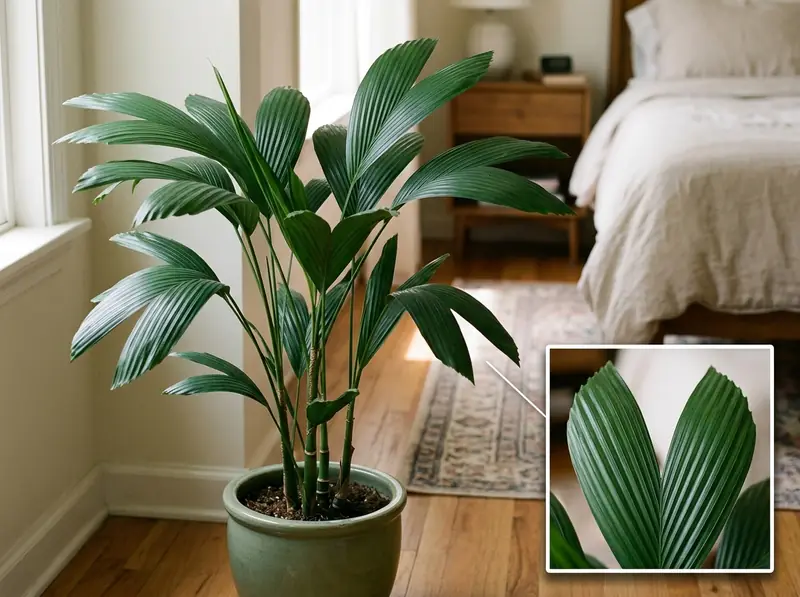 AI-generated
Ernest Augustus Palm
Chamaedorea ernesti-augusti
- Low to medium light
- Moderate watering
Pets: not yet checked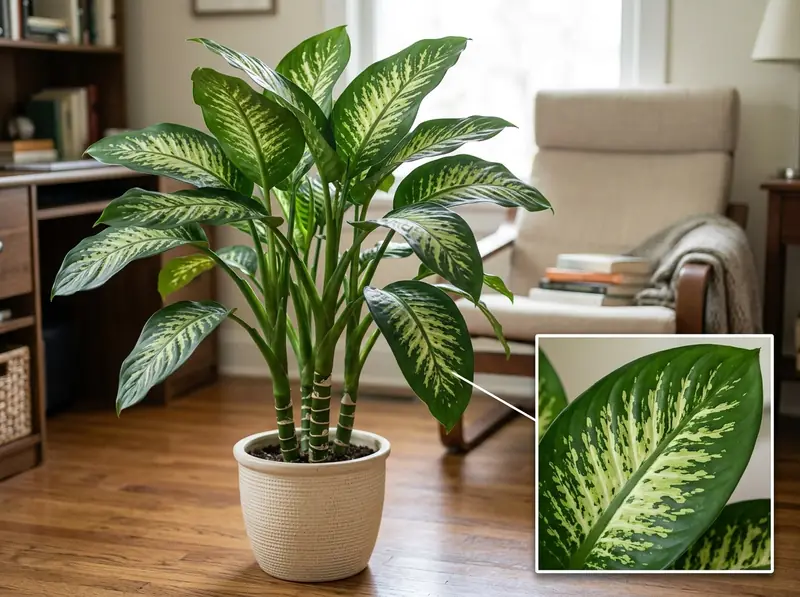 AI-generated
Giant Dumb Cane
Dieffenbachia amoena
- Medium to bright, indirect light
- Moderate watering
Toxic to cats and dogs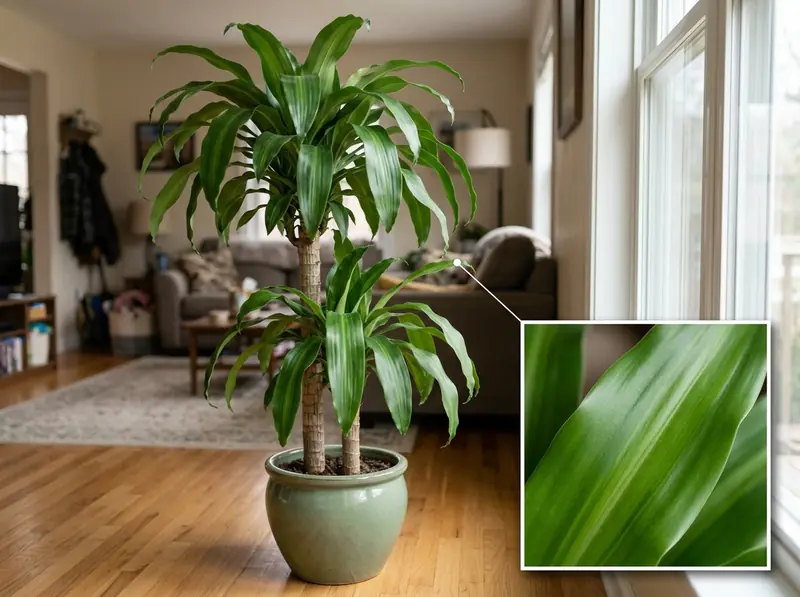 AI-generated
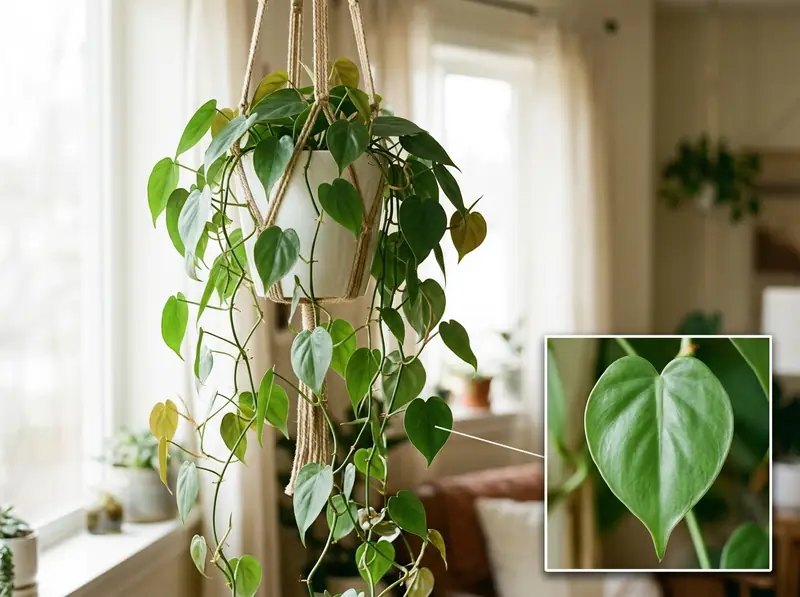 AI-generated
Heartleaf Philodendron
Philodendron hederaceum
- Low to medium light
- Moderate watering
Toxic to cats and dogs