
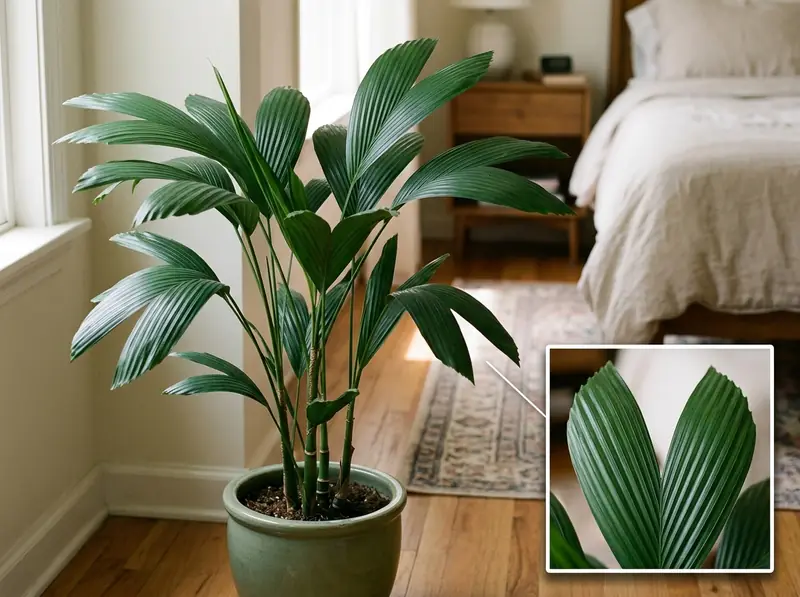
 AI-generated
Ernest Augustus Palm
Chamaedorea ernesti-augusti
Ernest Augustus palm is a compact, slow-growing Chamaedorea from Philippine forests with broad, undivided, fishtail-shaped fronds on slender cane-like stems. It is easy to keep in low to medium light and average home temperatures. Water when the top inch or two is dry, and keep it out of direct sun and cold drafts.
Saving is free with a KinClub account, and it works here and in the KinClub app. Sign up free
Care profile
- Light
- Low to medium lightLow → direct sun
- Water
- Moderate wateringAbout every 10 days
- Difficulty
- Easy to moderateTricky → easy
- Coldest it tolerates
- 55°F
- Humidity
- Medium to high
- Mature size
- Medium to largeSmall → tree-size
- Growth rate
- Slow
- How common
- CommonRare → everywhere
- Plant family
- Arecaceae
Pets and toxicity
Cats and dogs: not yet checked
Not yet checked against ASPCA — don't assume it's safe for pets.
No toxicity source on record for this plant yet. If a pet eats any houseplant, call your vet or an animal poison helpline.
How to care for Ernest Augustus Palm
Light
Grows well in low to medium light, such as a spot a few feet from an east or north window. Keep it out of direct sun, which scorches the fronds.
Watering
Water when the top 1 to 2 inches of soil are dry, about every 7 to 14 days in the growing season. Water until it drains freely and empty the saucer, and water less in winter.
Soil
Use a well-draining, peat- or coir-based houseplant mix with some perlite or bark added. Make sure the pot has drainage holes.
Feeding
Feed monthly in spring and summer with a balanced liquid houseplant fertilizer at half strength. Skip feeding in fall and winter.
Repotting
Repot only every 2 to 3 years when roots crowd the pot, moving up one size (about 2 inches wider). It resents root disturbance, so be gentle and keep the crown at the same soil depth.
Propagation
Propagation is done from seed, which is slow and unreliable at home, or by carefully dividing a mature clump with several stems and their own roots. Most owners simply buy a new plant.
Common problems
- Brown leaf tips: caused by dry air, fluoride or salts in tap water, or irregular watering; flush the soil and use filtered or rainwater if possible.
- Spider mites (fine webbing, stippled leaves): wipe fronds and rinse them, then treat with insecticidal soap weekly until clear.
- Yellowing lower fronds: often overwatering or poor drainage; let the soil dry more between waterings and check the roots.
- Pale, bleached fronds: too much direct light; move the plant back from the window.
Similar plants
Same light needs and difficulty.
 AI-generated
 AI-generated
 AI-generated
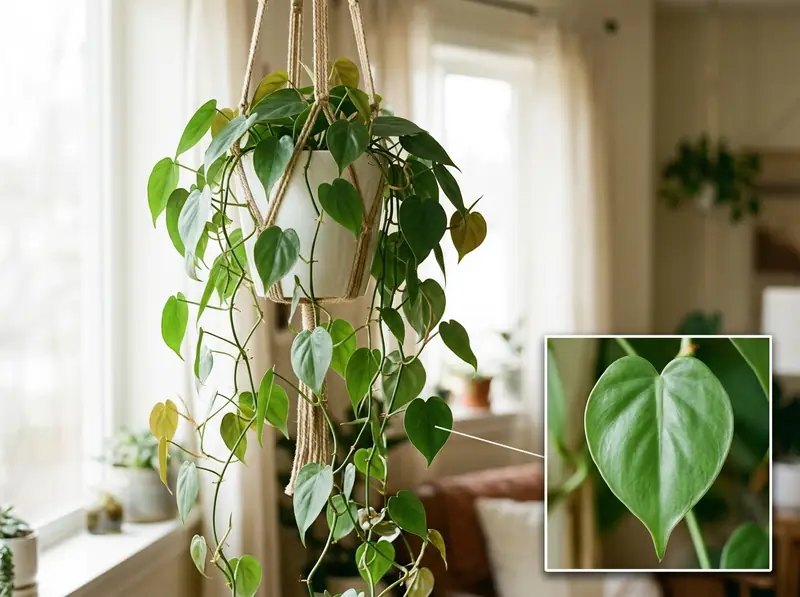 AI-generated
Heartleaf Philodendron
Philodendron hederaceum
- Low to medium light
- Moderate watering
Toxic to cats and dogs