
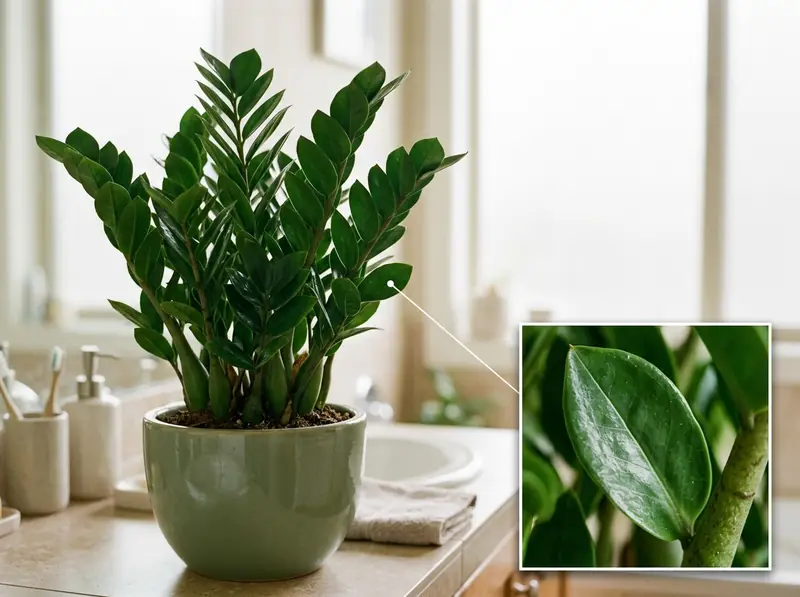
 AI-generated
Zenzi ZZ
Zamioculcas zamiifolia 'Zenzi'
Zenzi ZZ is a compact ZZ plant cultivar with short, upright stems and thick, glossy, dark green leaves that curl slightly and grow densely. It stays tidier than the standard ZZ, so it suits desks, shelves and small corners. Like the species, it is very forgiving: water only when the soil is fully dry and it will thrive in most indoor light.
Saving is free with a KinClub account, and it works here and in the KinClub app. Sign up free
Care profile
- Light
- Low lightLow → direct sun
- Water
- Let it dry outAbout every 18 days
- Difficulty
- EasyTricky → easy
- Coldest it tolerates
- 45°F
- Humidity
- Low
- Mature size
- Small to mediumSmall → tree-size
- Growth rate
- Slow
- How common
- CommonRare → everywhere
- Plant family
- Araceae
Pets and toxicity
Cats and dogs: not yet checked
Not yet checked against ASPCA — don't assume it's safe for pets.
No toxicity source on record for this plant yet. If a pet eats any houseplant, call your vet or an animal poison helpline.
How to care for Zenzi ZZ
Light
Does best in medium to bright indirect light, but tolerates low light such as a dim office or north-facing room, just with slower growth. Keep it out of direct midday sun, which can scorch the leaves.
Watering
Water thoroughly only when the soil has dried out completely, about every 2 to 3 weeks in summer and every 4 to 6 weeks in winter. Empty the saucer after watering and never let the pot sit in water.
Soil
Use a fast-draining mix such as cactus and succulent soil, or regular potting mix with about one-third perlite or coarse sand added. Always use a pot with drainage holes.
Feeding
Feed with a balanced houseplant fertilizer diluted to half strength about once a month from spring through summer. Skip feeding in fall and winter.
Repotting
Repot every 2 to 3 years, in spring, when the thick rhizomes crowd the pot or push the plant upward. Move up only one pot size, since the rhizomes can even bulge and crack a plastic pot.
Propagation
Divide the rhizomes when repotting, or root single leaves or stem cuttings in barely moist gritty mix. Leaf cuttings work but are slow, often taking 6 to 9 months to form a small rhizome.
Common problems
- Yellow, mushy stems: overwatering or rot. Unpot, cut away soft rhizomes, and repot in dry gritty mix, then water sparingly.
- Brown crispy leaf tips or wrinkled stems: soil left dry too long. Water deeply and keep to a steadier schedule.
- Leggy, leaning growth: too little light. Move to a brighter spot and rotate the pot occasionally.
- White cottony clusters or brown bumps on stems: mealybugs or scale. Wipe with rubbing alcohol on a cotton swab and repeat weekly.
- Lower leaves yellowing occasionally: normal shedding of old stems, but if many turn yellow at once, check for wet soil.
Similar plants
Same light needs and difficulty.
 AI-generated
 AI-generated
 AI-generated
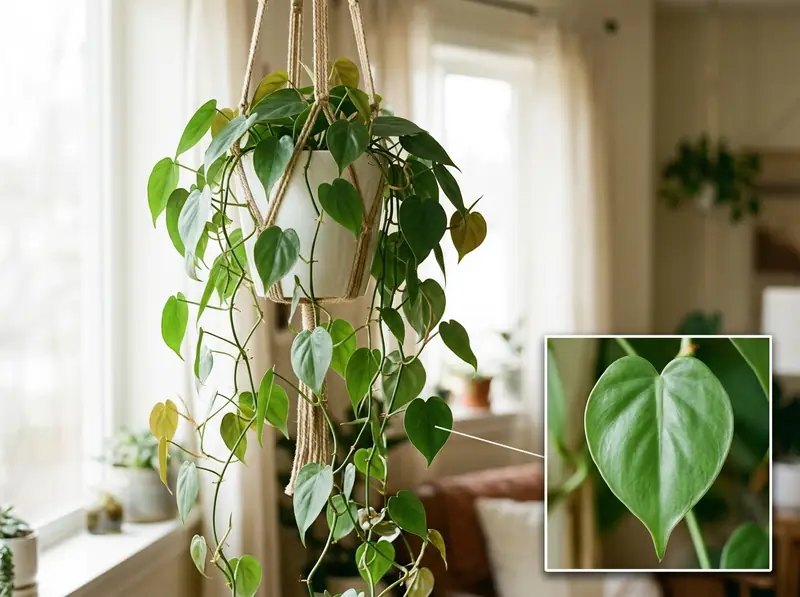 AI-generated
Heartleaf Philodendron
Philodendron hederaceum
- Low to medium light
- Moderate watering
Toxic to cats and dogs