
 AI-generated
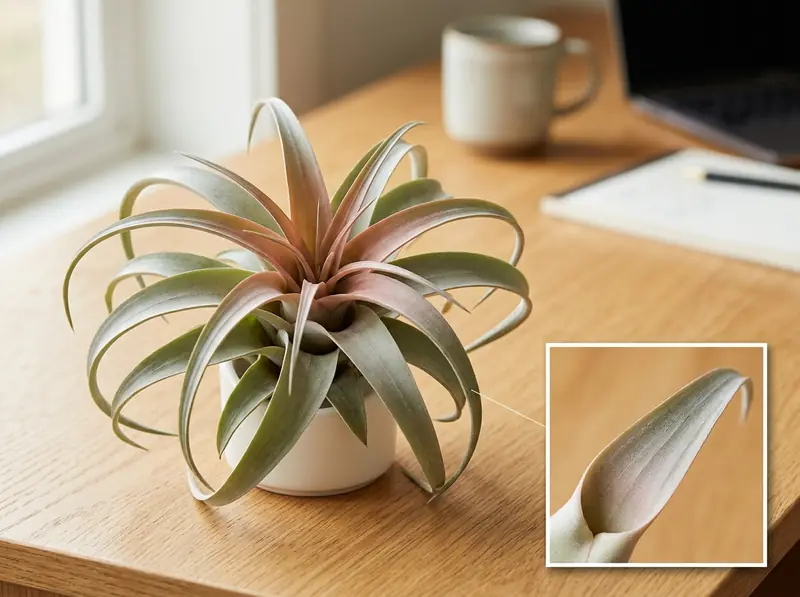
Brachycaulos Air Plant
Tillandsia brachycaulos
Tillandsia brachycaulos is a compact, slow-growing air plant that forms a small rosette of stiff, silvery-green leaves. It blushes red when it is about to bloom, then produces pups. It is easy to grow with a weekly soak, bright filtered light, and good airflow so it dries quickly.
Saving is free with a KinClub account, and it works here and in the KinClub app. Sign up free
Care profile
- Light
- Bright, indirect lightLow → direct sun
- Water
- Dry to moderate wateringAbout every 7 days
- Difficulty
- EasyTricky → easy
- Coldest it tolerates
- 45°F
- Humidity
- Medium to high
- Mature size
- SmallSmall → tree-size
- Growth rate
- Slow
- How common
- CommonRare → everywhere
- Plant family
- Bromeliaceae
Pets and toxicity
Cats and dogs: not yet checked
Not yet checked against ASPCA — don't assume it's safe for pets.
No toxicity source on record for this plant yet. If a pet eats any houseplant, call your vet or an animal poison helpline.
How to care for Brachycaulos Air Plant
Light
Give bright, filtered light, such as a spot near an east or south window with a sheer curtain. A few hours of gentle morning sun is fine, but avoid harsh midday sun through glass.
Watering
Soak in room-temperature water for 10 to 20 minutes about once a week, or mist thoroughly 2 to 3 times a week in dry homes. Shake out water from the center and dry in good airflow within 4 hours.
Soil
No soil is needed, because this is an epiphyte. Display it on bark, driftwood, in a shallow dish or a hanging holder, never buried in potting mix, and keep the base open to air.
Feeding
Feed once a month in the growing season with a bromeliad or air plant fertilizer diluted to 1/4 strength, added to the soaking water. Skip feeding in winter.
Repotting
It doesn't need repotting. If mounted, move it to a larger holder or a fresh mount only when the clump of pups outgrows it, and keep the base above any moist material.
Propagation
Separate pups gently once they are about one-third to half the size of the parent, or leave them to form a clump. Mature plants bloom once, then produce several offsets from the base.
Common problems
- Brown, mushy base: caused by water sitting in the center. Shake dry after watering, improve airflow, and remove any rotted pups.
- Crispy brown leaf tips: the plant is underwatered or the air is very dry. Soak it longer or more often, for up to an hour.
- Mealybugs or scale on the leaf bases: dab with cotton swabs dipped in rubbing alcohol and isolate the plant.
- Leaves curling tightly inward and looking dull: the plant is thirsty. Soak it for 30 minutes, then dry it well.
Similar plants
Same light needs and difficulty.
 AI-generated
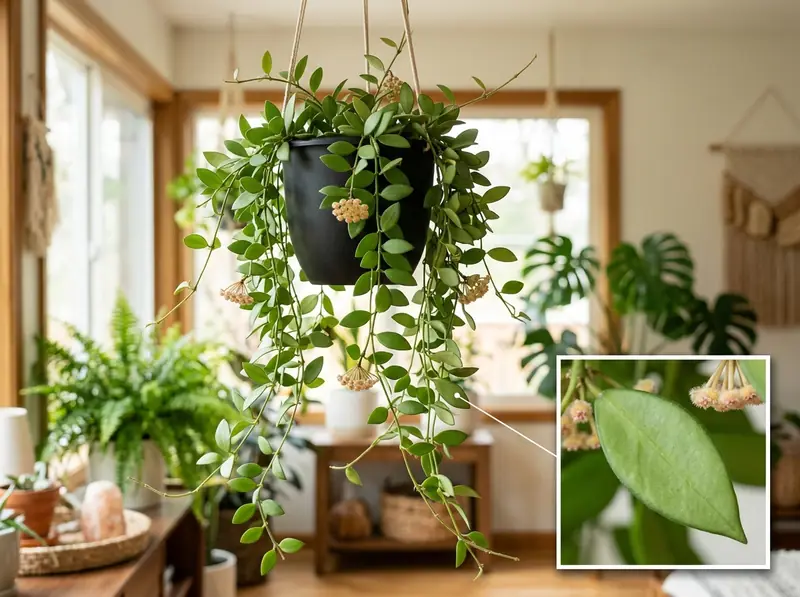
Heuschkeliana Hoya
Hoya heuschkeliana
- Bright, indirect light
- Dry to moderate watering
Pets: not yet checked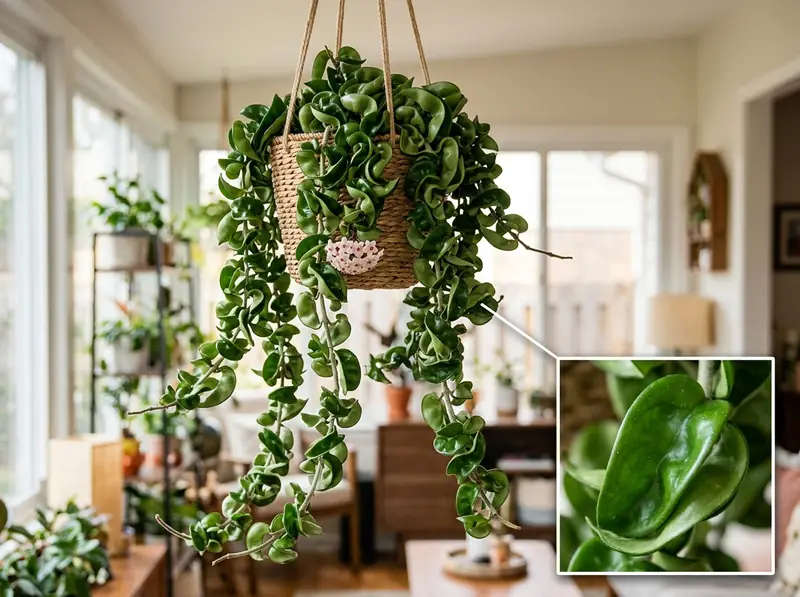 AI-generated
 AI-generated
Chinese Money Plant
Pilea peperomioides
- Bright, indirect light
- Dry to moderate watering
Pets: not yet checked AI-generated
Christmas Cactus
Schlumbergera × buckleyi
- Bright, indirect light
- Moderate watering
Pets: not yet checked