
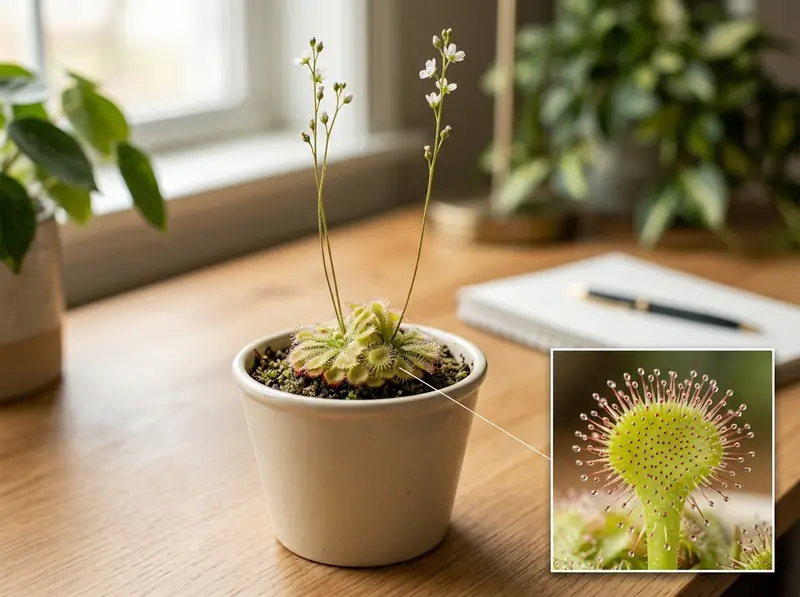
 AI-generated
Burmann's Sundew
Drosera burmanni
Burmann's sundew is a tiny tropical rosette sundew from Asia and Australia with paddle-shaped, dew-covered leaves, grown as a fast annual. It self-sows freely in warm, wet pots, and is a good fit for a terrarium or warm sill.
Saving is free with a KinClub account, and it works here and in the KinClub app. Sign up free
Care profile
- Light
- Direct sunLow → direct sun
- Water
- Keep moistAbout every 3 days
- Difficulty
- ModerateTricky → easy
- Coldest it tolerates
- 50°F
- Humidity
- High
- Mature size
- SmallSmall → tree-size
- Growth rate
- Fast
- How common
- RareRare → everywhere
- Plant family
- Droseraceae
Pets and toxicity
Cats and dogs: not yet checked
Not yet checked against ASPCA — don't assume it's safe for pets.
No toxicity source on record for this plant yet. If a pet eats any houseplant, call your vet or an animal poison helpline.
How to care for Burmann's Sundew
Light
Give bright light with 3 or more hours of direct sun, or a grow light for 12 to 14 hours. Strong light colors the leaves red.
Watering
Use only distilled, rain or reverse-osmosis water. Keep the pot standing in about 1 inch of water at all times; it grows in wet sands.
Soil
Use a mix of 1 part peat moss to 1 part silica sand or perlite, with no fertilizer, in a small plastic pot.
Feeding
Do not fertilize. The leaves catch gnats and tiny flies; the plant is small and needs little.
Repotting
It is a short-lived annual, so start fresh pots from the seeds it drops, or transplant seedlings into new peat in spring.
Propagation
Seed is easy: sprinkle the tiny seed on damp peat and keep it warm at 70 to 80 F in bright light; seedlings appear in 2 to 3 weeks.
Common problems
- It prefers warm temperatures above 50 F; cold slows it or kills it.
- Low humidity and dry soil stop the dew; keep a humid, covered space if your home is dry.
- Tap water browns the roots; use only pure water.
- Fungus gnats may breed in wet peat; use yellow sticky cards.
Similar plants
Same light needs and difficulty.
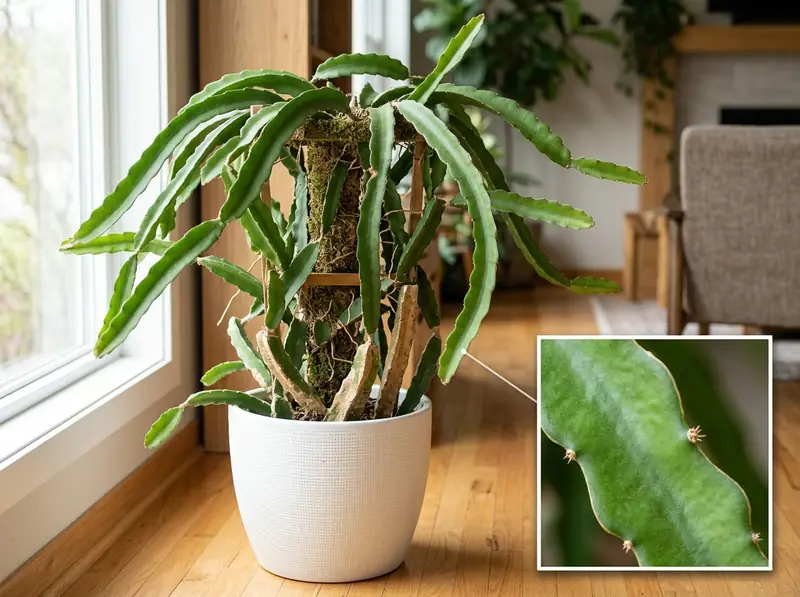 AI-generated
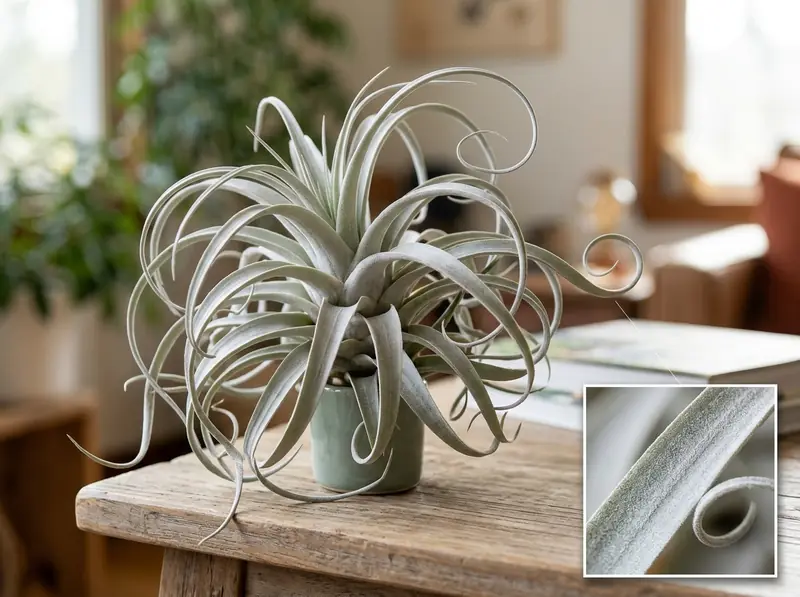 AI-generated
Duratii Air Plant
Tillandsia duratii
- Bright, indirect to direct sun
- Dry to moderate watering
Pets: not yet checked AI-generated
 AI-generated