
 AI-generated
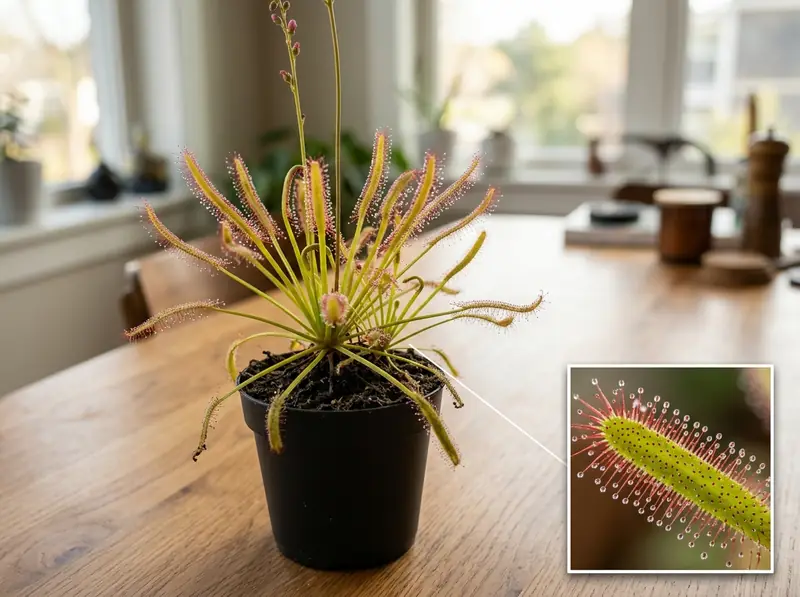
Cape Sundew
Drosera capensis
Cape Sundew is a small, easy carnivorous plant with narrow leaves covered in sticky red-tipped tentacles that trap small insects. It needs bright direct sun, constantly damp peat-based soil and pure water such as rainwater or distilled water. It can handle ordinary room temperatures and often blooms with pink flowers and self-seeds.
Saving is free with a KinClub account, and it works here and in the KinClub app. Sign up free
Care profile
- Light
- Direct sunLow → direct sun
- Water
- Keep moistAbout every 3 days
- Difficulty
- EasyTricky → easy
- Coldest it tolerates
- 40°F
- Humidity
- Medium to high
- Mature size
- SmallSmall → tree-size
- Growth rate
- Moderate to fast
- How common
- CommonRare → everywhere
- Plant family
- Droseraceae
Pets and toxicity
Cats and dogs: not yet checked
Not yet checked against ASPCA — don't assume it's safe for pets.
No toxicity source on record for this plant yet. If a pet eats any houseplant, call your vet or an animal poison helpline.
How to care for Cape Sundew
Light
Give 4 or more hours of direct sun, such as a south or west window, or a full-spectrum grow light for 12 hours a day. Strong light keeps the leaves red and the dew sticky.
Watering
Keep the pot standing in about 1/2 inch of rainwater, distilled or reverse-osmosis water at all times in the growing season. Let the tray dry for a day or so before refilling; in winter, keep the soil just damp with a shallower tray.
Soil
Use a nutrient-poor mix of 1 part peat moss (or coco-free sphagnum peat) to 1 part perlite or silica sand. Never use ordinary potting soil or fertilised mixes, and use a plastic or glazed pot.
Feeding
Do not fertilise the soil, as it burns the roots. The plant feeds on insects it catches; if indoors with few bugs, offer a tiny insect, such as a fruit fly, to a few leaves once a month.
Repotting
Repot every 1 to 2 years in spring into fresh peat and perlite when the pot is crowded or the mix has broken down. Choose a pot only 1 to 2 inches wider, as the roots are small.
Propagation
Easiest from leaf cuttings: lay a healthy 2 in leaf on damp peat in bright light and keep humid. It also self-seeds and produces offsets and root cuttings, so new plants appear readily.
Common problems
- Leaves lose their dew: raise humidity slightly, keep the tray filled, and give more direct light.
- Brown, crisped leaves: old leaves die naturally, so trim them off, but widespread browning means the tray dried out or tap water is being used.
- Leggy, green, floppy growth: light is too weak, so move to a sunny window or add a grow light.
- Gnats or aphids on stems and flower stalks: sticky leaves catch many, but rinse aphids off gently or use insecticidal soap sparingly on the stems.
Similar plants
Same light needs and difficulty.
 AI-generated
 AI-generated
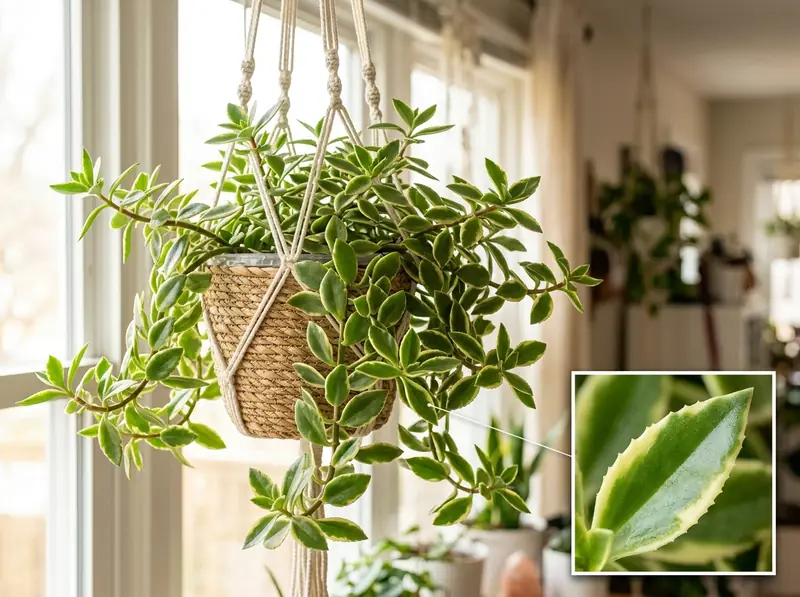
Variegated Crassula
Crassula sarmentosa
- Bright, indirect to direct sun
- Let it dry out
Pets: not yet checked AI-generated
 AI-generated