
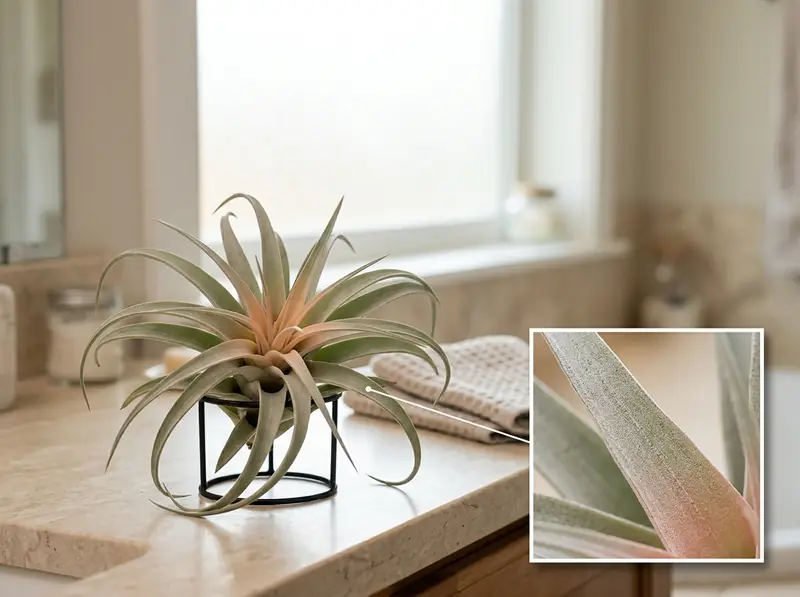
 AI-generated
Capitata Air Plant
Tillandsia capitata
Tillandsia capitata is a small, silvery-green air plant with a rosette of stiff, curved leaves that can blush pink or red before it blooms. It grows without soil, taking in water through its leaves. Give it bright light, a weekly soak and good airflow to keep it healthy.
Saving is free with a KinClub account, and it works here and in the KinClub app. Sign up free
Care profile
- Light
- Bright, indirect lightLow → direct sun
- Water
- Dry to moderate wateringAbout every 7 days
- Difficulty
- EasyTricky → easy
- Coldest it tolerates
- 45°F
- Humidity
- Low
- Mature size
- SmallSmall → tree-size
- Growth rate
- Slow
- How common
- EnthusiastRare → everywhere
- Plant family
- Bromeliaceae
Pets and toxicity
Cats and dogs: not yet checked
Not yet checked against ASPCA — don't assume it's safe for pets.
No toxicity source on record for this plant yet. If a pet eats any houseplant, call your vet or an animal poison helpline.
How to care for Capitata Air Plant
Light
Give bright, filtered light, such as a spot a few feet from an east or south window or directly in an east window. Gentle morning sun is fine, but shade it from hot midday sun through glass.
Watering
Soak in room-temperature water for 15 to 30 minutes about once a week, or mist thoroughly 2 to 3 times a week in dry homes. Shake out excess water and dry upright or upside down in open air within 4 hours.
Soil
Needs no soil. Mount it on wood, stone or in a shallow dish or holder where air flows freely around it, and never plant it in potting mix.
Feeding
Feed once a month in the growing season with bromeliad or air plant fertilizer diluted to 1/4 strength, added to the soaking water. Skip feeding in winter.
Repotting
It does not need repotting. Re-mount or move it only if the holder is crowded by pups, and avoid glues with solvents or copper-treated wood.
Propagation
Separate pups once they are about one-third to half the size of the parent by gently twisting them off. Pups appear after the plant blooms, and the mother plant slowly declines afterward.
Common problems
- Soft, dark base from rot: water was trapped in the center, so shake it dry after each soak, improve airflow and cut back watering frequency.
- Curled, crispy leaves from thirst: soak for 1 to 2 hours once, then return to a regular weekly schedule.
- Bleached, dry leaves from too much sun: move it back from the window or to filtered light.
- Cottony white bugs or bumps on the leaves: wipe with cotton swab dipped in rubbing alcohol and isolate the plant until clean.
Similar plants
Same light needs and difficulty.
 AI-generated
Tricolor Air Plant
Tillandsia tricolor
- Bright, indirect light
- Dry to moderate watering
Pets: not yet checked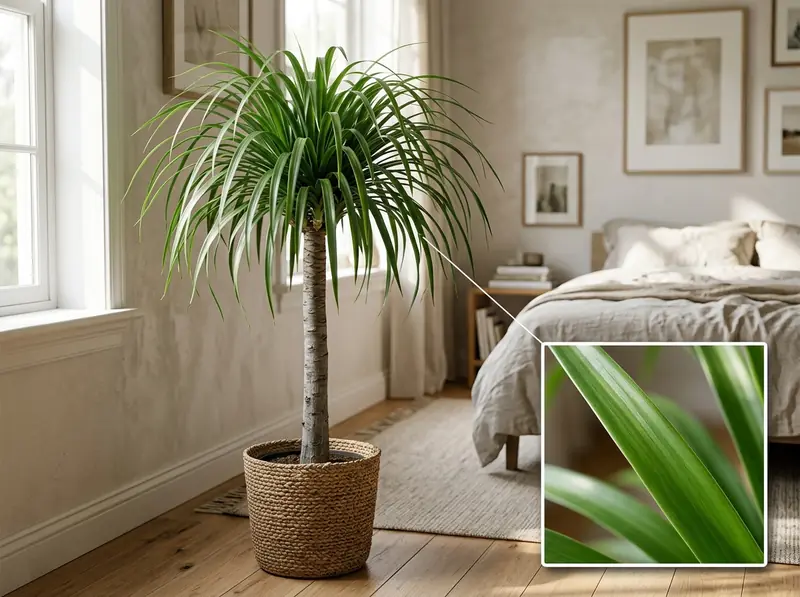 AI-generated
Umbrella Dracaena
Dracaena umbraculifera
- Medium to bright, indirect light
- Moderate watering
Toxic to cats and dogs AI-generated
Chinese Money Plant
Pilea peperomioides
- Bright, indirect light
- Dry to moderate watering
Pets: not yet checked AI-generated
Christmas Cactus
Schlumbergera × buckleyi
- Bright, indirect light
- Moderate watering
Pets: not yet checked