
 AI-generated
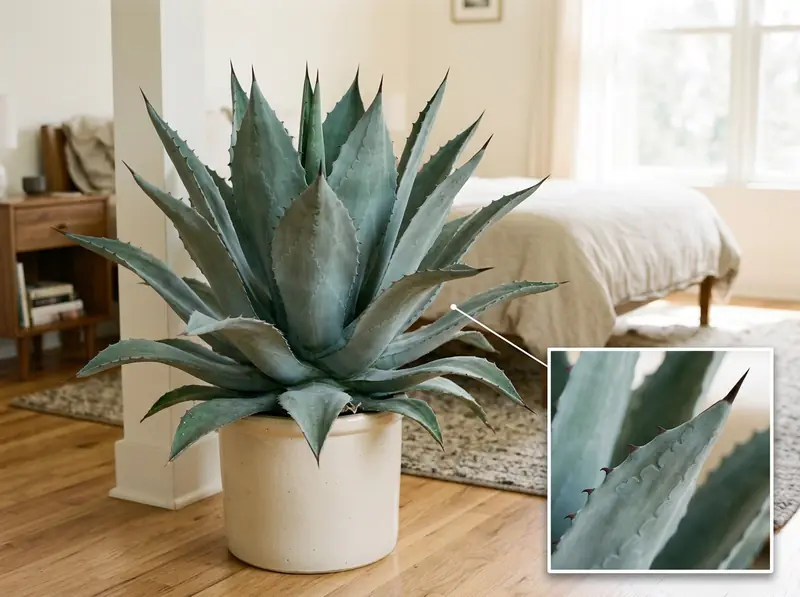
Century Plant
Agave americana
Century plant is a bold, slow-growing succulent with a rosette of thick blue-gray leaves edged with sharp teeth and tipped with a hard spine. It needs as much direct sun as you can give, gritty soil and infrequent watering. Indoors it can get large over the years, so choose a spot with plenty of room, away from walkways.
Saving is free with a KinClub account, and it works here and in the KinClub app. Sign up free
Care profile
- Light
- Direct sunLow → direct sun
- Water
- Let it dry outAbout every 21 days
- Difficulty
- EasyTricky → easy
- Coldest it tolerates
- 30°F
- Humidity
- Low
- Mature size
- LargeSmall → tree-size
- Growth rate
- Slow
- How common
- CommonRare → everywhere
- Plant family
- Asparagaceae
Pets and toxicity
Cats and dogs: not yet checked
Not yet checked against ASPCA — don't assume it's safe for pets.
No toxicity source on record for this plant yet. If a pet eats any houseplant, call your vet or an animal poison helpline.
How to care for Century Plant
Light
Give it at least 6 hours of direct sun, ideally in a south- or west-facing window. Move it outdoors in summer if possible, acclimating over 1-2 weeks to avoid sunburn.
Watering
Soak the soil thoroughly, then let it dry out completely before watering again, about every 2-3 weeks in summer. In winter water only every 4-8 weeks, or barely at all if kept cool.
Soil
Use a gritty cactus and succulent mix, with extra perlite or pumice added (about half grit). Use a pot with drainage holes, ideally unglazed clay.
Feeding
Feed with a half-strength balanced fertilizer or cactus fertilizer once a month in spring and summer. Do not feed in fall and winter.
Repotting
Repot every 2-3 years in spring, only into a pot one or two sizes larger. Wear thick gloves because leaf tips are sharp, and let the soil stay dry for a week after repotting.
Propagation
Separate offsets (pups) from the base in spring with a clean knife and let the cut ends callus for several days. Then pot them in gritty mix and water lightly once they start rooting.
Common problems
- Soft, mushy base from rot: stop watering, cut away any rotten tissue, and repot in dry gritty mix if the core is still firm.
- Stretched, pale growth from low light: move to the sunniest window or add a grow light; new growth will tighten up.
- Mealybugs in leaf bases: dab with a cotton swab dipped in rubbing alcohol, and repeat weekly until gone.
- Brown, scorched patches after a move into sun: acclimate gradually; damaged leaves will not heal but new growth will be fine.
- Outgrowing its space: the plant gets very large with sharp spines, so trim the spine tips and give it room or divide off pups.
Similar plants
Same light needs and difficulty.
 AI-generated
 AI-generated
 AI-generated
 AI-generated