
 AI-generated
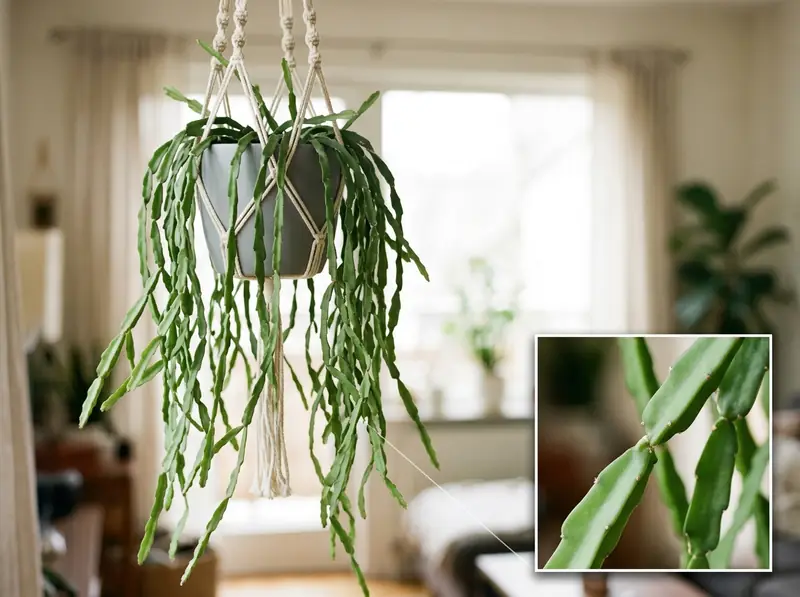
Chain Cactus
Rhipsalis paradoxa
Chain cactus is a trailing, jointed-stem epiphytic cactus from tropical forests that looks great in a hanging basket. It is easy to grow if you give it bright, indirect light and a fast-draining mix, and it is easy to overwater, so let the mix dry a little between waterings.
Saving is free with a KinClub account, and it works here and in the KinClub app. Sign up free
Care profile
- Light
- Bright, indirect lightLow → direct sun
- Water
- Moderate wateringAbout every 10 days
- Difficulty
- Easy to moderateTricky → easy
- Coldest it tolerates
- 50°F
- Humidity
- Medium
- Mature size
- MediumSmall → tree-size
- Growth rate
- Moderate
- How common
- CommonRare → everywhere
- Plant family
- Cactaceae
Pets and toxicity
Cats and dogs: not yet checked
Not yet checked against ASPCA — don't assume it's safe for pets.
No toxicity source on record for this plant yet. If a pet eats any houseplant, call your vet or an animal poison helpline.
How to care for Chain Cactus
Light
Give it bright, indirect light, such as a spot near an east window or a few feet back from a south or west window. Gentle morning sun is fine, but avoid hot midday sun, which bleaches the stems.
Watering
Water thoroughly when the top inch or two of mix is dry, roughly every 7 to 14 days in spring and summer. In winter, water about half as often, just enough to keep the stems from shriveling.
Soil
Use a very free-draining mix, such as cactus mix with extra orchid bark or perlite (about 2 parts cactus mix to 1 part bark). Always use a pot with drainage holes.
Feeding
Feed monthly in spring and summer with a balanced houseplant fertilizer diluted to half strength. Skip feeding in fall and winter.
Repotting
Repot only every 2 to 3 years, when roots fill the pot, in spring. Choose a pot only one size larger, since it likes to be slightly snug.
Propagation
Take a 4 to 6 inch stem cutting in spring or summer and let the cut end dry for a few days. Set it on barely damp, gritty mix and it roots in a few weeks.
Common problems
- Mushy, dark stems at the base: this is rot from overwatering, so cut off healthy sections, let them callus and repot in dry, gritty mix.
- Shriveled, wrinkled stems: the plant is too dry, so water deeply and then keep a steadier schedule.
- Yellow or reddish stems: too much direct sun, so move it back to brighter, filtered light.
- White cottony clusters or brown bumps on stems: mealybugs or scale, so dab with rubbing alcohol on a cotton swab and repeat weekly until gone.
- Segments dropping: often caused by moving the plant, drafts or extremes of watering, so keep conditions steady.
Similar plants
Same light needs and difficulty.
 AI-generated
 AI-generated
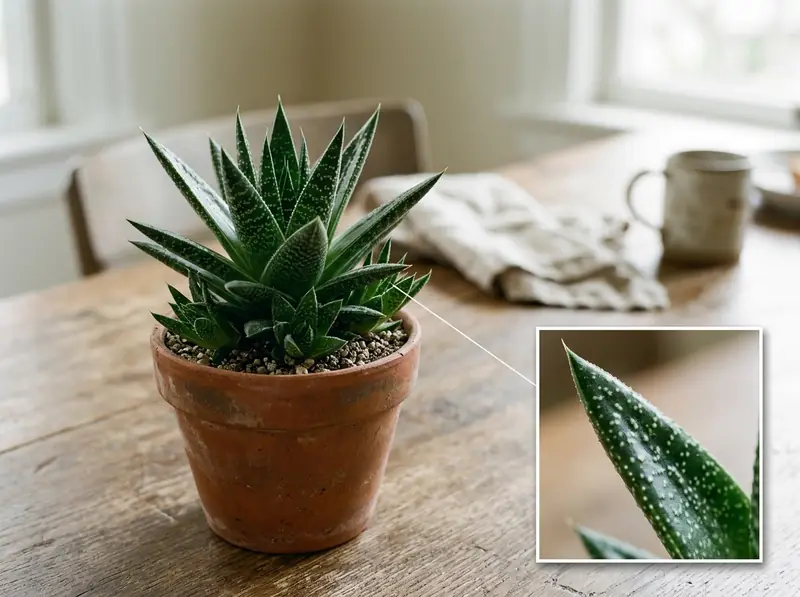
Green Ice Gasteraloe
Gasteraloe 'Green Ice'
- Bright, indirect light
- Let it dry out
Pets: not yet checked AI-generated
Chinese Money Plant
Pilea peperomioides
- Bright, indirect light
- Dry to moderate watering
Pets: not yet checked AI-generated
Christmas Cactus
Schlumbergera × buckleyi
- Bright, indirect light
- Moderate watering
Pets: not yet checked