
 AI-generated
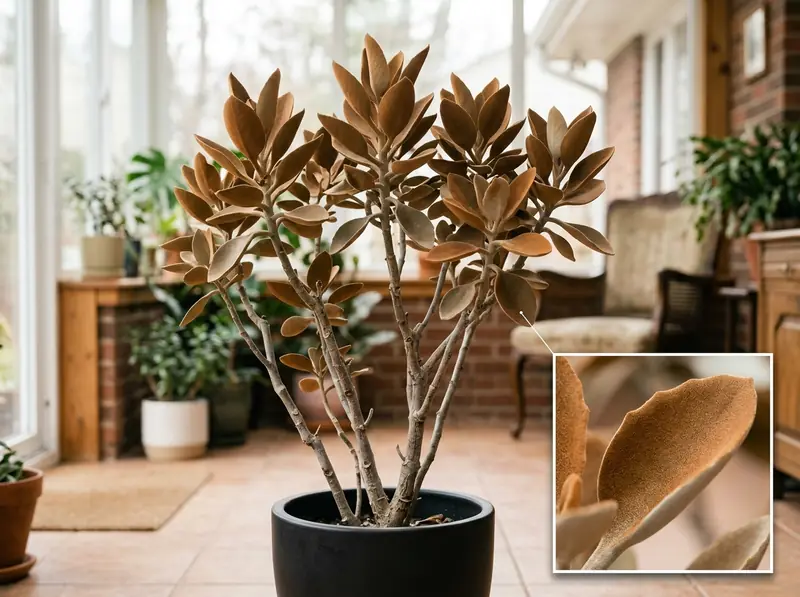
Copper Spoons
Kalanchoe orgyalis
Also known as Kalanchoe antanosiana, Kalanchoe cantonasyana
Copper Spoons is a slow-growing succulent with upright stems and spoon-shaped, felty leaves in a coppery brown-silver color. It thrives on bright sun, gritty soil and infrequent watering, which makes it a forgiving choice for a sunny window. Over the years it can grow into a branching shrub a few feet tall.
Saving is free with a KinClub account, and it works here and in the KinClub app. Sign up free
Care profile
- Light
- Direct sunLow → direct sun
- Water
- Let it dry outAbout every 18 days
- Difficulty
- EasyTricky → easy
- Coldest it tolerates
- 50°F
- Humidity
- Low
- Mature size
- Medium to largeSmall → tree-size
- Growth rate
- Slow
- How common
- CommonRare → everywhere
- Plant family
- Crassulaceae
Pets and toxicity
Toxic to cats
Keep away from cats. Call your vet or a pet poison helpline if a cat chews it.
Toxic to dogs
Keep away from dogs. Call your vet or a pet poison helpline if a dog chews it.
Source: ASPCA toxic and non-toxic plants. If a pet eats any houseplant, call your vet or an animal poison helpline.
How to care for Copper Spoons
Light
Give it as much bright light as you can, ideally a south- or west-facing window with several hours of direct sun. Acclimate it gradually if moving it from a dim spot to strong sun.
Watering
Soak the soil thoroughly, then wait until it is completely dry through the pot before watering again, roughly every 2 to 3 weeks in summer. In winter, water only about once a month or less.
Soil
Use a gritty cactus or succulent mix, or regular potting mix cut with about one-third perlite or coarse sand. The pot must have a drainage hole.
Feeding
Feed with a half-strength cactus or balanced fertilizer about once a month from spring to late summer. Do not feed in autumn and winter.
Repotting
Repot every 2 to 3 years in spring, only moving up 1 to 2 inches in pot size. A heavy terracotta pot helps keep the top-heavy stems upright.
Propagation
Take a stem tip cutting or a single leaf in spring or summer. Let it callus for 2 to 3 days, then set it on dry gritty mix and water lightly once roots form in a few weeks.
Common problems
- Leggy, stretched stems: the light is too weak, so move it to a sunnier window and prune stems back to encourage branching.
- Soft, yellow leaves and a blackening stem base: this is rot from overwatering, so let the soil dry out, and cut off and re-root healthy tops if the stem is mushy.
- White cottony clusters in leaf joints: these are mealybugs, so dab them with rubbing alcohol on a cotton swab and repeat weekly.
- Lower leaves drop naturally over time: this is normal, and the plant develops a bare woody trunk with leaves at the tips.
Similar plants
Same light needs and difficulty.
 AI-generated
 AI-generated
 AI-generated
 AI-generated