
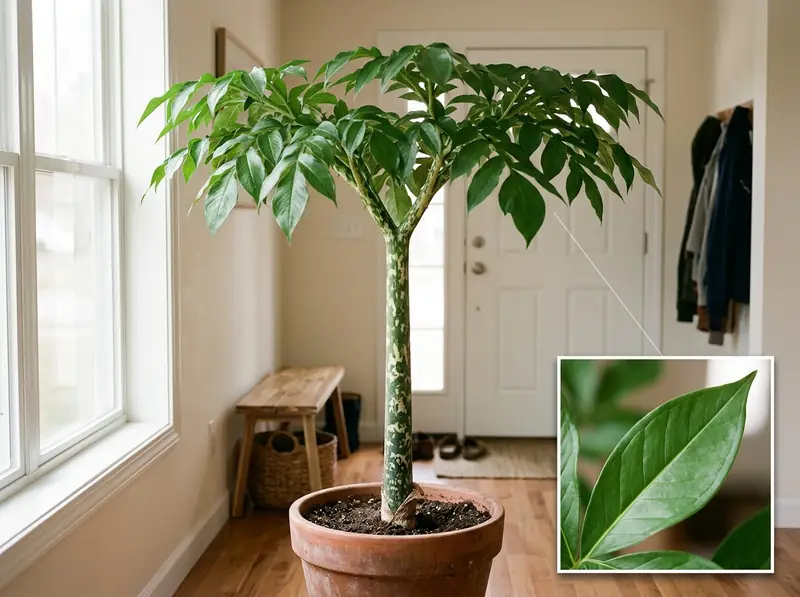
 AI-generated
Corpse Flower
Amorphophallus titanum
Corpse Flower is a giant tuberous aroid that sends up a single huge leaf like a small tree each year and blooms only after many years. It is a specialist plant that needs a large pot, warmth, and humidity.
Saving is free with a KinClub account, and it works here and in the KinClub app. Sign up free
Care profile
- Light
- Bright, indirect lightLow → direct sun
- Water
- Moderate to moist wateringAbout every 7 days
- Difficulty
- ChallengingTricky → easy
- Coldest it tolerates
- 60°F
- Humidity
- High
- Mature size
- Tree-sizeSmall → tree-size
- Growth rate
- Slow to moderate
- How common
- RareRare → everywhere
- Plant family
- Araceae
Pets and toxicity
Cats and dogs: not yet checked
Not yet checked against ASPCA — don't assume it's safe for pets.
No toxicity source on record for this plant yet. If a pet eats any houseplant, call your vet or an animal poison helpline.
How to care for Corpse Flower
Light
Bright, indirect light with no hot direct sun. Its leaf can stand over 6 feet tall, so give it a bright, high-ceilinged spot.
Watering
While the leaf is growing, water when the top 2 inches are dry, about weekly. When it yellows and dies back, stop watering and let the tuber rest.
Soil
A very free-draining, rich mix with plenty of bark, perlite, and compost. Use a deep, wide pot with several drainage holes.
Feeding
Feed every 2 weeks while the leaf is growing with a balanced liquid fertilizer. Do not feed during dormancy.
Repotting
Repot the tuber each year when it goes dormant, moving to a larger, deeper pot. Mature tubers need pots up to 24 inches wide.
Propagation
Mostly grown from seed or from rare tuber offsets, which is slow and specialized. Expect many years before a plant is mature.
Common problems
- Tuber rot is the biggest risk. Keep the soil nearly dry during dormancy and use a very gritty mix.
- The leaf dies back after months of growth. This is natural; stop watering and wait for the next leaf, often after 2 to 3 months.
- Spider mites attack in dry air. Raise humidity and wipe the leaf segments with insecticidal soap.
Similar plants
Same light needs and difficulty.
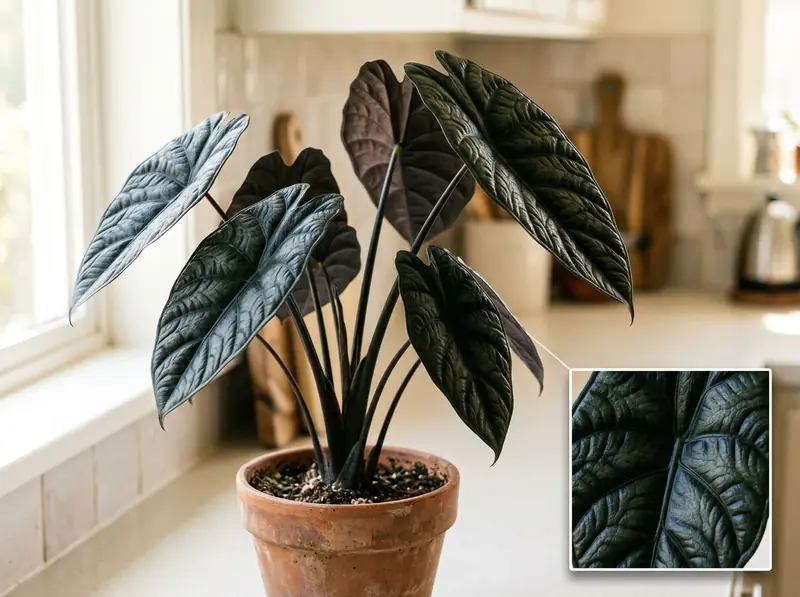 AI-generated
Infernalis Alocasia
Alocasia infernalis
- Bright, indirect light
- Moderate to moist watering
Toxic to cats and dogs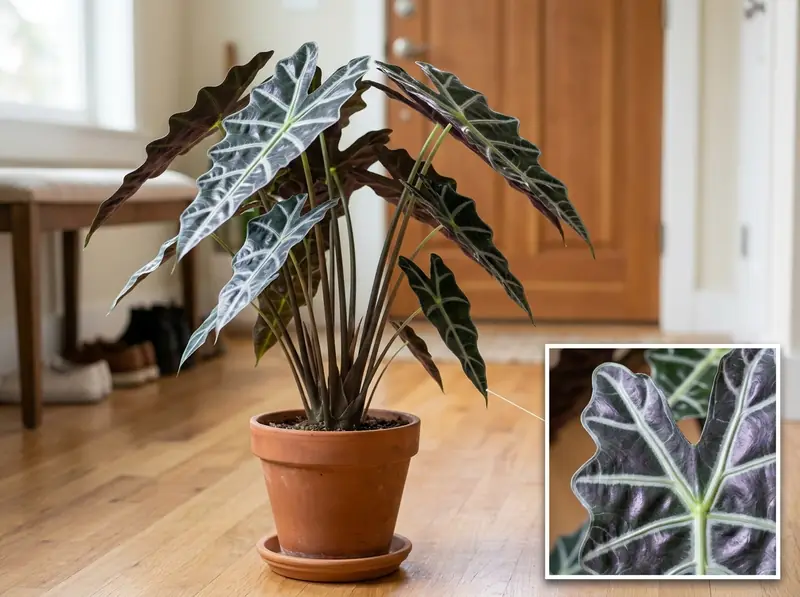 AI-generated
Kris Plant
Alocasia sanderiana
- Bright, indirect light
- Moderate to moist watering
Toxic to cats and dogs AI-generated
 AI-generated
Calathea Orbifolia
Goeppertia orbifolia
- Medium to bright, indirect light
- Keep moist
Pets: not yet checked