
 AI-generated
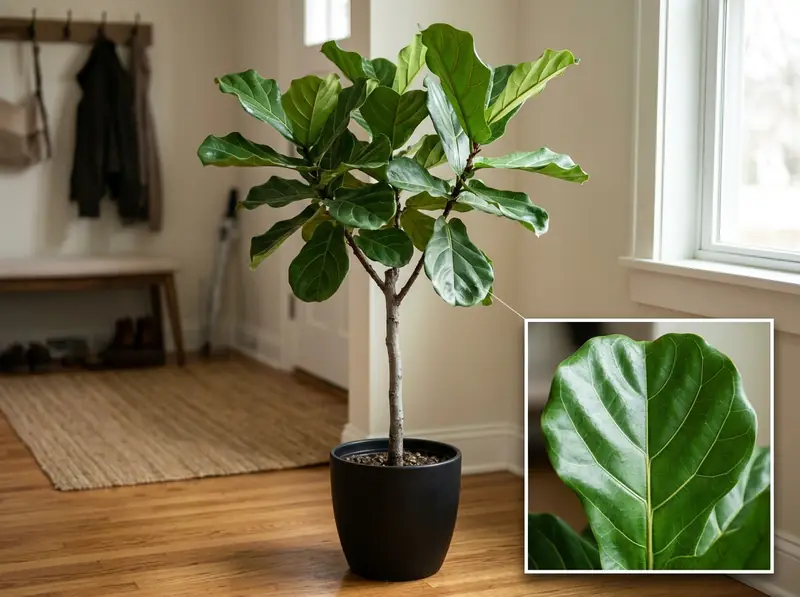
Fiddle-Leaf Fig
Ficus lyrata
Also known as Ficus jollyana, Ficus pandurata
Fiddle-leaf fig is a dramatic indoor tree with big, violin-shaped, glossy leaves. It is fussy: it wants bright indirect light, steady conditions, and watering only when the top couple of inches of soil are dry. Once settled in a good spot, it can grow to 6 feet or more indoors.
Saving is free with a KinClub account, and it works here and in the KinClub app. Sign up free
Care profile
- Light
- Bright, indirect lightLow → direct sun
- Water
- Moderate wateringAbout every 10 days
- Difficulty
- ChallengingTricky → easy
- Coldest it tolerates
- 50°F
- Humidity
- Medium to high
- Mature size
- Tree-sizeSmall → tree-size
- Growth rate
- Moderate
- How common
- EverywhereRare → everywhere
- Plant family
- Moraceae
Pets and toxicity
Toxic to cats
Keep away from cats. Call your vet or a pet poison helpline if a cat chews it.
Toxic to dogs
Keep away from dogs. Call your vet or a pet poison helpline if a dog chews it.
Source: ASPCA toxic and non-toxic plants. If a pet eats any houseplant, call your vet or an animal poison helpline.
How to care for Fiddle-Leaf Fig
Light
Give it bright, indirect light, ideally within a few feet of an east-facing window or a bright south or west window filtered by a sheer curtain. A few hours of gentle morning sun is fine.
Watering
Water thoroughly when the top 2 inches of soil are dry, usually every 7 to 14 days in the growing season, until water drains out the bottom. Empty the saucer and water less often in winter.
Soil
Use a chunky, well-draining potting mix, such as standard indoor mix blended with about one-quarter perlite or bark. The pot must have drainage holes.
Feeding
Feed every 2 to 4 weeks from spring through summer with a balanced liquid houseplant fertilizer at half the label strength. Stop or reduce feeding in fall and winter.
Repotting
Repot every 1 to 2 years in spring, going up only 2 inches in pot diameter. Once it is large, refresh the top few inches of soil instead.
Propagation
Take a 6-inch tip cutting with a few leaves just below a node in spring or summer. Root it in water or moist mix in a warm, bright spot, which can take 4 to 8 weeks; air layering works for larger plants.
Common problems
- Brown spots on leaves: usually overwatering or root rot, so let the soil dry more between waterings and check that the pot drains.
- Sudden leaf drop: often from moving, drafts, or cold; choose a stable spot away from vents and doors.
- Dusty leaves and poor growth: wipe leaves every few weeks with a damp cloth so they can absorb light.
- Fine webbing and stippled leaves: spider mites; rinse the leaves and treat with insecticidal soap weekly.
- Leggy growth with few leaves: too little light; move it somewhere brighter, and prune the top to encourage branching.
Similar plants
Same light needs and difficulty.
 AI-generated
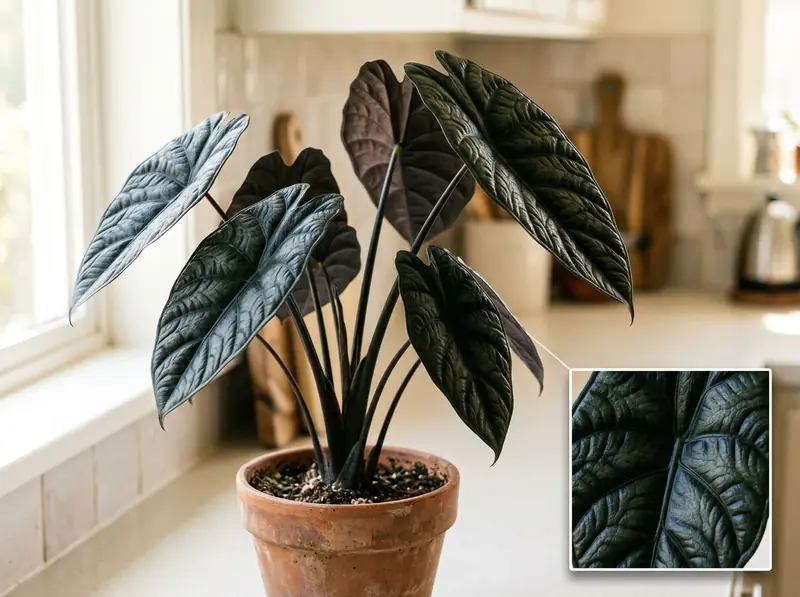
Infernalis Alocasia
Alocasia infernalis
- Bright, indirect light
- Moderate to moist watering
Toxic to cats and dogs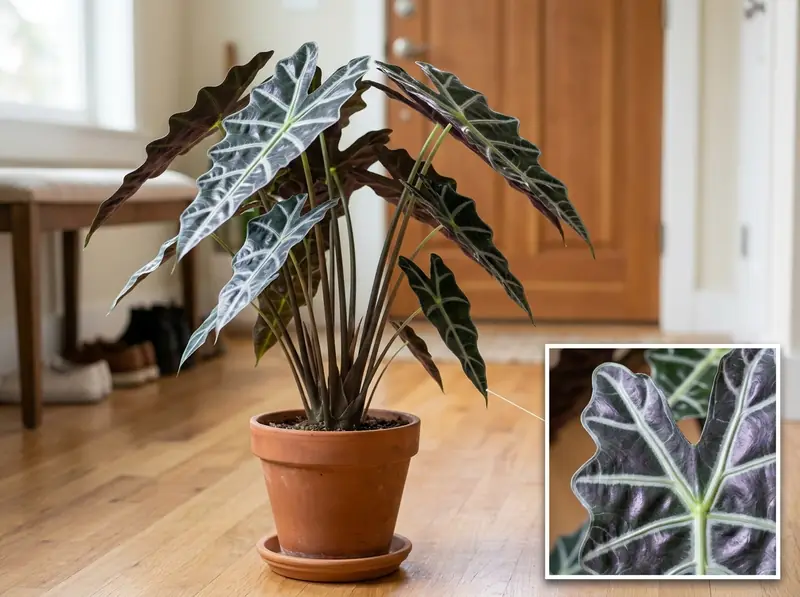 AI-generated
Kris Plant
Alocasia sanderiana
- Bright, indirect light
- Moderate to moist watering
Toxic to cats and dogs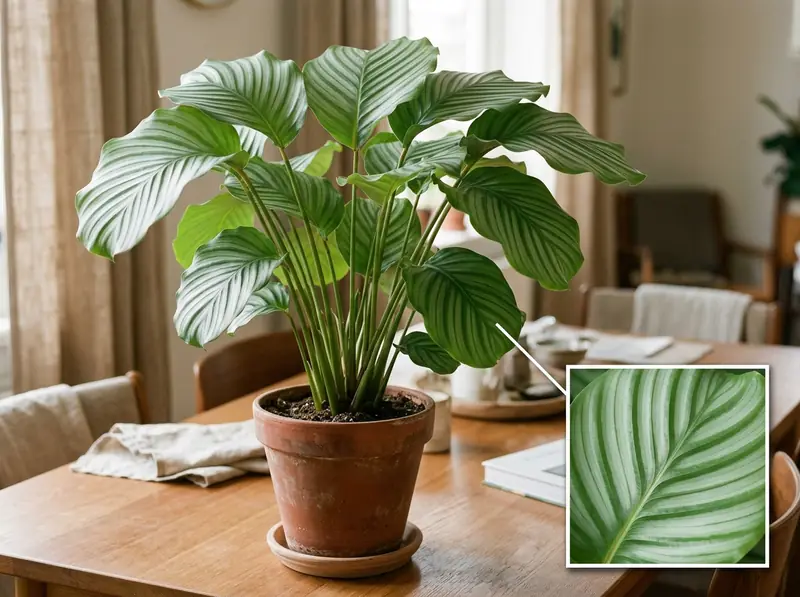 AI-generated
Calathea Orbifolia
Goeppertia orbifolia
- Medium to bright, indirect light
- Keep moist
Pets: not yet checked AI-generated