
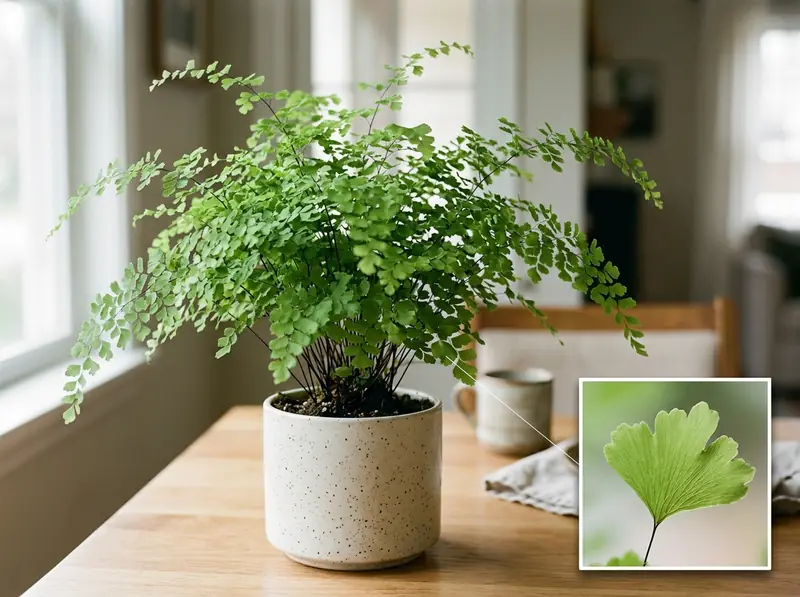
 AI-generated
Delta Maidenhair Fern
Adiantum raddianum
Delta maidenhair fern has lacy, fan-shaped leaflets on thin dark stems, making a soft, airy mound. It is a fussy plant that needs constant moisture, high humidity and gentle, indirect light, so it suits a bright bathroom or a spot away from vents. Keep the soil evenly damp and it will reward you with fresh growth.
Saving is free with a KinClub account, and it works here and in the KinClub app. Sign up free
Care profile
- Light
- Bright, indirect lightLow → direct sun
- Water
- Keep moistAbout every 4 days
- Difficulty
- ChallengingTricky → easy
- Coldest it tolerates
- 55°F
- Humidity
- High
- Mature size
- SmallSmall → tree-size
- Growth rate
- Moderate to fast
- How common
- Very commonRare → everywhere
- Plant family
- Pteridaceae
Pets and toxicity
Cats and dogs: not yet checked
Not yet checked against ASPCA — don't assume it's safe for pets.
No toxicity source on record for this plant yet. If a pet eats any houseplant, call your vet or an animal poison helpline.
How to care for Delta Maidenhair Fern
Light
Give it bright, indirect light, such as a spot a few feet from an east window or filtered light from a north window. Avoid direct sun, which scorches the delicate leaflets.
Watering
Keep the soil evenly damp like a wrung-out sponge, never soggy and never fully dry. Check every 2-3 days and water when the surface just begins to feel less damp, typically every 3-5 days. Use room-temperature water.
Soil
Use a peat- or coir-based potting mix with plenty of organic matter, lightened with about 20-25% perlite. It should hold moisture yet drain freely, in a pot with drainage holes.
Feeding
Feed every 4 weeks in spring and summer with a balanced liquid fertilizer diluted to half strength. Do not feed in winter or to dry soil.
Repotting
Repot every 1-2 years in spring when roots fill the pot, moving up only 1-2 inches in diameter. It likes being slightly snug, so do not overpot.
Propagation
Divide a large clump in spring into sections, each with roots and several fronds, and replant in moist mix. Keep them humid while they settle. Spore growing is possible but slow.
Common problems
- Crispy brown fronds from dry air or missed watering: cut them back, raise humidity with a pebble tray or grouping plants, and keep soil evenly damp.
- Yellowing fronds from soggy soil: let the top layer barely dry, empty the saucer and check that drainage holes are clear.
- Bleached or scorched leaflets from direct sun: move to filtered light and trim damaged fronds.
- Spider mites in dry, warm air: rinse the plant in a lukewarm shower and raise humidity; repeat weekly.
- Leaf drop from cold drafts or heating vents: move it away from vents, doors and cold windows.
Similar plants
Same light needs and difficulty.
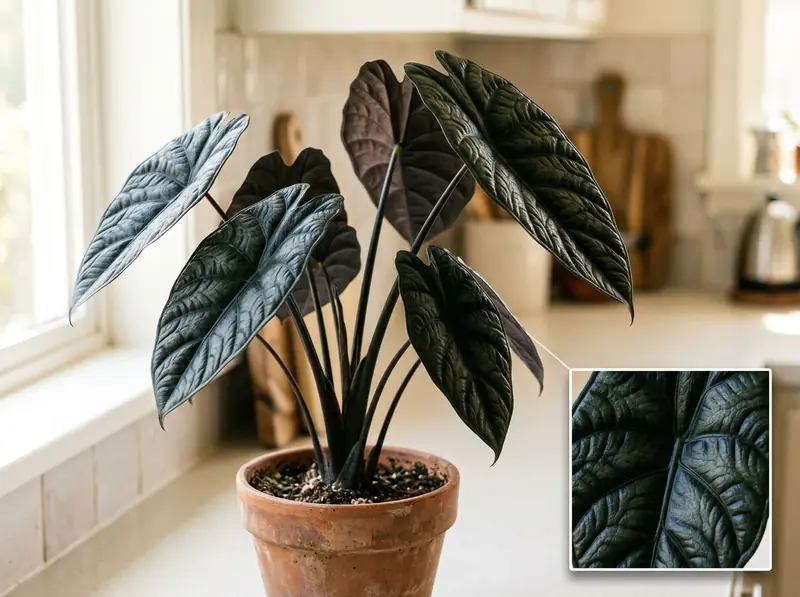 AI-generated
Infernalis Alocasia
Alocasia infernalis
- Bright, indirect light
- Moderate to moist watering
Toxic to cats and dogs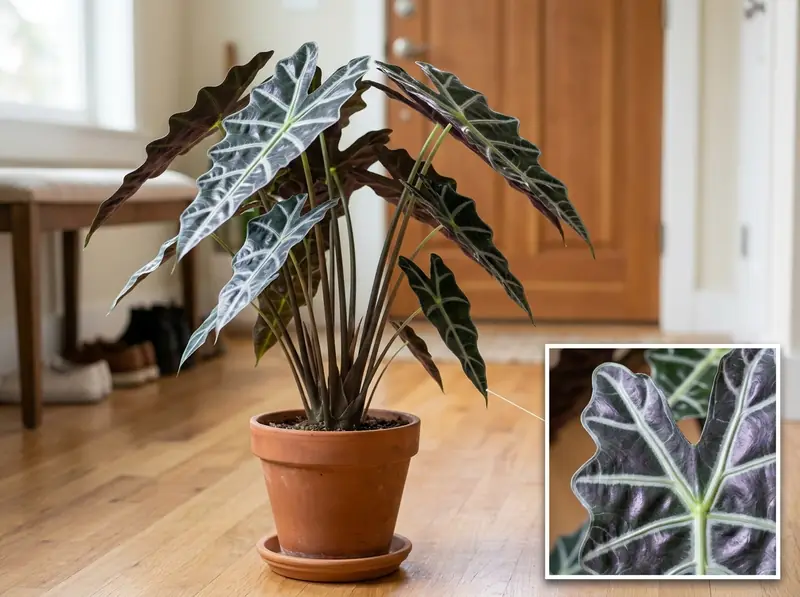 AI-generated
Kris Plant
Alocasia sanderiana
- Bright, indirect light
- Moderate to moist watering
Toxic to cats and dogs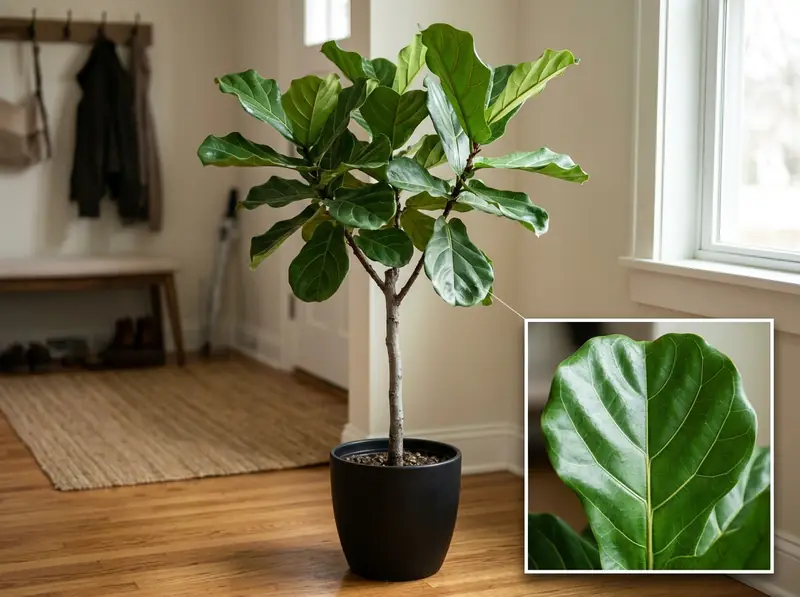 AI-generated
 AI-generated
Calathea Orbifolia
Goeppertia orbifolia
- Medium to bright, indirect light
- Keep moist
Pets: not yet checked