
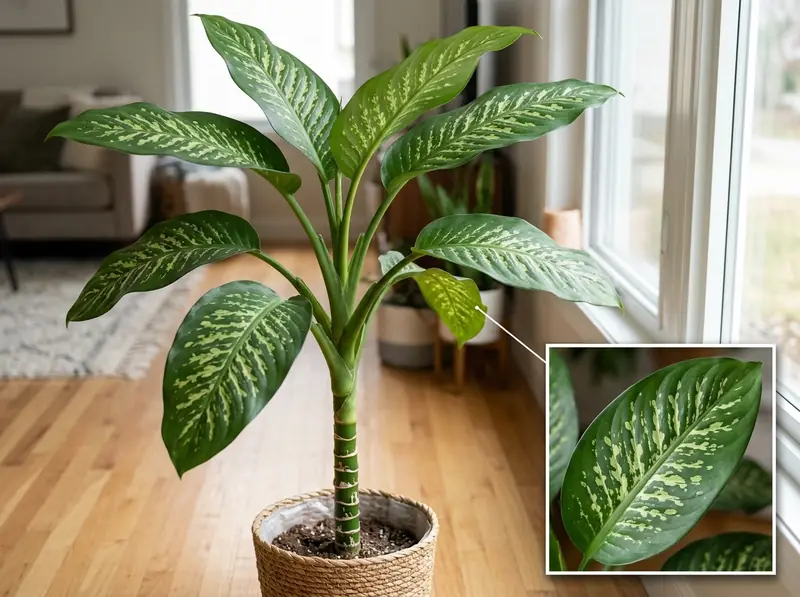
 AI-generated
Dumb Cane
Dieffenbachia seguine
Also known as Charming Dieffenbachia, Exotica, Giant Dumb Cane, Tropic Snow, Dumbcane, Spotted Dumb Cane, Exotica Perfection, Gold Dieffenbachia, Variable Dieffenbachia, Dieffenbachia amoena, Dieffenbachia picta
Dumb cane is a bold, upright foliage plant with large, marbled green and cream leaves. It is forgiving and adapts to ordinary room light and average home temperatures, which makes it a good choice for beginners. Keep it out of cold drafts and strong sun, and let the top inch or two of soil dry between waterings.
Saving is free with a KinClub account, and it works here and in the KinClub app. Sign up free
Care profile
- Light
- Medium lightLow → direct sun
- Water
- Moderate wateringAbout every 7 days
- Difficulty
- EasyTricky → easy
- Coldest it tolerates
- 60°F
- Humidity
- Medium
- Mature size
- LargeSmall → tree-size
- Growth rate
- Moderate to fast
- How common
- Very commonRare → everywhere
- Plant family
- Araceae
Pets and toxicity
Toxic to cats
Keep away from cats. Call your vet or a pet poison helpline if a cat chews it.
Toxic to dogs
Keep away from dogs. Call your vet or a pet poison helpline if a dog chews it.
Source: ASPCA toxic and non-toxic plants. If a pet eats any houseplant, call your vet or an animal poison helpline.
How to care for Dumb Cane
Light
Give it bright, filtered light or a medium-lit spot a few feet from a window. It tolerates lower light but grows slowly and loses some variegation. Avoid direct midday sun, which scorches the leaves.
Watering
Water thoroughly when the top 1 to 2 inches of soil feel dry, usually every 7 to 10 days in the growing season, less in winter. Empty the saucer after 15 minutes so the roots do not sit in water.
Soil
Use a well-draining, peat- or coir-based potting mix with some perlite or bark added, about one part perlite to three parts mix. Make sure the pot has drainage holes.
Feeding
Feed every 4 weeks from spring through summer with a balanced liquid houseplant fertilizer at half the labeled strength. Stop or cut back to once every 8 weeks in winter.
Repotting
Repot every 2 years in spring, or when roots circle the pot or come out of the drainage holes. Move up only 1 to 2 inches in pot diameter.
Propagation
Take stem cuttings 4 to 6 inches long with at least one node, or cut a bare cane into 2-inch sections. Lay them in moist mix or root in water at 70 to 75°F. Roots usually form in 3 to 6 weeks. Wear gloves, as the sap can irritate skin.
Common problems
- Yellowing lower leaves: usually overwatering or old age. Let the soil dry more between waterings and remove leaves that have turned fully yellow.
- Brown leaf tips and edges: dry air, underwatering, or fertilizer salts. Water evenly and flush the soil with plain water every few months.
- Bare, leggy lower stem: normal with age, and worsened by low light. Move it to brighter light, or cut the cane back to 6 inches and let it resprout.
- Stem rot at the soil line: caused by soggy soil or cold. Cut healthy top sections and re-root them, and discard the mushy base.
- Fine webbing and stippled leaves: spider mites. Rinse the leaves, wipe them, and treat with insecticidal soap weekly for 3 weeks.
Similar plants
Same light needs and difficulty.
 AI-generated
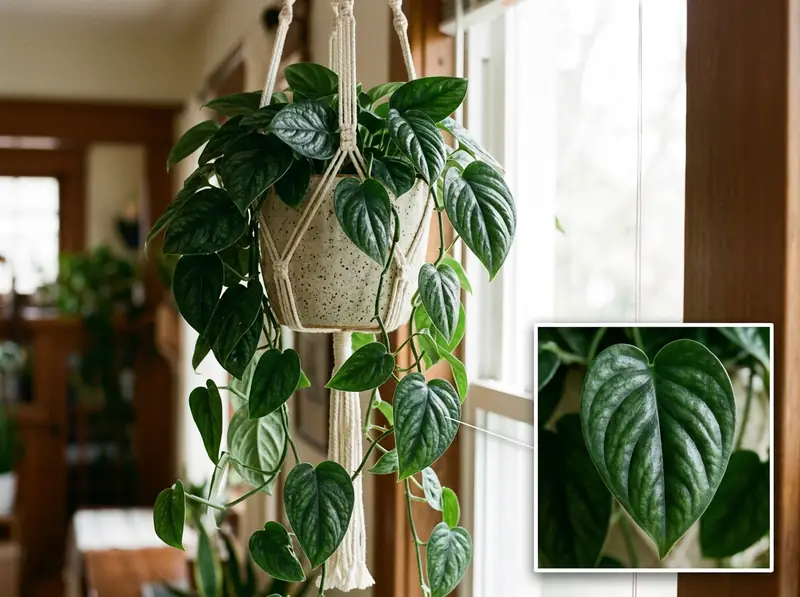
Lucens Scindapsus
Scindapsus lucens
- Medium to bright, indirect light
- Moderate watering
Toxic to cats and dogs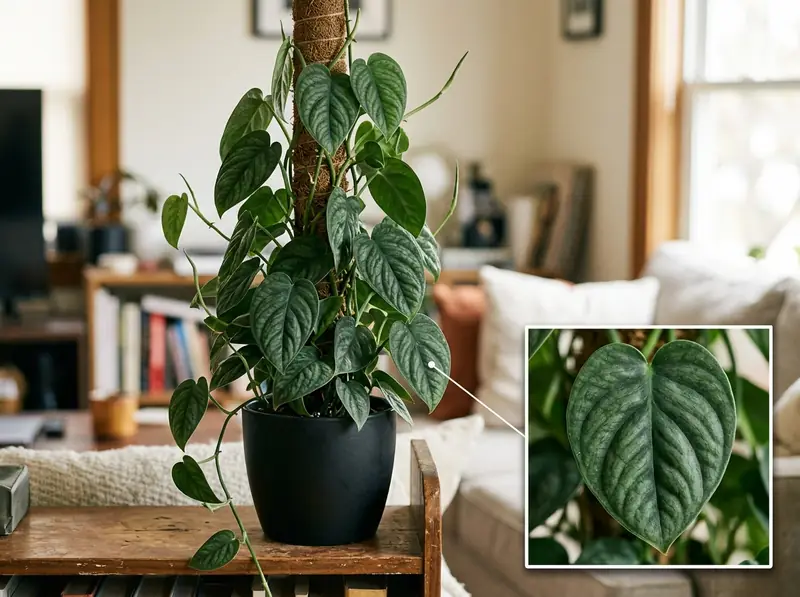 AI-generated
Mayari Scindapsus
Scindapsus mayari
- Medium to bright, indirect light
- Dry to moderate watering
Toxic to cats and dogs AI-generated
 AI-generated