
 AI-generated
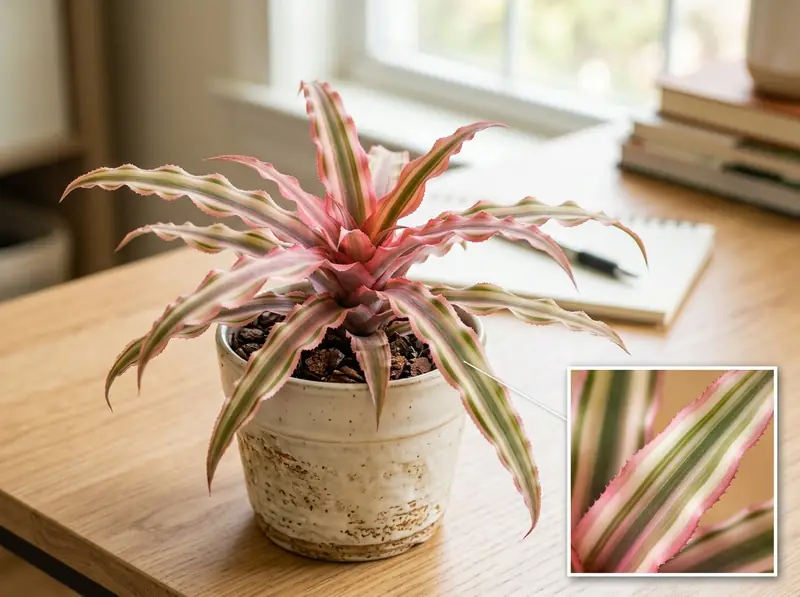
Earth Star
Cryptanthus bivittatus
Earth Star is a small, slow-growing bromeliad with wavy, striped leaves that form a flat star-shaped rosette in pink, cream and green. It stays under a foot across, so it suits a shelf or terrarium-like display. Give it bright indirect light, a fast-draining mix, and moderate watering, and it will slowly produce pups.
Saving is free with a KinClub account, and it works here and in the KinClub app. Sign up free
Care profile
- Light
- Bright, indirect lightLow → direct sun
- Water
- Moderate to moist wateringAbout every 10 days
- Difficulty
- EasyTricky → easy
- Coldest it tolerates
- 55°F
- Humidity
- Medium to high
- Mature size
- SmallSmall → tree-size
- Growth rate
- Slow to moderate
- How common
- CommonRare → everywhere
- Plant family
- Bromeliaceae
Pets and toxicity
Cats and dogs: not yet checked
Not yet checked against ASPCA — don't assume it's safe for pets.
No toxicity source on record for this plant yet. If a pet eats any houseplant, call your vet or an animal poison helpline.
How to care for Earth Star
Light
Give bright, indirect light, such as a spot near an east or filtered south window. A little gentle morning sun is fine and improves the striping, but hot midday sun scorches the leaves.
Watering
Water when the top inch of the mix is dry, about every 7 to 14 days in the growing season. Pour water around the base and let the excess drain, and water less in winter.
Soil
Use a light, fast-draining mix, such as standard potting mix with about one-third perlite or fine orchid bark. Choose a shallow pot with drainage holes, since the roots are small.
Feeding
Feed with a balanced houseplant fertilizer diluted to half strength once a month in spring and summer. Do not feed in fall and winter.
Repotting
Repot only every 2 to 3 years, or when pups crowd the pot. Go up just one pot size, because this plant has a small root system and prefers a snug, shallow pot.
Propagation
Separate the small offsets (pups) that grow around the base once they are about a third of the parent's size. Pot them in a light mix and keep them lightly moist and warm until they root.
Common problems
- Brown, crisp leaf tips: the air is too dry or the watering is irregular. Mist lightly or group it with other plants, and water on a steadier schedule.
- Soft, mushy center or base: this is rot from overwatering or water sitting in the rosette. Let the mix dry out, and cut off any rotted tissue. Keep water out of the center.
- Faded, plain green leaves: the light is too low. Move it to a brighter spot to restore the color.
- White cottony bugs or brown bumps in the leaf bases: these are mealybugs or scale. Wipe them off with rubbing alcohol on a cotton swab and repeat weekly until they are gone.
Similar plants
Same light needs and difficulty.
 AI-generated
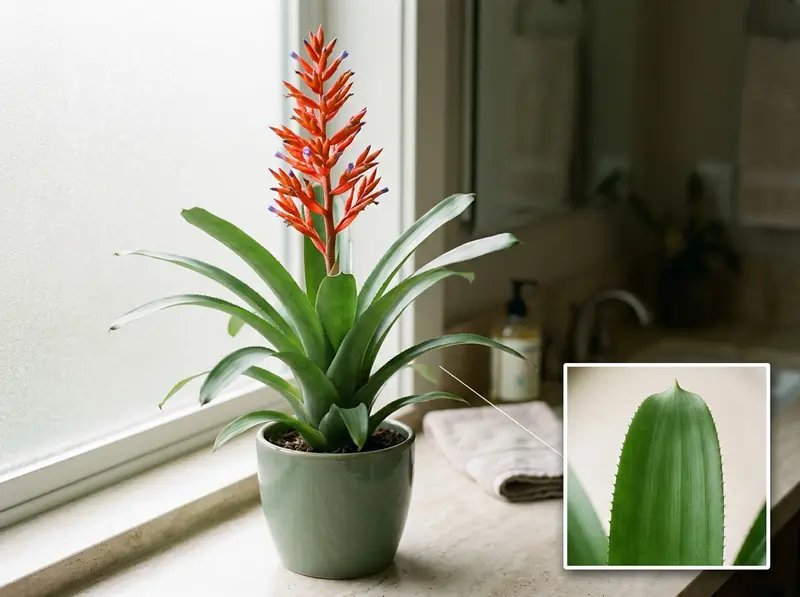
Miniata Bromeliad
Aechmea miniata
- Bright, indirect light
- Dry to moderate watering
Pets: not yet checked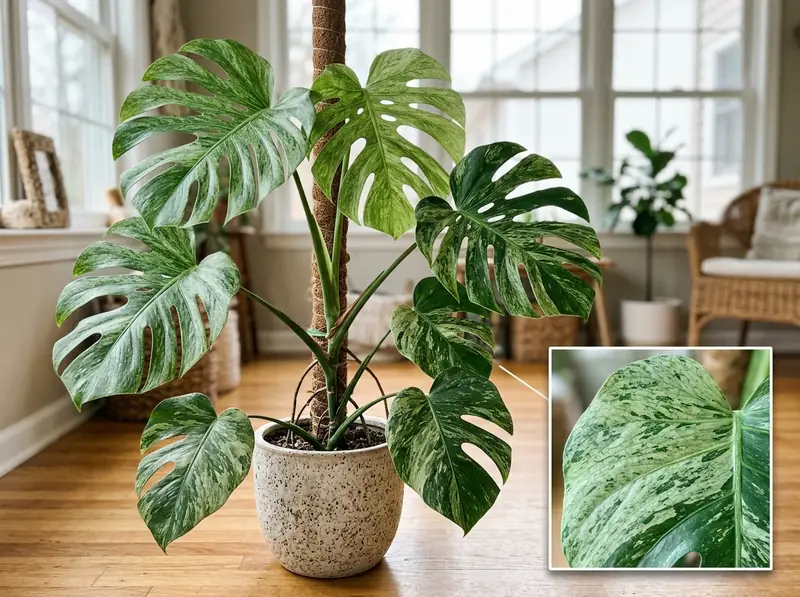 AI-generated
Mint Monstera
Monstera deliciosa 'Mint'
- Bright, indirect light
- Moderate watering
Toxic to cats and dogs AI-generated
Chinese Money Plant
Pilea peperomioides
- Bright, indirect light
- Dry to moderate watering
Pets: not yet checked AI-generated
Christmas Cactus
Schlumbergera × buckleyi
- Bright, indirect light
- Moderate watering
Pets: not yet checked