
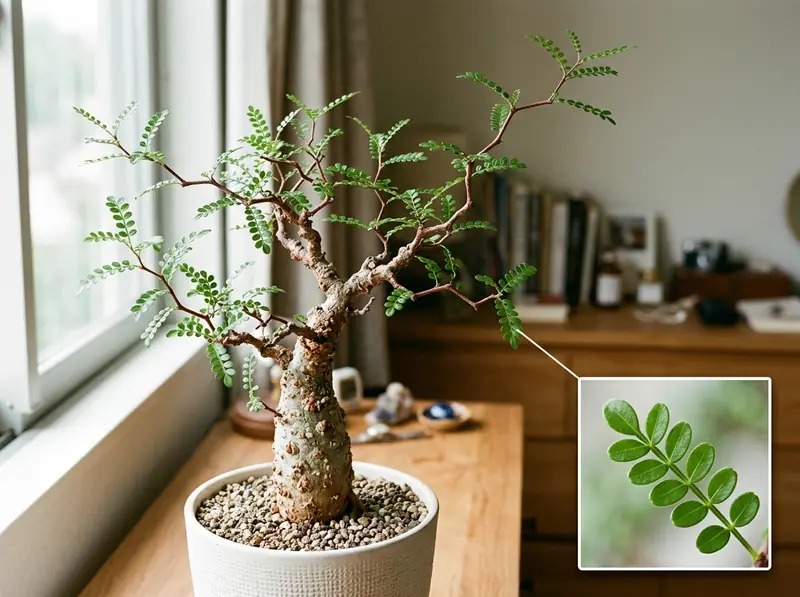
 AI-generated
Elephant Tree
Operculicarya decaryi
Elephant tree is a slow-growing succulent tree with a thick, swollen trunk, zigzagging stems and small glossy leaves, which makes it a popular bonsai-style plant. It needs lots of sun and a gritty soil, and the main way to lose it is overwatering. It may drop its leaves in winter, which is normal.
Saving is free with a KinClub account, and it works here and in the KinClub app. Sign up free
Care profile
- Light
- Direct sunLow → direct sun
- Water
- Let it dry outAbout every 14 days
- Difficulty
- ModerateTricky → easy
- Coldest it tolerates
- 50°F
- Humidity
- Low
- Mature size
- Medium to largeSmall → tree-size
- Growth rate
- Slow
- How common
- EnthusiastRare → everywhere
- Plant family
- Anacardiaceae
Pets and toxicity
Cats and dogs: not yet checked
Not yet checked against ASPCA — don't assume it's safe for pets.
No toxicity source on record for this plant yet. If a pet eats any houseplant, call your vet or an animal poison helpline.
How to care for Elephant Tree
Light
Give it as much bright light as you can, ideally 4-6 hours of direct sun from a south or west window. Move it toward full sun gradually to avoid leaf scorch.
Watering
Soak thoroughly, then let the soil dry out completely before watering again, usually every 10-18 days in summer. In winter, water sparingly, about once a month, or less if the plant is leafless.
Soil
Use a fast-draining gritty mix, such as cactus mix with about one third added perlite or pumice. Use a pot with drainage holes, and terracotta helps the soil dry faster.
Feeding
Feed with a half-strength balanced fertilizer or cactus fertilizer about once a month from spring through summer. Do not feed in autumn and winter.
Repotting
Repot every 2-3 years in spring, only moving up one pot size, as it likes being slightly snug. Shallow pots suit it well and show off the trunk.
Propagation
Take stem cuttings in late spring or summer, let the cut end callus for several days, then root in a gritty mix with warmth and light. Rooting can be slow and is not guaranteed.
Common problems
- Leaf drop in autumn or winter is often normal dormancy or low light; reduce watering and provide the brightest spot.
- Yellow leaves with soft stems mean overwatering; let the soil dry fully and check the roots for rot.
- Leggy growth with small leaves means too little light; move to a sunnier window or add a grow light.
- White cottony clusters in the stem joints are mealybugs; dab with rubbing alcohol on a cotton swab and repeat weekly.
- Fine webbing and stippled leaves indicate spider mites; rinse the plant and treat with insecticidal soap.
Similar plants
Same light needs and difficulty.
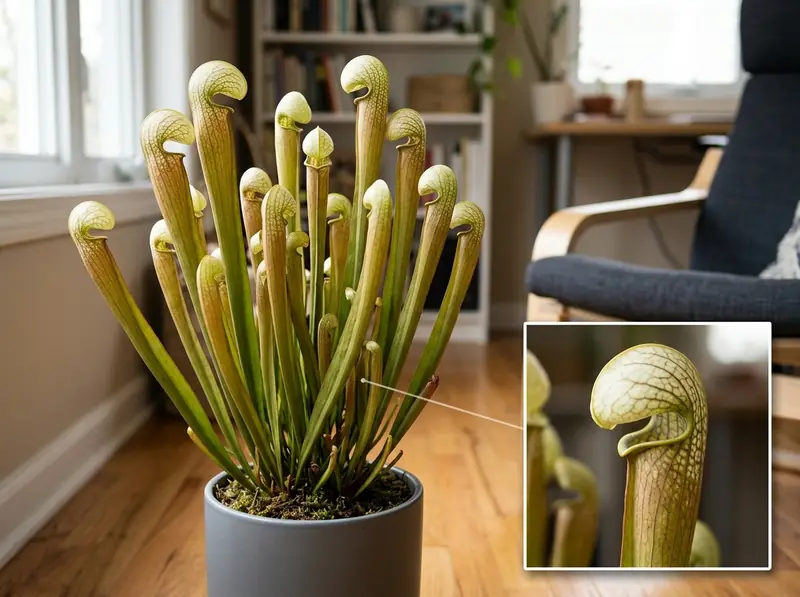 AI-generated
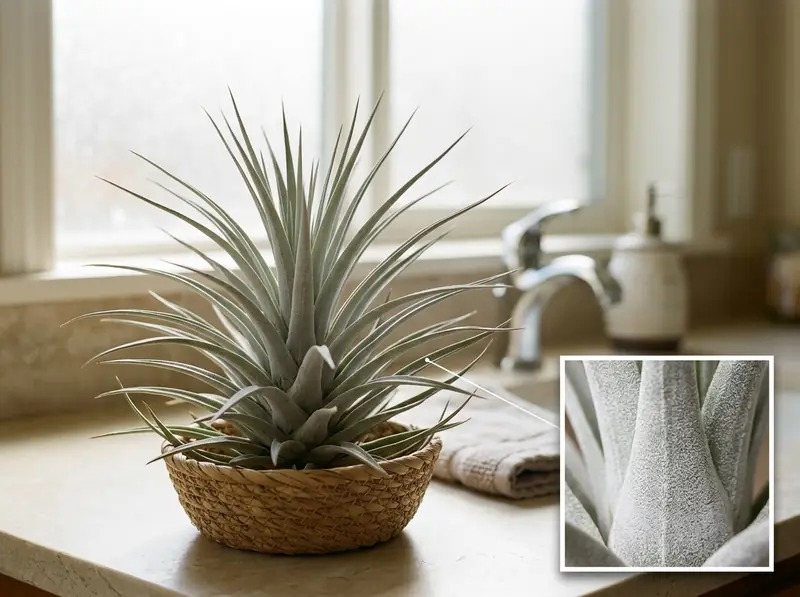 AI-generated
Paleacea Air Plant
Tillandsia paleacea
- Bright, indirect to direct sun
- Let it dry out
Pets: not yet checked AI-generated
 AI-generated