
 AI-generated
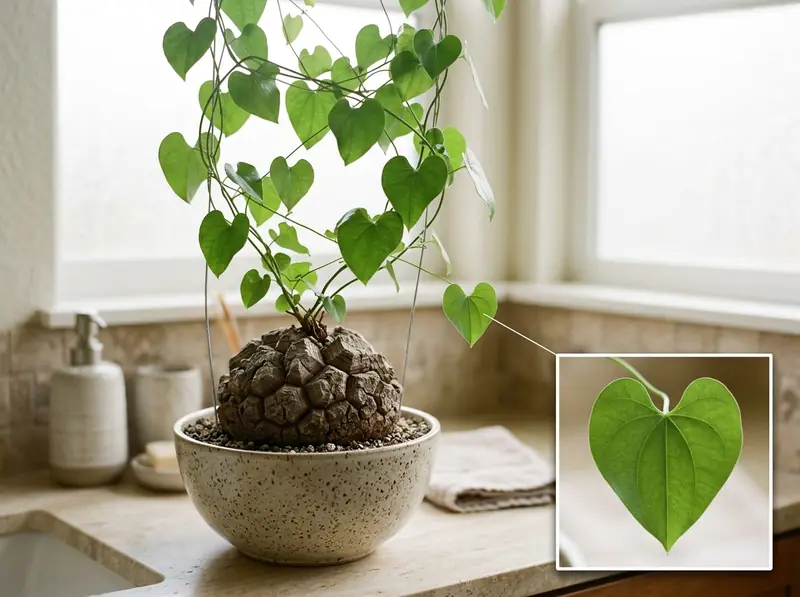
Elephant's Foot
Dioscorea elephantipes
A South African caudiciform plant whose cork-like, plated tuber looks like an elephant foot, with a delicate vine of heart-shaped leaves in the cool months. It sleeps through summer and wakes in fall. It needs gritty soil and patience.
Saving is free with a KinClub account, and it works here and in the KinClub app. Sign up free
Care profile
- Light
- Bright, indirect lightLow → direct sun
- Water
- Let it dry outAbout every 21 days
- Difficulty
- Moderate to challengingTricky → easy
- Coldest it tolerates
- 40°F
- Humidity
- Low
- Mature size
- MediumSmall → tree-size
- Growth rate
- Slow
- How common
- EnthusiastRare → everywhere
- Plant family
- Dioscoreaceae
Pets and toxicity
Cats and dogs: not yet checked
Not yet checked against ASPCA — don't assume it's safe for pets.
No toxicity source on record for this plant yet. If a pet eats any houseplant, call your vet or an animal poison helpline.
How to care for Elephant's Foot
Light
Provide bright light with some direct morning sun while the vine is active. Keep it in bright, filtered light once it goes dormant.
Watering
This is a winter grower: water lightly every 2 to 3 weeks from fall to spring when the vine is in leaf, then stop completely in summer rest. Never water a dormant tuber.
Soil
Use a very gritty, mineral cactus mix with at least half pumice or grit, and set the tuber with the top half exposed.
Feeding
Feed with a quarter-strength cactus fertilizer once or twice during the winter growing season.
Repotting
Repot only every 3 to 4 years, in early fall as the vine restarts, using a shallow pot.
Propagation
Mainly propagated from seed, which is slow; the caudex does not root from cuttings. Plants need a male and female for seeds.
Common problems
- Tuber rot from summer watering is the biggest killer. Keep it completely dry during dormancy.
- No sprouting in fall means it is not yet ready. Wait for the first shoot before watering.
- Mealybugs and scale hide in the vine joints. Wipe with alcohol and check often.
Similar plants
Same light needs and difficulty.
 AI-generated
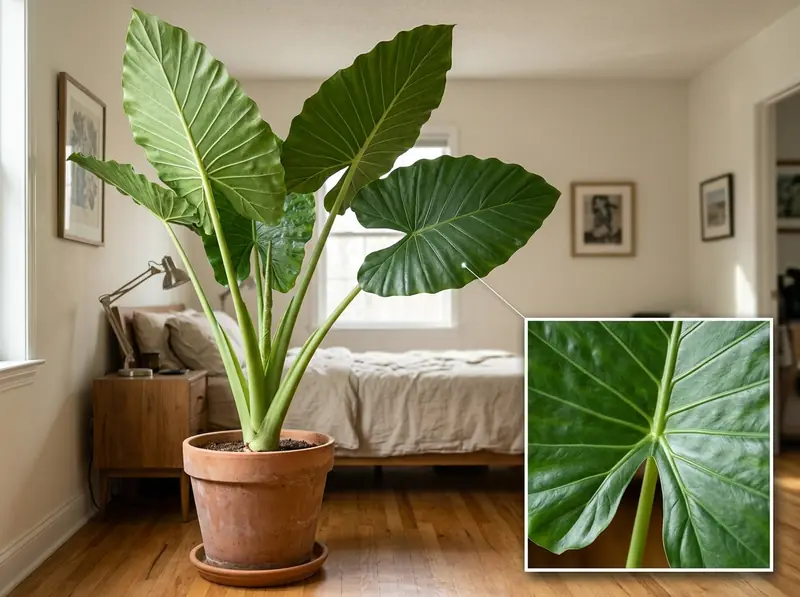
Robusta Alocasia
Alocasia robusta
- Bright, indirect light
- Moderate to moist watering
Toxic to cats and dogs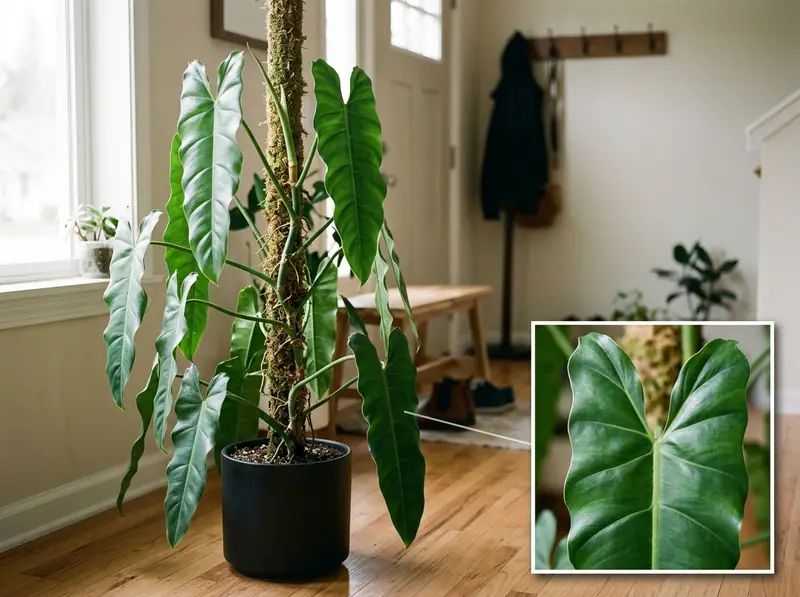 AI-generated
Spiritus Sancti Philodendron
Philodendron spiritus-sancti
- Bright, indirect light
- Moderate watering
Toxic to cats and dogs AI-generated
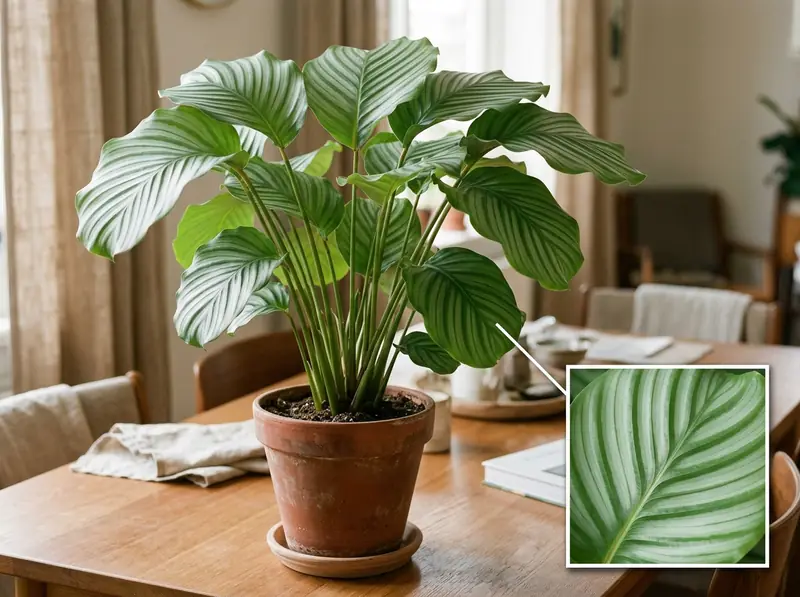 AI-generated
Calathea Orbifolia
Goeppertia orbifolia
- Medium to bright, indirect light
- Keep moist
Pets: not yet checked