AI-generated image, not a photograph of this plant. Real plants look different depending on light, soil, temperature and age.
AsphodelaceaeEnthusiast in stores
Fairy Washboard
Haworthiopsis limifolia
Also known as Haworthia limifolia
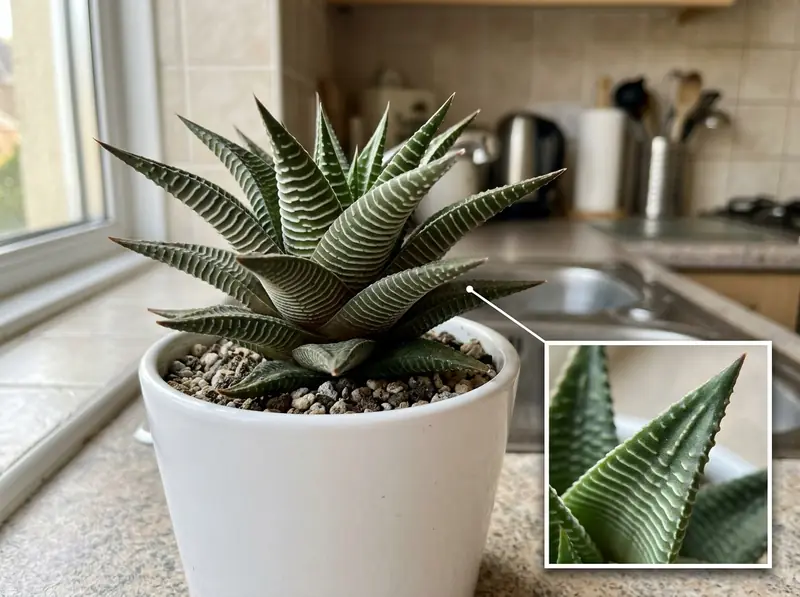
Fairy washboard (Haworthiopsis limifolia) forms a tight spiral rosette of dark green leaves marked with raised, ridged white bands, like a tiny washboard. It is a compact, slow-growing succulent that does well on a bright shelf with little care.
Pets: not yet checked
💡
Saving is free with a KinClub account, and it works here and in the KinClub app. Sign up free
🪴 Care profile
Light
Bright, indirect lightLow → direct sun
Water
Let it dry outAbout every 14 days
Difficulty
EasyTricky → easy
Coldest it tolerates
40°F
Humidity
Low
Mature size
SmallSmall → tree-size
Growth rate
Slow
How common
EnthusiastRare → everywhere
Plant family
Asphodelaceae
🐾 Pets and toxicity
Cats and dogs: not yet checked
Not yet checked against ASPCA — don't assume it's safe for pets.
Bright indirect light suits it, such as an east window or a spot back from a south one. It tolerates light shade, but strong afternoon sun browns and tightens the leaves.
Watering
Soak the soil when it is fully dry, about every 2 weeks in spring and summer and every 4-6 weeks in winter. Do not let water pool in the rosette.
Soil
Use a gritty cactus mix with added pumice or perlite, in a shallow pot with drainage. Quick drying is the key to keeping the roots healthy.
Feeding
Feed once a month in spring and summer with a half-strength cactus fertilizer. Skip winter feeding.
Repotting
Repot every 2-3 years in spring or when pups crowd the pot. A shallow container only slightly larger than the clump works well.
Propagation
It sends out many offsets at the base; separate them with roots attached in spring, let the cut dry, and pot in gritty mix. Division is the easy method.
Common problems
A dark, soft base means rot from too much water: unpot, trim the damage, and repot in dry gritty mix.
Brown or reddish leaves point to too much sun: move it back from the glass or add a sheer curtain.
Faded stripes and floppy leaves mean too little light, so move to a brighter spot.
Mealybugs between the leaves: dab with an alcohol-dipped swab and repeat weekly.

 AI-generated
 AI-generated
 AI-generated
 AI-generated
 AI-generated