
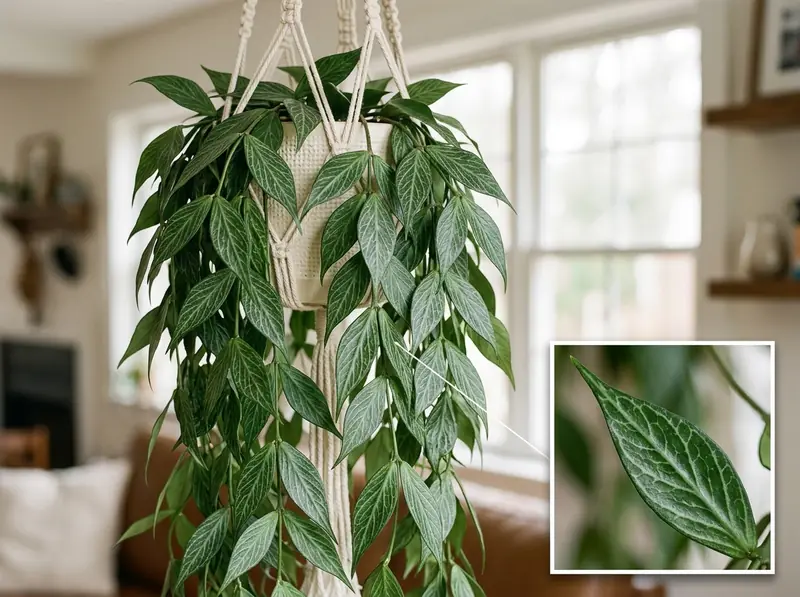
 AI-generated
Fishtail Hoya
Hoya polyneura
Fishtail hoya is a climbing or trailing vine with slender, dark-green leaves that have pale silvery veining and pointed tips. It's an easy, slow-to-moderate grower that copes well with some neglect if it gets bright light and a chunky, fast-draining mix. Mature plants can bloom with fragrant clusters of small flowers, and it looks best on a trellis or in a hanging basket.
Saving is free with a KinClub account, and it works here and in the KinClub app. Sign up free
Care profile
- Light
- Bright, indirect lightLow → direct sun
- Water
- Dry to moderate wateringAbout every 10 days
- Difficulty
- Easy to moderateTricky → easy
- Coldest it tolerates
- 55°F
- Humidity
- Medium to high
- Mature size
- Medium to largeSmall → tree-size
- Growth rate
- Moderate to fast
- How common
- CommonRare → everywhere
- Plant family
- Apocynaceae
Pets and toxicity
Cats and dogs: not yet checked
Not yet checked against ASPCA — don't assume it's safe for pets.
No toxicity source on record for this plant yet. If a pet eats any houseplant, call your vet or an animal poison helpline.
How to care for Fishtail Hoya
Light
Give it bright indirect light, such as a spot near an east window or a few feet back from a south or west window. Gentle morning sun is fine, but shade it from hot afternoon sun. More light encourages flowering.
Watering
Water thoroughly when the top 1 to 2 inches of mix are dry, then empty the saucer. This is usually every 7 to 14 days in summer and every 2 to 4 weeks in winter. Err on the dry side, as the thin leaves store less water than many other hoyas.
Soil
Use a very chunky, fast-draining mix, for example 2 parts orchid bark, 1 part perlite and 1 part regular potting mix. Always use a pot with drainage holes.
Feeding
Feed every 2 to 4 weeks in spring and summer with a balanced houseplant fertilizer at half the labeled strength. Stop feeding in fall and winter.
Repotting
Hoyas like being snug, so repot only every 2 to 3 years, or when roots fill the pot. Move up just 1 to 2 inches in pot diameter in spring.
Propagation
Take a stem cutting 4 to 6 inches long with at least 2 nodes and remove the lowest leaves. Root it in water or damp perlite and bark in warm, bright light, which takes 3 to 6 weeks.
Common problems
- Yellow, mushy leaves: usually overwatering or heavy soil. Let the mix dry out, and repot into a chunkier mix if the roots are brown and soft.
- No flowers: usually too little light or pruning of the old flower spurs. Move to brighter indirect light and leave the spurs alone.
- Cottony white clusters in leaf joints are mealybugs. Dab with cotton swabs dipped in rubbing alcohol and repeat weekly until gone.
- Long bare vines with few leaves: low light. Move to a brighter spot and trim the tips to encourage branching.
- Leaf drop after a move or a draft: the plant is reacting to sudden change. Keep it in a stable spot away from vents and cold windows.
Similar plants
Same light needs and difficulty.
 AI-generated
 AI-generated
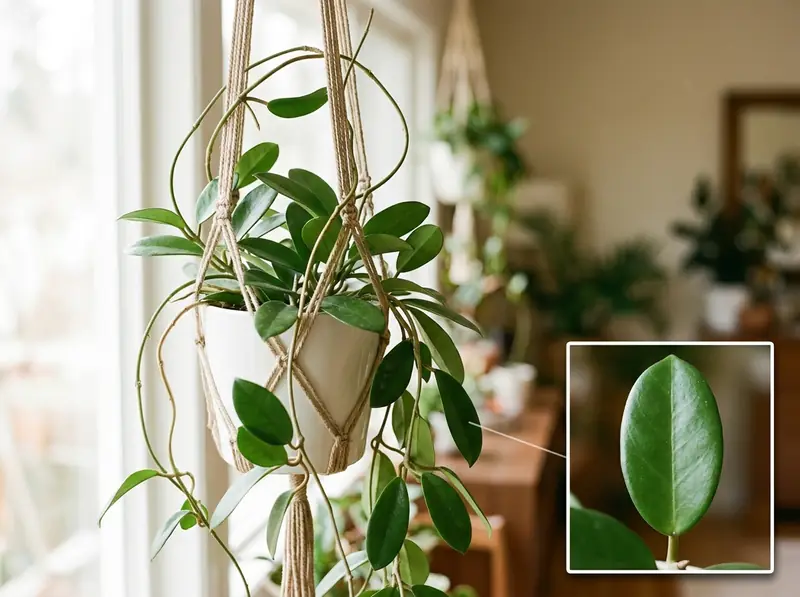
Diversifolia Hoya
Hoya diversifolia
- Bright, indirect light
- Dry to moderate watering
Pets: not yet checked AI-generated
Chinese Money Plant
Pilea peperomioides
- Bright, indirect light
- Dry to moderate watering
Pets: not yet checked AI-generated
Christmas Cactus
Schlumbergera × buckleyi
- Bright, indirect light
- Moderate watering
Pets: not yet checked