
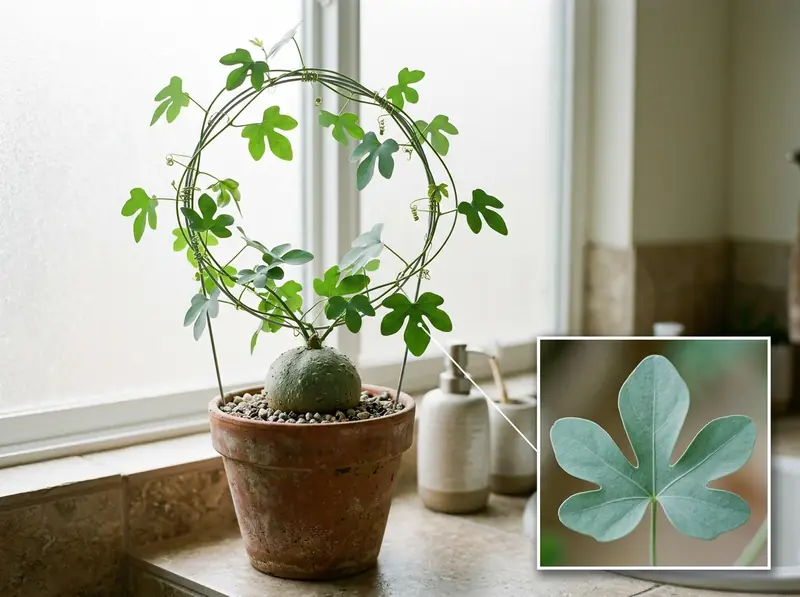
 AI-generated
Glauca Adenia
Adenia glauca
Glauca adenia is a slow-growing succulent vine from southern Africa with a swollen, rounded base (caudex) and thin climbing stems with tendrils. It wants lots of sun, gritty soil and infrequent watering, and it rests in winter, often dropping its leaves. Give it a small trellis or hoop to climb and keep it dry while dormant.
Saving is free with a KinClub account, and it works here and in the KinClub app. Sign up free
Care profile
- Light
- Direct sunLow → direct sun
- Water
- Let it dry outAbout every 14 days
- Difficulty
- ModerateTricky → easy
- Coldest it tolerates
- 50°F
- Humidity
- Low
- Mature size
- MediumSmall → tree-size
- Growth rate
- Slow
- How common
- EnthusiastRare → everywhere
- Plant family
- Passifloraceae
Pets and toxicity
Cats and dogs: not yet checked
Not yet checked against ASPCA — don't assume it's safe for pets.
No toxicity source on record for this plant yet. If a pet eats any houseplant, call your vet or an animal poison helpline.
How to care for Glauca Adenia
Light
Give it as much bright light as you can, including several hours of direct sun from a south or west window. Acclimate it gradually if moving it into stronger light.
Watering
In spring and summer, soak the pot thoroughly, then wait until the soil is completely dry before watering again, usually every 2 to 3 weeks. When it loses its leaves in winter, water only a few tablespoons a month or not at all.
Soil
Use a gritty, fast-draining cactus mix with extra pumice or perlite, roughly half mineral grit. Let the top of the caudex sit partly above the soil line.
Feeding
Feed with a half-strength balanced or cactus fertilizer once a month during active growth in spring and summer. Do not feed in dormancy.
Repotting
Repot only every 2 to 3 years, in spring as growth starts, into a pot just 1 to 2 inches wider. A shallow, wide pot with a drainage hole suits the caudex.
Propagation
Seed is the reliable method and needs warmth and a gritty mix. Stem cuttings are slow and unreliable, so most people buy an established plant.
Common problems
- Leaf drop in autumn or winter is normal dormancy; reduce watering and keep the plant in a bright, frost-free place until spring.
- Soft, mushy caudex is rot from wet soil; unpot, cut away any soft tissue, let it dry for a week, and repot in fresh gritty mix.
- Spider mites cause fine speckling and webbing in dry warm rooms; rinse the vine and spray with insecticidal soap weekly until clear.
- Mealybugs and scale hide on stems and leaf joints; dab them with cotton swabs dipped in rubbing alcohol and repeat weekly.
Similar plants
Same light needs and difficulty.
 AI-generated
 AI-generated
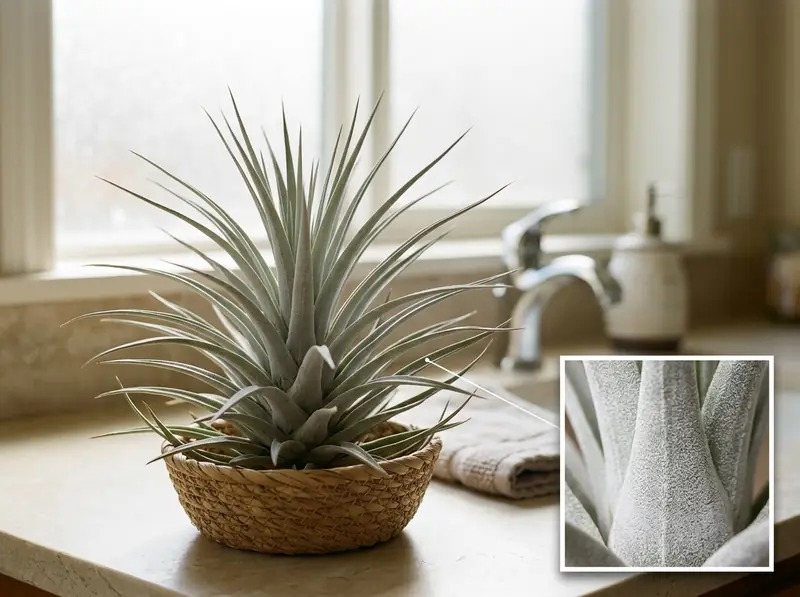
Paleacea Air Plant
Tillandsia paleacea
- Bright, indirect to direct sun
- Let it dry out
Pets: not yet checked AI-generated
 AI-generated