
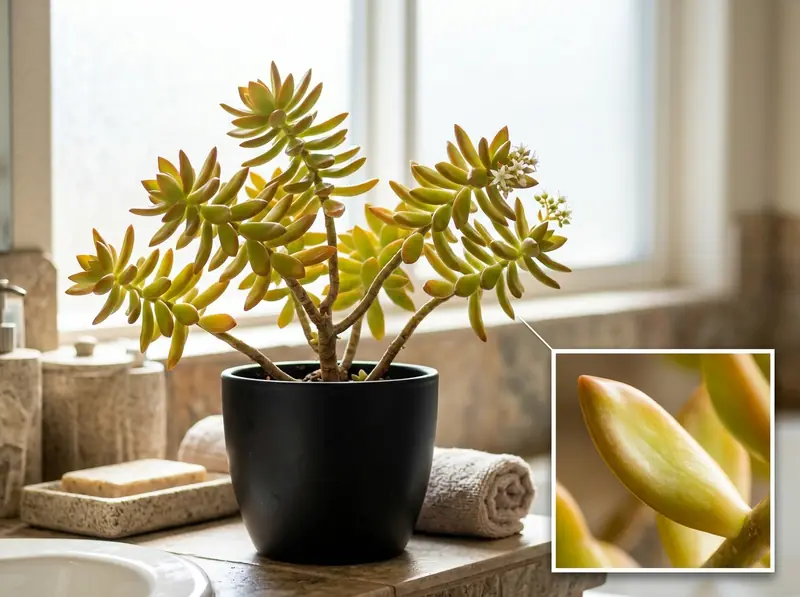
 AI-generated
Golden Sedum
Sedum adolphi
Golden sedum is a compact, slow-growing succulent with fleshy, gold-green leaves on arching stems, and it can produce small white flowers. It wants lots of sun and very little water, so it suits a bright sunny windowsill and forgives neglect. It is easy to multiply from cuttings or fallen leaves.
Saving is free with a KinClub account, and it works here and in the KinClub app. Sign up free
Care profile
- Light
- Direct sunLow → direct sun
- Water
- Let it dry outAbout every 14 days
- Difficulty
- EasyTricky → easy
- Coldest it tolerates
- 40°F
- Humidity
- Low
- Mature size
- SmallSmall → tree-size
- Growth rate
- Slow to moderate
- How common
- CommonRare → everywhere
- Plant family
- Crassulaceae
Pets and toxicity
Cats and dogs: not yet checked
Not yet checked against ASPCA — don't assume it's safe for pets.
No toxicity source on record for this plant yet. If a pet eats any houseplant, call your vet or an animal poison helpline.
How to care for Golden Sedum
Light
Give it at least 4 to 6 hours of bright light, ideally direct sun from a south or west window. Acclimate it gradually to full sun to avoid scorching.
Watering
Water thoroughly, then let the soil dry out almost completely before watering again, usually every 2 to 3 weeks in summer. In winter, water only about once a month or when leaves begin to look slightly wrinkled.
Soil
Use a gritty cactus or succulent mix, or mix regular potting soil with about half perlite or coarse sand. Use a pot with drainage holes, ideally terracotta.
Feeding
Feed with a balanced fertilizer diluted to half strength once or twice in spring and summer. Do not feed in fall and winter.
Repotting
Repot every 2 to 3 years, or when the plant crowds the pot, in spring. Choose a pot only 1 to 2 inches wider and handle the brittle stems gently.
Propagation
Stem cuttings or single fallen leaves root easily. Let cuttings callus for a few days, then lay them on or push them into dry gritty soil and water sparingly after a week or two.
Common problems
- Leggy, stretched stems: the plant needs more light. Move it to a sunnier window and trim the stems back to restart compact growth.
- Mushy, translucent leaves or soft stem base: overwatering. Let soil dry completely, and if the stem is rotting, take healthy cuttings and replant.
- Leaves drop easily: they are brittle and fall when bumped, which is normal. Dropped leaves can be replanted to root.
- White cottony clusters in leaf joints: mealybugs. Dab them with a cotton swab dipped in rubbing alcohol and repeat weekly until gone.
Similar plants
Same light needs and difficulty.
 AI-generated
 AI-generated
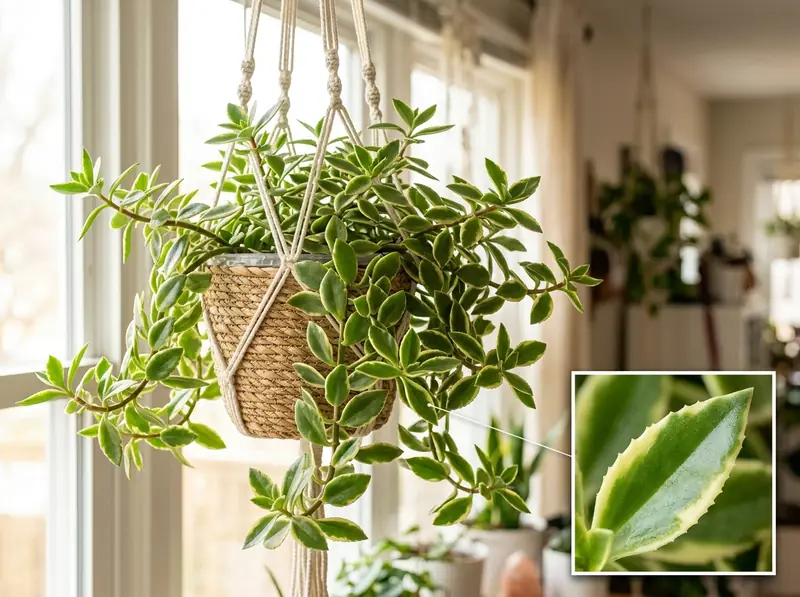
Variegated Crassula
Crassula sarmentosa
- Bright, indirect to direct sun
- Let it dry out
Pets: not yet checked AI-generated
 AI-generated