
 AI-generated
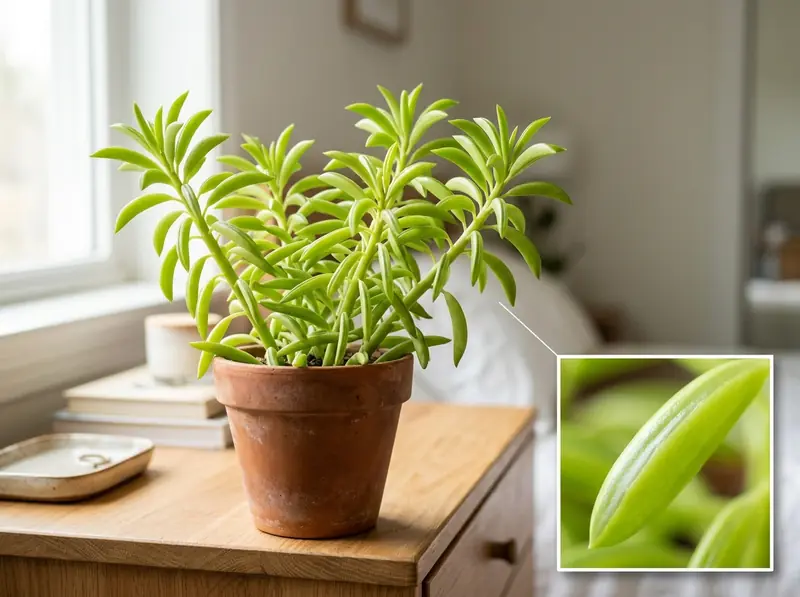
Happy Bean
Peperomia ferreyrae
Happy Bean is a compact, slow-growing Peperomia with plump, bean-pod-shaped green leaves on upright stems that eventually arch and spread. It stores water in its leaves, so it suits beginners who tend to forget watering. Give it bright, indirect light, gritty soil and a thorough soak only when the soil is dry.
Saving is free with a KinClub account, and it works here and in the KinClub app. Sign up free
Care profile
- Light
- Bright, indirect lightLow → direct sun
- Water
- Let it dry outAbout every 14 days
- Difficulty
- EasyTricky → easy
- Coldest it tolerates
- 50°F
- Humidity
- Low
- Mature size
- SmallSmall → tree-size
- Growth rate
- Slow to moderate
- How common
- CommonRare → everywhere
- Plant family
- Piperaceae
Pets and toxicity
Cats and dogs: not yet checked
Not yet checked against ASPCA — don't assume it's safe for pets.
No toxicity source on record for this plant yet. If a pet eats any houseplant, call your vet or an animal poison helpline.
How to care for Happy Bean
Light
Give it bright, indirect light, such as a spot near an east or filtered south or west window. It tolerates some gentle morning sun but not hot midday sun, and it becomes leggy in dim rooms.
Watering
Water thoroughly only when the soil has dried out almost completely, roughly every 2 to 3 weeks in the growing season and less in winter. The thick, succulent leaves store water, so it is safer to water too little than too much.
Soil
Use a fast-draining mix, for example 2 parts standard potting mix to 1 part perlite or coarse sand, or a cactus mix lightened with some bark. Always use a pot with drainage holes, and terracotta helps the soil dry.
Feeding
Feed once a month in spring and summer with a balanced houseplant fertiliser diluted to half the label strength. Skip feeding in fall and winter.
Repotting
Repot only every 2 to 3 years when roots fill the pot, in spring, going up just one size (about 1 inch wider). It has a small root system and prefers a snug pot.
Propagation
Take a stem cutting 3 to 4 inches long with a few leaves, let the cut end callus for a day, and set it in barely damp gritty mix. Individual leaves with a bit of stem can also root, in a few weeks, in bright light.
Common problems
- Yellow, mushy leaves and a soft stem base point to overwatering or root rot; cut off healthy stem tops, let them callus and repot in fresh gritty mix.
- Wrinkled, limp leaves mean the plant is thirsty; give a thorough soak and let it drain fully.
- Long, sparse stems with small leaves mean low light; move it somewhere brighter and pinch back the tips to encourage bushier growth.
- White cottony clusters in the leaf joints are mealybugs; dab them with cotton swabs dipped in rubbing alcohol and repeat weekly until gone.
- Leaf loss in cold drafts or below about 50°F; keep it away from cold windows and vents in winter.
Similar plants
Same light needs and difficulty.
 AI-generated
 AI-generated
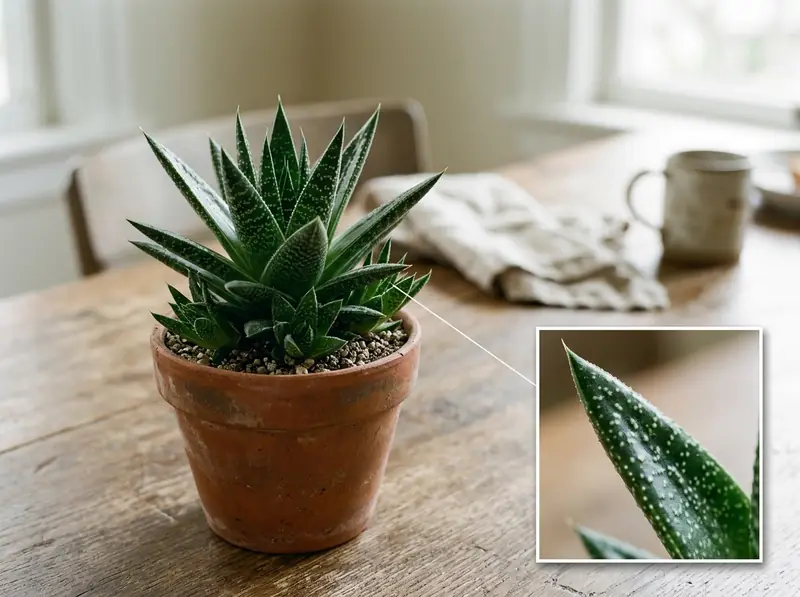
Green Ice Gasteraloe
Gasteraloe 'Green Ice'
- Bright, indirect light
- Let it dry out
Pets: not yet checked AI-generated
Chinese Money Plant
Pilea peperomioides
- Bright, indirect light
- Dry to moderate watering
Pets: not yet checked AI-generated
Christmas Cactus
Schlumbergera × buckleyi
- Bright, indirect light
- Moderate watering
Pets: not yet checked