
 AI-generated
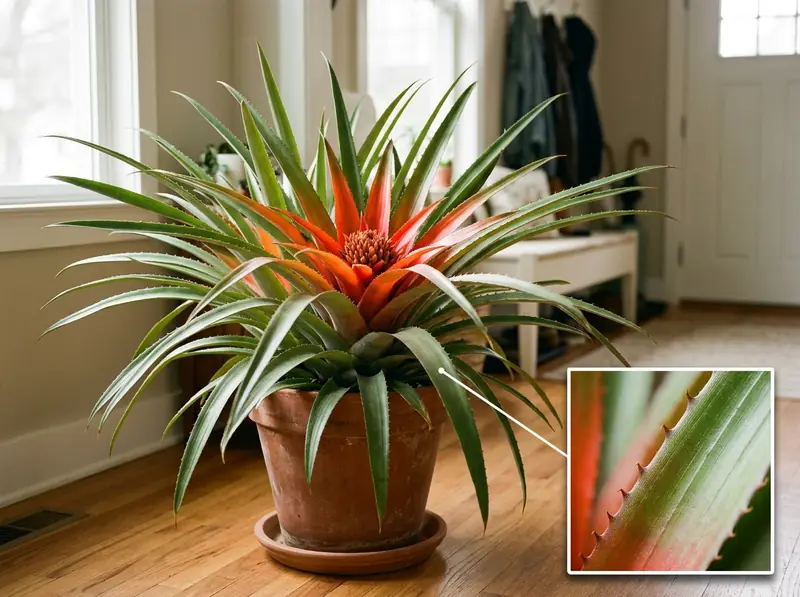
Heart of Flame
Bromelia balansae
A tough terrestrial bromeliad with long, arching, sharp-toothed leaves whose center flushes bright red when mature and in bloom. It handles dry air and a sunny window, and it suits a large floor pot.
Saving is free with a KinClub account, and it works here and in the KinClub app. Sign up free
Care profile
- Light
- Direct sunLow → direct sun
- Water
- Dry to moderate wateringAbout every 10 days
- Difficulty
- Easy to moderateTricky → easy
- Coldest it tolerates
- 40°F
- Humidity
- Low to medium
- Mature size
- LargeSmall → tree-size
- Growth rate
- Slow to moderate
- How common
- EnthusiastRare → everywhere
- Plant family
- Bromeliaceae
Pets and toxicity
Cats and dogs: not yet checked
Not yet checked against ASPCA — don't assume it's safe for pets.
No toxicity source on record for this plant yet. If a pet eats any houseplant, call your vet or an animal poison helpline.
How to care for Heart of Flame
Light
Needs bright light, ideally several hours of direct sun from a south or west window. Low light keeps the leaves dull green and prevents the red center from developing.
Watering
Water when the top 2 inches of mix are dry, roughly every 10 days in summer and every 3 weeks in winter. It also holds a little water in the central cup; keep that fresh.
Soil
Use a coarse, well-draining mix such as cactus or succulent soil blended with orchid bark or perlite.
Feeding
Feed with a half-strength balanced fertilizer monthly in spring and summer; apply it to the soil rather than the center cup.
Repotting
Repot every 2 to 3 years in spring, only when the clump has outgrown its container. Use a sturdy, wide pot.
Propagation
Separate pups from the base when they are about a third the size of the parent, and pot them in gritty mix.
Common problems
- Brown, mushy center: crown rot from stagnant water. Pour water out of the cup and let the mix dry more between waterings.
- Dull green leaves, no red color: too little light. Move to the brightest, sunniest spot.
- Small bumps or white cotton on leaves: scale or mealybugs. Scrape off or dab with alcohol on a cotton swab.
Similar plants
Same light needs and difficulty.
 AI-generated
 AI-generated
 AI-generated
 AI-generated