
 AI-generated
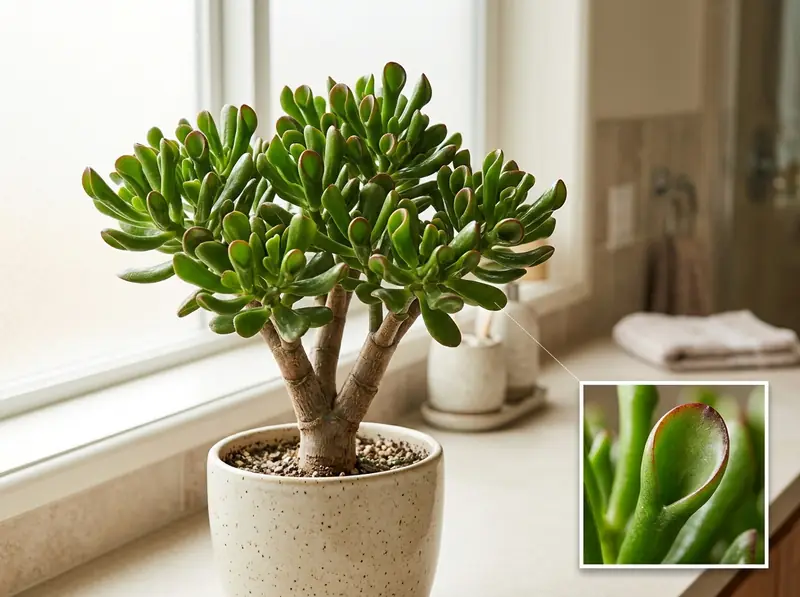
Hobbit Jade
Crassula ovata 'Hobbit'
Hobbit jade is a compact form of the classic jade plant, known for its small, tubular green leaves that curl into little trumpet or suction-cup shapes at the tips. It is slow-growing and easygoing, and it thrives on a sunny windowsill with infrequent watering. Bright light brings out red edges on the leaves and keeps the branching dense.
Saving is free with a KinClub account, and it works here and in the KinClub app. Sign up free
Care profile
- Light
- Direct sunLow → direct sun
- Water
- Let it dry outAbout every 14 days
- Difficulty
- EasyTricky → easy
- Coldest it tolerates
- 50°F
- Humidity
- Low
- Mature size
- MediumSmall → tree-size
- Growth rate
- Slow
- How common
- CommonRare → everywhere
- Plant family
- Crassulaceae
Pets and toxicity
Toxic to cats
Keep away from cats. Call your vet or a pet poison helpline if a cat chews it.
Toxic to dogs
Keep away from dogs. Call your vet or a pet poison helpline if a dog chews it.
Source: ASPCA toxic and non-toxic plants. If a pet eats any houseplant, call your vet or an animal poison helpline.
How to care for Hobbit Jade
Light
Give it at least 4-6 hours of bright light, ideally some direct sun from a south or west window. In lower light it survives but becomes leggy and weak.
Watering
Water thoroughly until it drains, then let the soil dry out completely, about every 2-3 weeks in summer. In winter water only every 4-6 weeks, just enough to keep the leaves from wrinkling.
Soil
Use a gritty cactus or succulent mix, or regular potting mix with about one-third perlite or coarse sand. Always use a pot with drainage holes, and unglazed terracotta helps the soil dry.
Feeding
Feed with a half-strength balanced fertilizer or cactus fertilizer about once a month from spring to late summer. Do not feed in fall and winter.
Repotting
Repot every 2-3 years in spring, only when it is root-bound or top-heavy. Choose a heavy pot only slightly larger, since mature plants tip over easily.
Propagation
Twist off a leaf or cut a stem tip, let the cut end dry and callus for several days, then lay the leaf on or set the cutting in dry gritty mix. Water lightly once roots form, in 2-4 weeks.
Common problems
- Leggy, stretched growth: move to a brighter spot and prune stem tips to encourage branching.
- Soft, mushy stem or leaves from rot: stop watering, cut off rotted parts, and repot in dry gritty mix.
- White cottony clusters (mealybugs) in leaf joints: dab with cotton swab dipped in rubbing alcohol and repeat weekly.
- Leaves dropping in winter: check for overwatering or cold drafts, and reduce watering.
- Plant tipping over: repot into a heavier, wider pot and prune to balance the top growth.
Similar plants
Same light needs and difficulty.
 AI-generated
 AI-generated
 AI-generated
 AI-generated