
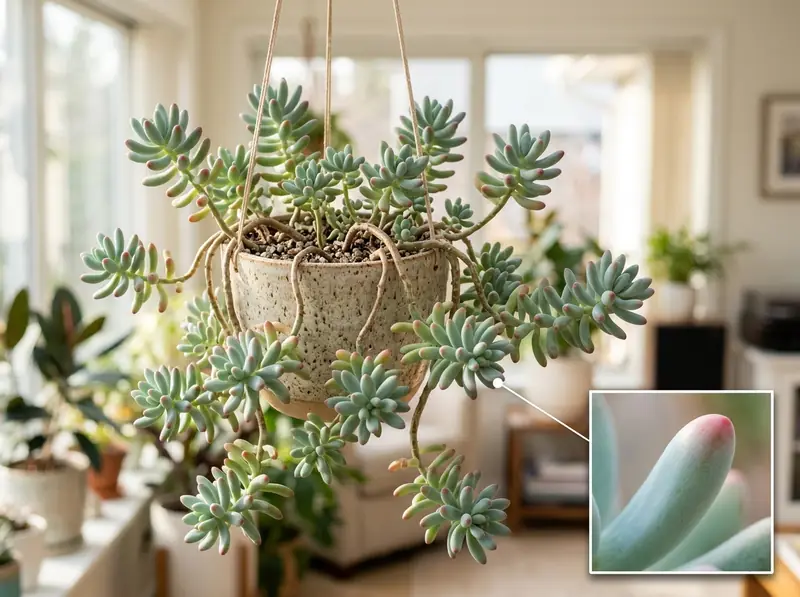
 AI-generated
Jelly Beans
Sedum pachyphyllum
Jelly Beans is a small succulent with plump, bean-shaped blue-green leaves that have reddish tips. It grows in sprawling, trailing stems and is easy to grow if given plenty of sun and gritty, fast-draining soil. Water it sparingly, and it will be tough and low-maintenance.
Saving is free with a KinClub account, and it works here and in the KinClub app. Sign up free
Care profile
- Light
- Direct sunLow → direct sun
- Water
- Let it dry outAbout every 14 days
- Difficulty
- EasyTricky → easy
- Coldest it tolerates
- 30°F
- Humidity
- Low
- Mature size
- SmallSmall → tree-size
- Growth rate
- Moderate
- How common
- EnthusiastRare → everywhere
- Plant family
- Crassulaceae
Pets and toxicity
Cats and dogs: not yet checked
Not yet checked against ASPCA — don't assume it's safe for pets.
No toxicity source on record for this plant yet. If a pet eats any houseplant, call your vet or an animal poison helpline.
How to care for Jelly Beans
Light
Give it at least 4-6 hours of direct sun, such as a south or west window. Bright light keeps the leaves compact and brings out the red tips.
Watering
Soak the soil thoroughly, then let it dry out completely before watering again, about every 2 weeks in summer. Water only about once a month or less in winter.
Soil
Use a gritty cactus and succulent mix, or add about one-third perlite or pumice to regular potting mix. The pot must have drainage holes.
Feeding
Feed with a half-strength balanced fertilizer once or twice in spring and summer. Do not feed in fall and winter.
Repotting
Repot every 2-3 years in spring, only when the plant has outgrown the pot. Choose a shallow pot just one size larger, and handle it gently because the leaves break off easily.
Propagation
Stem cuttings or fallen leaves root easily. Let cuttings callus for a few days, then set them on dry gritty mix and mist lightly until roots form.
Common problems
- Stretched, leggy growth means too little light. Move it to a sunnier spot and trim back the stems.
- Mushy, translucent leaves and a soft stem mean overwatering. Let the soil dry fully and cut off any rotted parts.
- Mealybugs show up as white cottony spots between the leaves. Dab them with rubbing alcohol on a cotton swab and repeat weekly.
- Leaves drop easily when bumped. This is normal, so replant the fallen leaves to grow new plants.
Similar plants
Same light needs and difficulty.
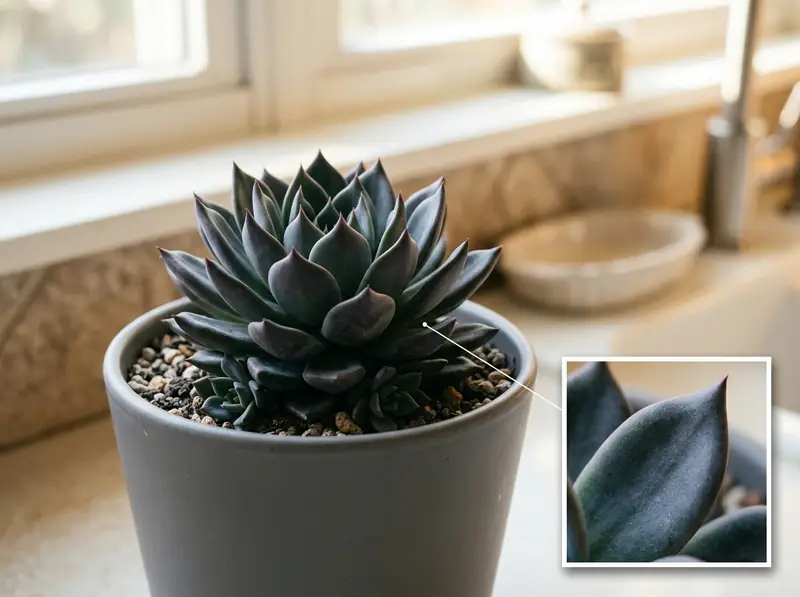 AI-generated
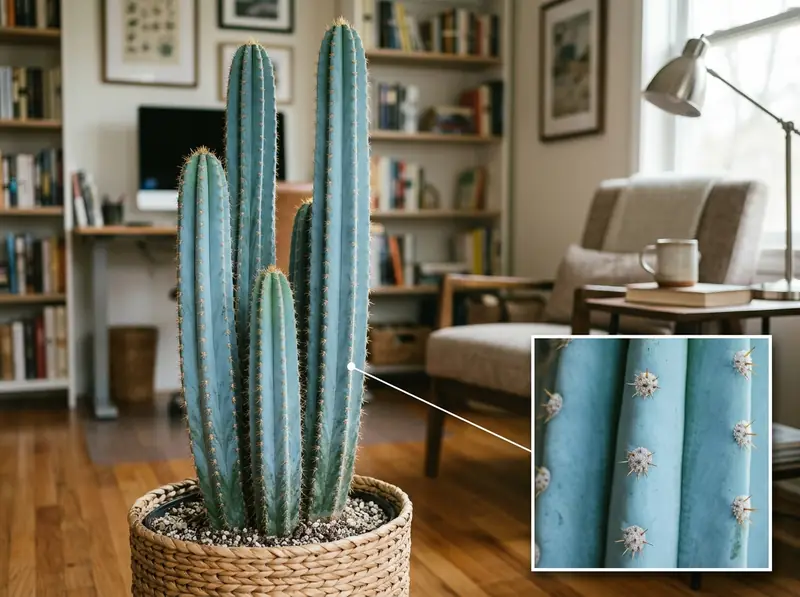 AI-generated
 AI-generated
 AI-generated