
 AI-generated
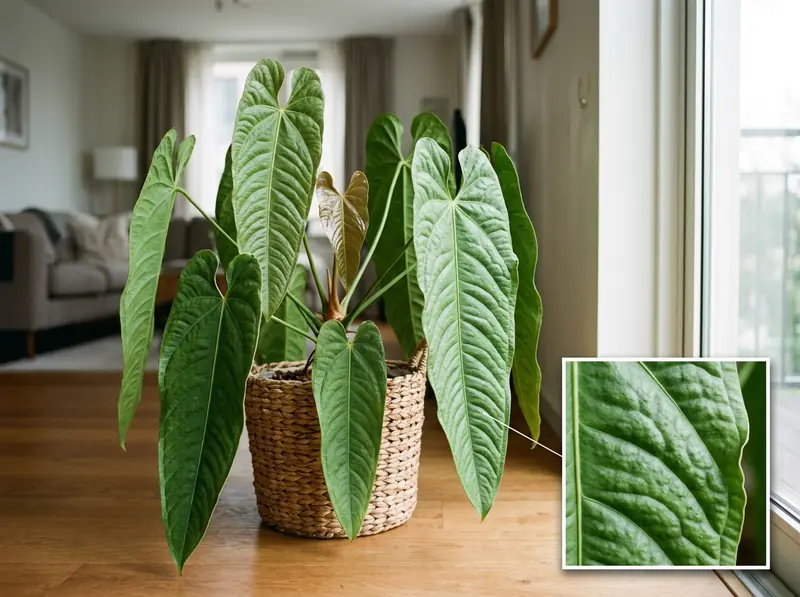
King Anthurium
Anthurium veitchii
King Anthurium is a slow-growing tropical plant grown for its enormous, leathery, deeply corrugated leaves, which can reach 3 feet or more on a mature plant. It needs warmth, steady moisture, high humidity and an airy mix, so it suits owners with some experience. Give it bright, indirect light and be patient with its slow growth.
Saving is free with a KinClub account, and it works here and in the KinClub app. Sign up free
Care profile
- Light
- Bright, indirect lightLow → direct sun
- Water
- Moderate wateringAbout every 7 days
- Difficulty
- Moderate to challengingTricky → easy
- Coldest it tolerates
- 60°F
- Humidity
- High
- Mature size
- LargeSmall → tree-size
- Growth rate
- Slow
- How common
- CommonRare → everywhere
- Plant family
- Araceae
Pets and toxicity
Cats and dogs: not yet checked
Not yet checked against ASPCA — don't assume it's safe for pets.
No toxicity source on record for this plant yet. If a pet eats any houseplant, call your vet or an animal poison helpline.
How to care for King Anthurium
Light
Give it bright, indirect light, such as a spot a few feet from an east or filtered south window. Avoid direct midday sun, which scorches the big leaves.
Watering
Water when the top inch or two of mix feels dry, usually about once a week in the growing season, and less in winter. Water thoroughly until it drains, and empty the saucer.
Soil
Use a very chunky, airy mix, such as equal parts orchid bark, perlite and peat-free potting soil or coco coir. The roots are thick and need air around them.
Feeding
Feed every 2 to 4 weeks from spring through summer with a balanced fertiliser at half the label strength. Pause or cut back in winter.
Repotting
Repot every 2 to 3 years in spring, only going up one pot size, since it likes being slightly snug. Handle the fleshy roots gently.
Propagation
Mature plants can sometimes be divided where offsets form with their own roots, but this is slow and risky. Growing from seed is the usual route and takes years, so most people buy an established plant.
Common problems
- Brown leaf edges: usually dry air or underwatering, so raise humidity to 60% or higher with a humidifier and water more consistently.
- Yellowing lower leaves: often overwatering or dense soil, so let the mix dry slightly and repot into a chunkier mix if needed.
- Leaves stay small and floppy: usually too little light, so move it to a brighter spot.
- Sap-sucking pests like mealybugs or scale on leaf undersides: wipe them off with rubbing alcohol on a cotton swab and repeat weekly.
Similar plants
Same light needs and difficulty.
 AI-generated
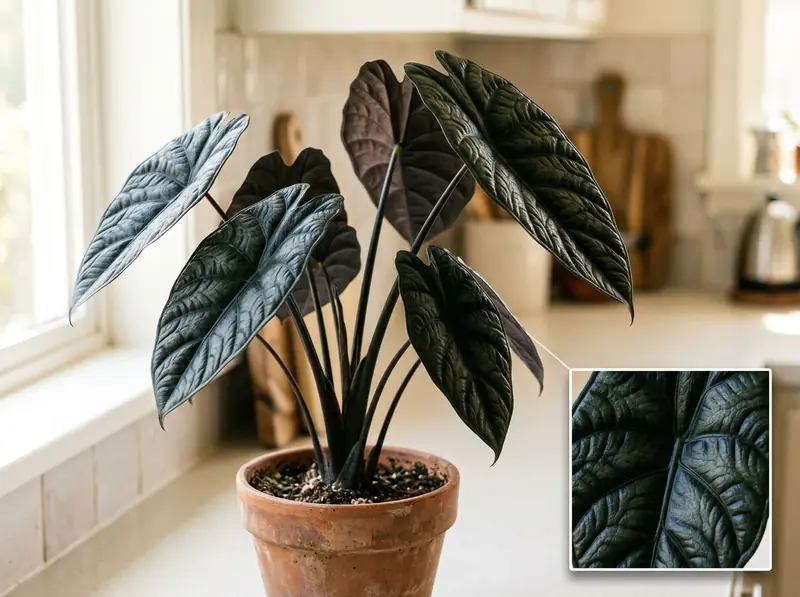
Infernalis Alocasia
Alocasia infernalis
- Bright, indirect light
- Moderate to moist watering
Toxic to cats and dogs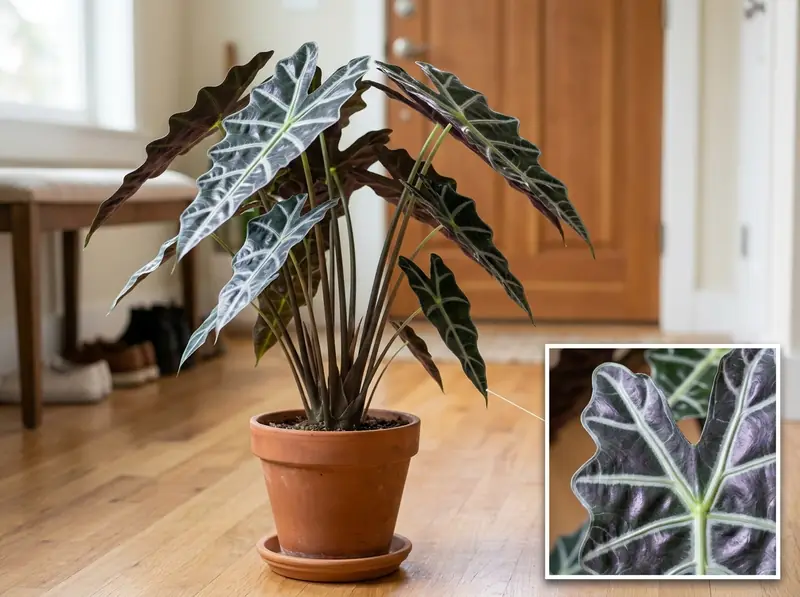 AI-generated
Kris Plant
Alocasia sanderiana
- Bright, indirect light
- Moderate to moist watering
Toxic to cats and dogs AI-generated
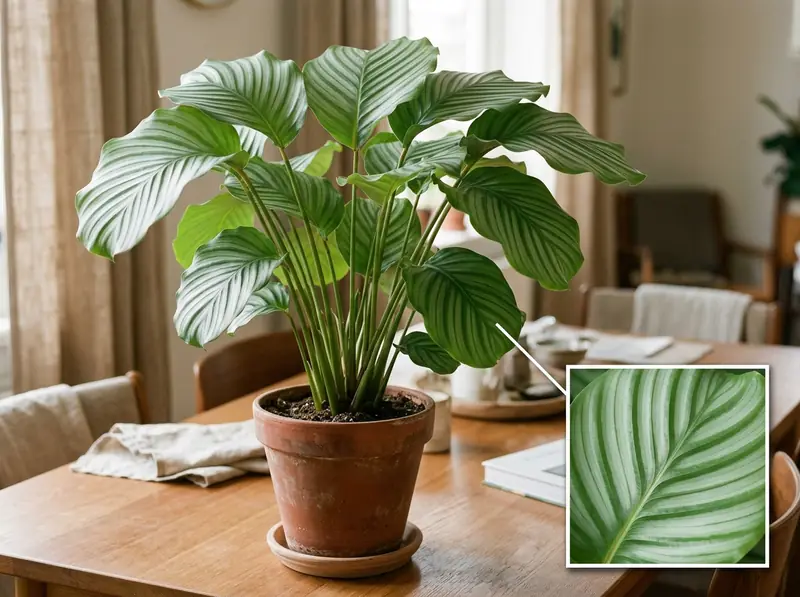 AI-generated
Calathea Orbifolia
Goeppertia orbifolia
- Medium to bright, indirect light
- Keep moist
Pets: not yet checked