
 AI-generated
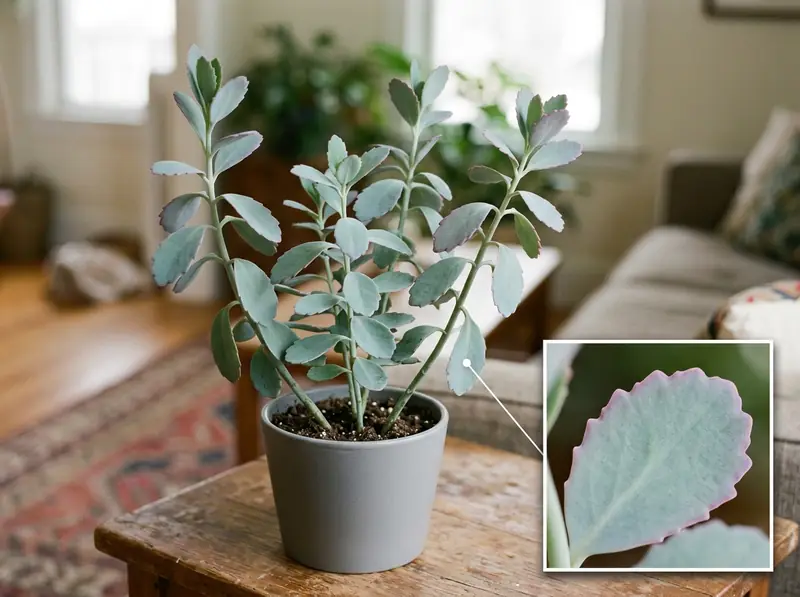
Lavender Scallops
Kalanchoe fedtschenkoi
Lavender Scallops is an upright succulent with blue-green, scalloped leaves edged in pink to purple. It is easy and forgiving in a bright window if you let the soil dry between waterings. It grows into a branching plant about 1 to 2 feet tall and is simple to propagate from cuttings.
Saving is free with a KinClub account, and it works here and in the KinClub app. Sign up free
Care profile
- Light
- Bright, indirect to direct sunLow → direct sun
- Water
- Let it dry outAbout every 14 days
- Difficulty
- EasyTricky → easy
- Coldest it tolerates
- 50°F
- Humidity
- Low
- Mature size
- Small to mediumSmall → tree-size
- Growth rate
- Moderate
- How common
- CommonRare → everywhere
- Plant family
- Crassulaceae
Pets and toxicity
Toxic to cats
Keep away from cats. Call your vet or a pet poison helpline if a cat chews it.
Toxic to dogs
Keep away from dogs. Call your vet or a pet poison helpline if a dog chews it.
Source: ASPCA toxic and non-toxic plants. If a pet eats any houseplant, call your vet or an animal poison helpline.
How to care for Lavender Scallops
Light
Give it a bright spot with a few hours of gentle direct sun, such as an east or south window with some protection from harsh midday summer rays. More light brings out the pink-purple leaf edges.
Watering
Water thoroughly, then let the soil dry out almost completely before watering again, usually every 2 to 3 weeks. Water much less in winter, about every 3 to 5 weeks.
Soil
Use a gritty cactus or succulent mix, or ordinary potting mix blended with about one third perlite or coarse sand. Use a pot with drainage holes.
Feeding
Feed with a diluted cactus or balanced fertilizer at half strength about once a month in spring and summer. Do not feed in fall and winter.
Repotting
Repot every 2 to 3 years in spring, only into a pot 1 to 2 inches wider. The plant can get top-heavy, so choose a fairly heavy pot.
Propagation
Stem cuttings root easily: let a 3 to 4 inch cutting dry for a day, then set it on gritty mix. Fallen leaves and the small plantlets that sometimes form on leaf edges also root.
Common problems
- Leggy, sparse stems: move to brighter light and pinch back the tips to encourage branching.
- Yellow, mushy leaves or stem rot: water less often, make sure the pot drains, and repot into dry gritty mix, cutting away any rotten parts.
- White cottony clusters in leaf joints are mealybugs: dab with cotton swabs dipped in rubbing alcohol and repeat weekly.
- Lower leaves dropping in winter: usually a sign of low light or too much water, so cut back watering.
Similar plants
Same light needs and difficulty.
 AI-generated
 AI-generated
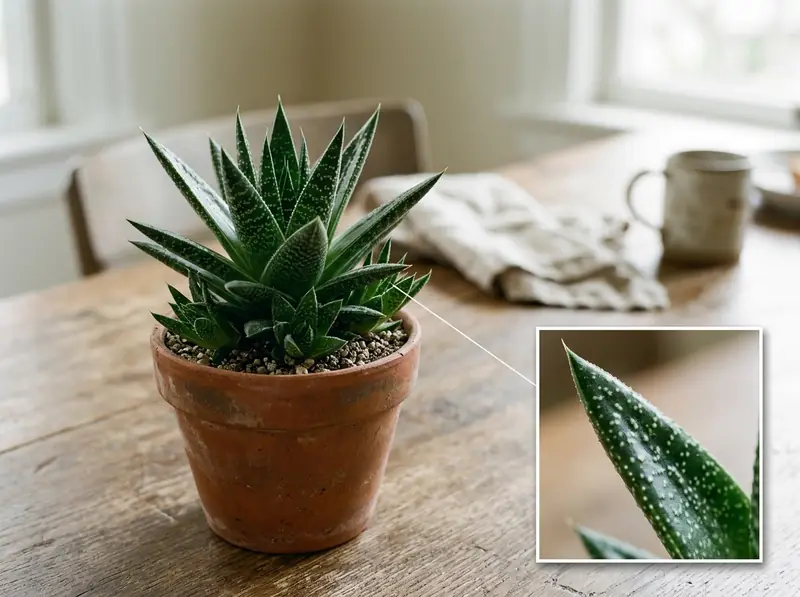
Green Ice Gasteraloe
Gasteraloe 'Green Ice'
- Bright, indirect light
- Let it dry out
Pets: not yet checked AI-generated
Chinese Money Plant
Pilea peperomioides
- Bright, indirect light
- Dry to moderate watering
Pets: not yet checked AI-generated
Christmas Cactus
Schlumbergera × buckleyi
- Bright, indirect light
- Moderate watering
Pets: not yet checked