
 AI-generated
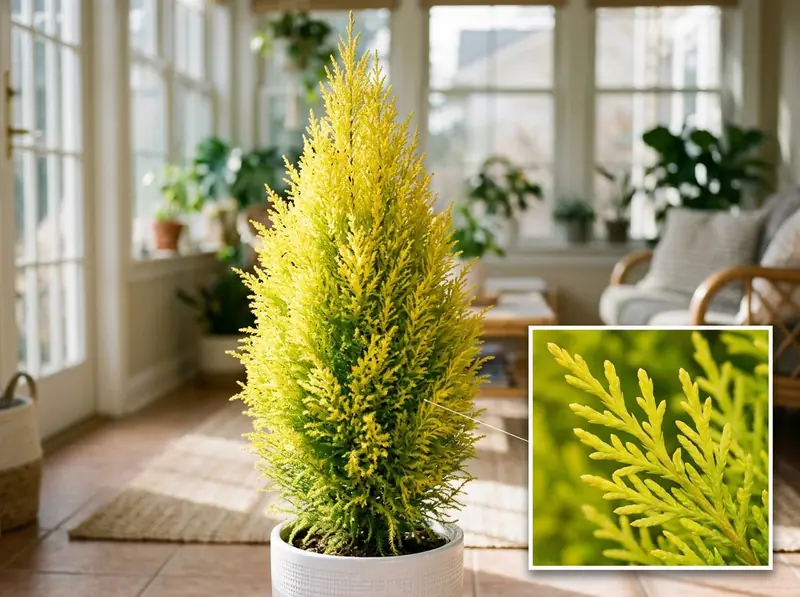
Lemon Cypress
Cupressus macrocarpa 'Wilma'
'Wilma' (Goldcrest Wilma) is the popular lemon cypress, a narrow, upright conifer with bright yellow-gold, lemon-scented foliage. It keeps its colour and dense shape only in very bright light and cool, evenly moist conditions. Treat it as a sunny, cool-room plant that can summer outdoors.
Saving is free with a KinClub account, and it works here and in the KinClub app. Sign up free
Care profile
- Light
- Direct sunLow → direct sun
- Water
- Moderate to moist wateringAbout every 7 days
- Difficulty
- ModerateTricky → easy
- Coldest it tolerates
- 30°F
- Humidity
- Medium
- Mature size
- Medium to largeSmall → tree-size
- Growth rate
- Moderate
- How common
- CommonRare → everywhere
- Plant family
- Cupressaceae
Pets and toxicity
Cats and dogs: not yet checked
Not yet checked against ASPCA — don't assume it's safe for pets.
No toxicity source on record for this plant yet. If a pet eats any houseplant, call your vet or an animal poison helpline.
How to care for Lemon Cypress
Light
Give it as much light as possible, ideally a south or west window with several hours of direct sun. Turn the pot a quarter turn every week or two for even growth.
Watering
Water thoroughly when the top inch of soil is dry, roughly weekly in summer, and let the excess drain away. Never let the root ball dry out completely or sit in water; water less in winter.
Soil
Use a well-draining potting mix with about one-third added perlite or coarse grit. Use a pot with drainage holes.
Feeding
Feed monthly in spring and summer with a balanced liquid fertiliser at half the label strength. Do not feed in autumn and winter.
Repotting
Repot every two to three years in spring into a pot 1 to 2 inches wider, handling the roots gently as conifers resent disturbance. Stop moving up once it reaches the size you want and refresh the topsoil instead.
Propagation
Take 4 to 6 inch semi-ripe cuttings in late summer, strip the lower foliage, dip in rooting hormone and set in gritty mix. Rooting is slow and can take several weeks to months; seed is the other route.
Common problems
- Browning inner foliage: often dry air or dry roots; water more evenly and move it away from heaters.
- Yellowing and limp growth: usually overwatering or poor drainage; let the soil dry a little and check the drainage holes.
- Fine webbing and stippled foliage: spider mites; shower the plant and use insecticidal soap weekly until clear.
- Thin, leggy growth: not enough light; move it to the brightest window or outside in summer.
Similar plants
Same light needs and difficulty.
 AI-generated
 AI-generated
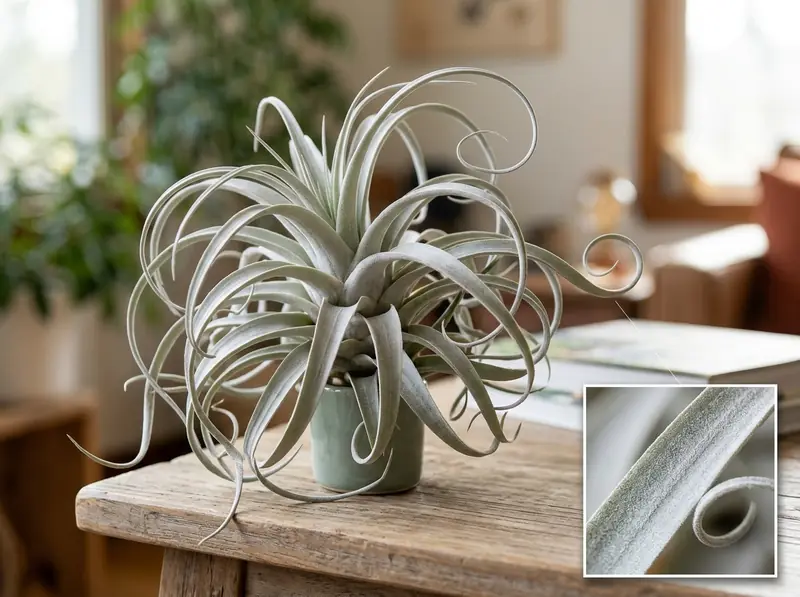
Duratii Air Plant
Tillandsia duratii
- Bright, indirect to direct sun
- Dry to moderate watering
Pets: not yet checked AI-generated
 AI-generated