
 AI-generated
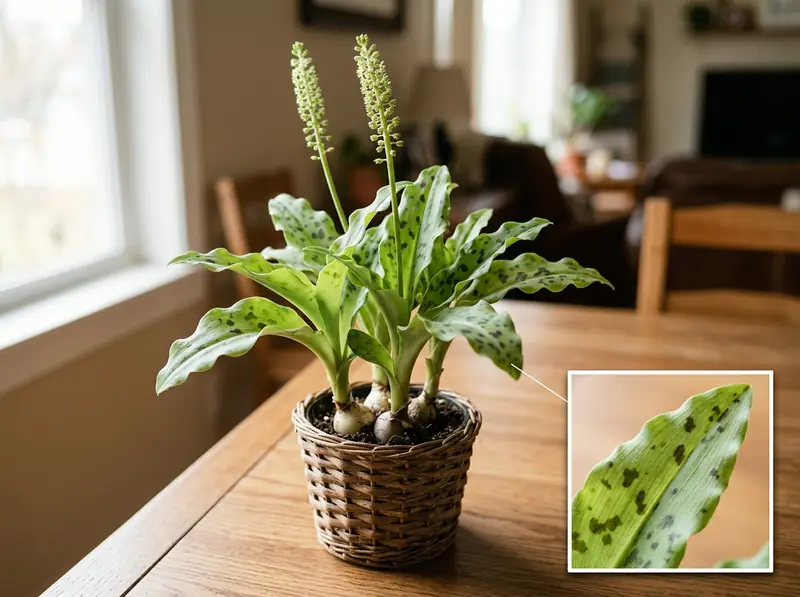
Little White Soldiers
Drimiopsis maculata
Little White Soldiers is a compact bulbous plant from southern Africa with wavy, green leaves marked with dark spots and spikes of tiny white flowers in spring or summer. It is forgiving and suits beginners, as long as it gets bright light and is never kept soggy. It may rest and lose leaves in winter, which is normal.
Saving is free with a KinClub account, and it works here and in the KinClub app. Sign up free
Care profile
- Light
- Bright, indirect lightLow → direct sun
- Water
- Dry to moderate wateringAbout every 14 days
- Difficulty
- EasyTricky → easy
- Coldest it tolerates
- 50°F
- Humidity
- Low to medium
- Mature size
- SmallSmall → tree-size
- Growth rate
- Moderate
- How common
- CommonRare → everywhere
- Plant family
- Asparagaceae
Pets and toxicity
Cats and dogs: not yet checked
Not yet checked against ASPCA — don't assume it's safe for pets.
No toxicity source on record for this plant yet. If a pet eats any houseplant, call your vet or an animal poison helpline.
How to care for Little White Soldiers
Light
Give it bright, indirect light, such as a spot near an east or filtered south window. Gentle morning sun is fine, but avoid hot midday sun, which scorches the leaves.
Watering
Water thoroughly when the top 1-2 inches of soil are dry, about every 2 weeks in the growing season. Cut back sharply in winter when growth slows or the leaves die back.
Soil
Use a fast-draining mix, such as cactus mix or regular potting soil with about one-third perlite or coarse sand. Leave the top of the bulb partly exposed above the soil.
Feeding
Feed with a balanced houseplant fertilizer at half strength about once a month in spring and summer. Do not feed in autumn and winter.
Repotting
Repot every 2-3 years in spring, when bulbs crowd the pot. Choose a pot only one size larger, with drainage holes.
Propagation
Separate offset bulbs from the parent in spring and pot them individually. Leaf cuttings can also root but are slower.
Common problems
- Yellow, mushy leaves: from overwatering. Let the soil dry, check the bulb for rot, and repot in fresh gritty mix if needed.
- Leaves die back in winter: natural dormancy. Water very sparingly and wait for spring regrowth.
- Long, floppy leaves: too little light. Move to a brighter spot.
- Mealybugs in leaf bases: dab with cotton swabs dipped in rubbing alcohol and repeat weekly until gone.
Similar plants
Same light needs and difficulty.
 AI-generated
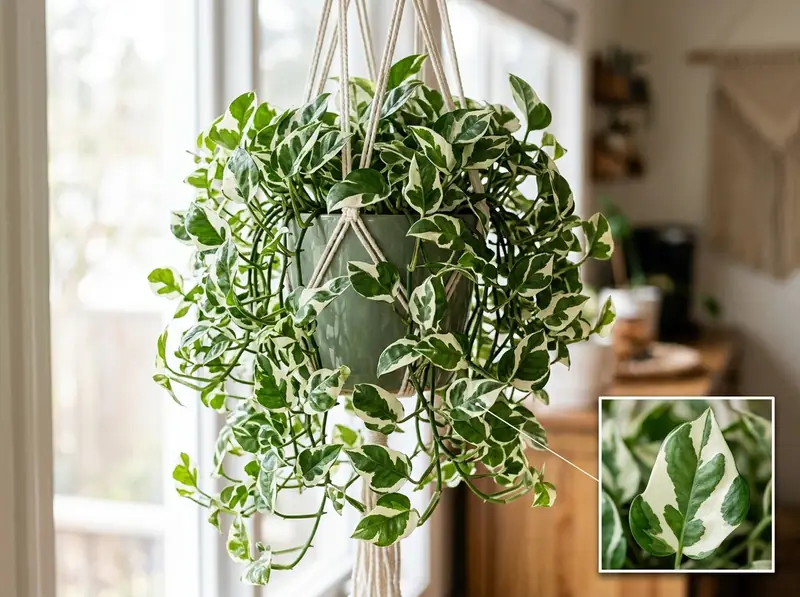
N'Joy Pothos
Epipremnum aureum 'N'Joy'
- Bright, indirect light
- Dry to moderate watering
Pets: not yet checked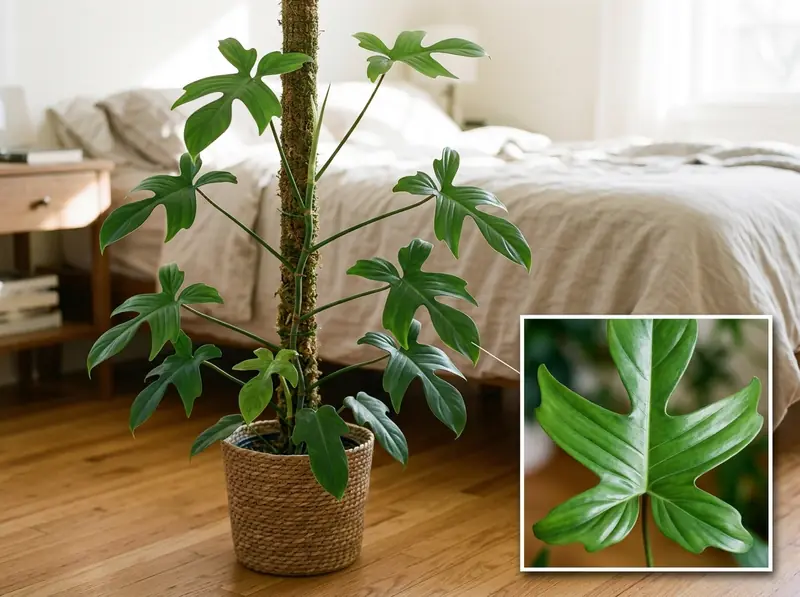 AI-generated
Oak Leaf Philodendron
Philodendron pedatum
- Bright, indirect light
- Moderate watering
Toxic to cats and dogs AI-generated
Chinese Money Plant
Pilea peperomioides
- Bright, indirect light
- Dry to moderate watering
Pets: not yet checked AI-generated
Christmas Cactus
Schlumbergera × buckleyi
- Bright, indirect light
- Moderate watering
Pets: not yet checked