
 AI-generated
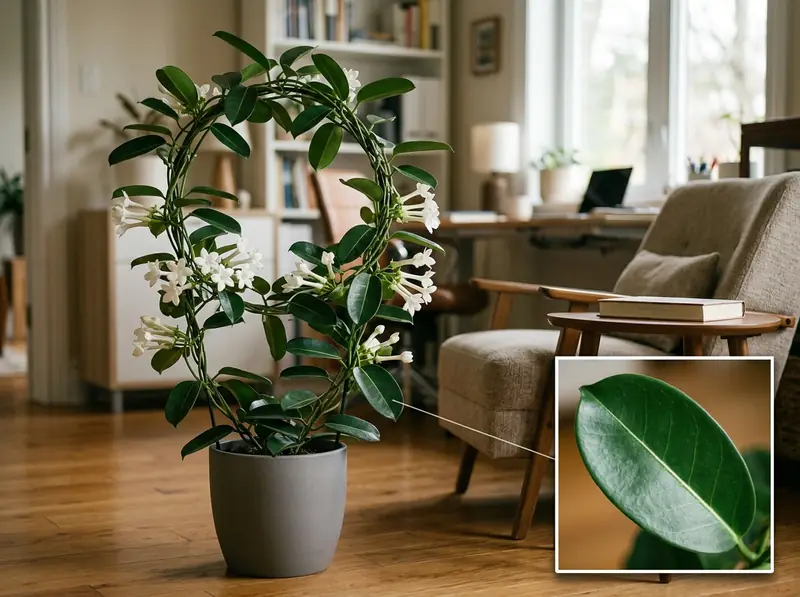
Madagascar Jasmine
Stephanotis floribunda
Also known as Wax Flower, Bride's Flower, Clustered Wax Flower
Madagascar jasmine is a twining evergreen vine grown for its waxy, very fragrant white flowers, which appear in clusters in summer. It needs bright light, steady moisture, good humidity and a trellis to climb, and it is often fussy, so it suits owners willing to pay attention. A cooler, drier winter rest helps it bloom.
Saving is free with a KinClub account, and it works here and in the KinClub app. Sign up free
Care profile
- Light
- Bright, indirect lightLow → direct sun
- Water
- Moderate wateringAbout every 7 days
- Difficulty
- Moderate to challengingTricky → easy
- Coldest it tolerates
- 50°F
- Humidity
- High
- Mature size
- LargeSmall → tree-size
- Growth rate
- Moderate
- How common
- CommonRare → everywhere
- Plant family
- Apocynaceae
Pets and toxicity
Non-toxic to cats
Listed as non-toxic to cats by the ASPCA.
Non-toxic to dogs
Listed as non-toxic to dogs by the ASPCA.
Source: ASPCA toxic and non-toxic plants. If a pet eats any houseplant, call your vet or an animal poison helpline.
How to care for Madagascar Jasmine
Light
Give it a bright spot with several hours of gentle direct morning sun or bright filtered light, such as an east or south window with a sheer curtain. Strong midday sun through glass can scorch the leaves.
Watering
Water when the top inch of soil feels dry, about once a week in the growing season, until water drains out. Cut back to every 2-3 weeks in winter, but never let the root ball dry out completely.
Soil
Use a light, well-draining potting mix with plenty of organic matter, such as standard mix with about one-quarter perlite or orchid bark. Make sure the pot has drainage holes.
Feeding
From spring to late summer feed every 2-4 weeks with a balanced or high-phosphorus liquid fertilizer at half strength. Stop feeding in fall and winter.
Repotting
It flowers best when slightly root-bound, so repot only every 2-3 years in spring, going up one pot size (about 2 inches wider). Give it a sturdy trellis or hoop at the same time.
Propagation
Take 4-6 inch semi-ripe stem cuttings in spring or summer, dip them in rooting hormone and set them in a moist mix with bottom heat. Rooting can be slow and is not always reliable.
Common problems
- Bud drop: caused by moving the plant, cold drafts or dry soil; keep it in one spot and water evenly once buds form.
- Yellow leaves: usually overwatering or poor drainage; let the top inch of soil dry and empty saucers.
- No flowers: usually too little light or no cool winter rest; move it to brighter light and give it cooler winter nights.
- Sticky residue and cottony or bumpy spots on stems: mealybugs or scale; dab with rubbing alcohol on a cotton swab and repeat weekly.
- Crispy leaf edges and fine webbing: low humidity and spider mites; raise humidity and rinse the leaves.
Similar plants
Same light needs and difficulty.
 AI-generated
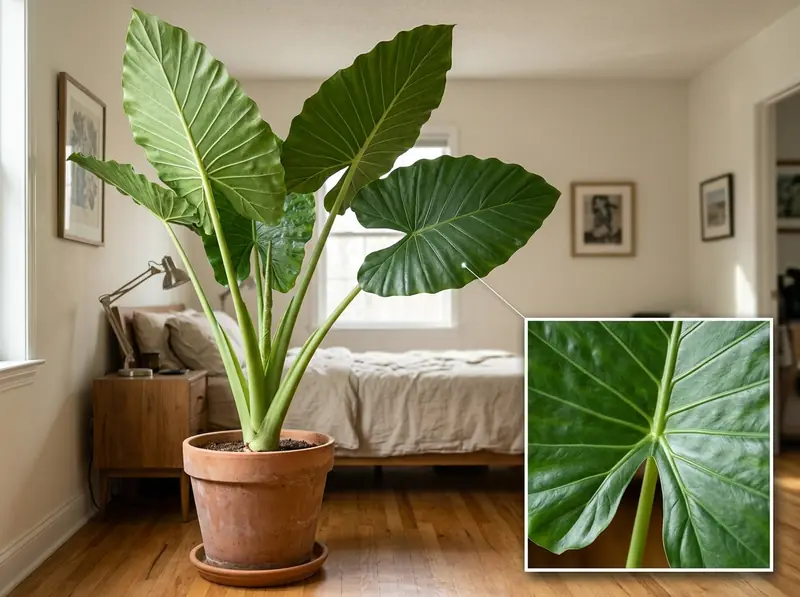
Robusta Alocasia
Alocasia robusta
- Bright, indirect light
- Moderate to moist watering
Toxic to cats and dogs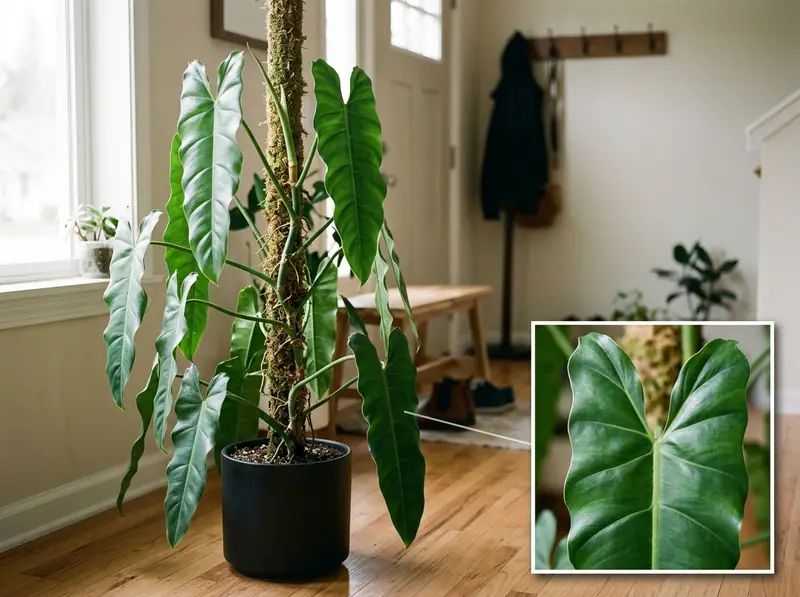 AI-generated
Spiritus Sancti Philodendron
Philodendron spiritus-sancti
- Bright, indirect light
- Moderate watering
Toxic to cats and dogs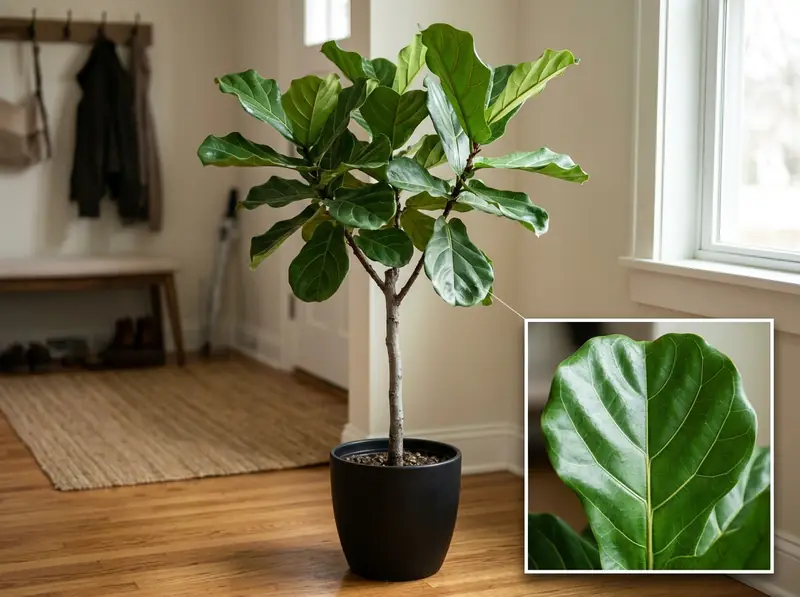 AI-generated
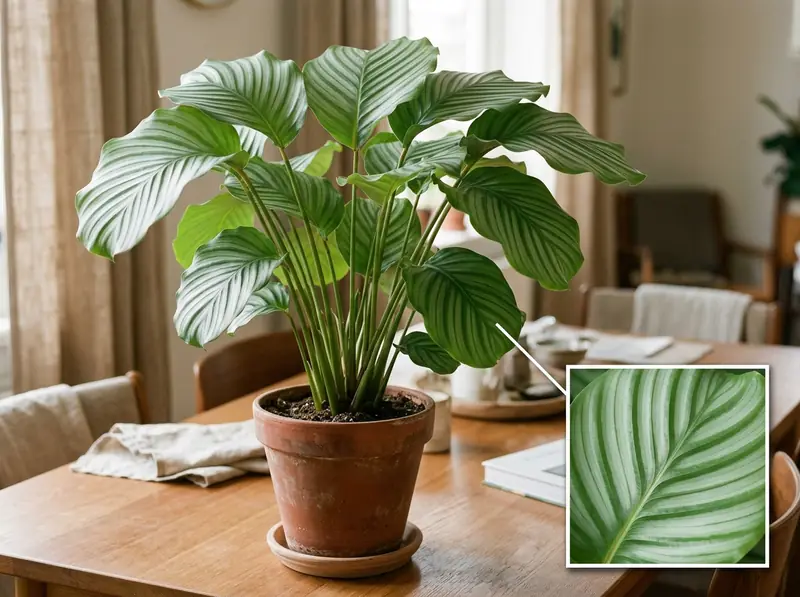 AI-generated
Calathea Orbifolia
Goeppertia orbifolia
- Medium to bright, indirect light
- Keep moist
Pets: not yet checked